



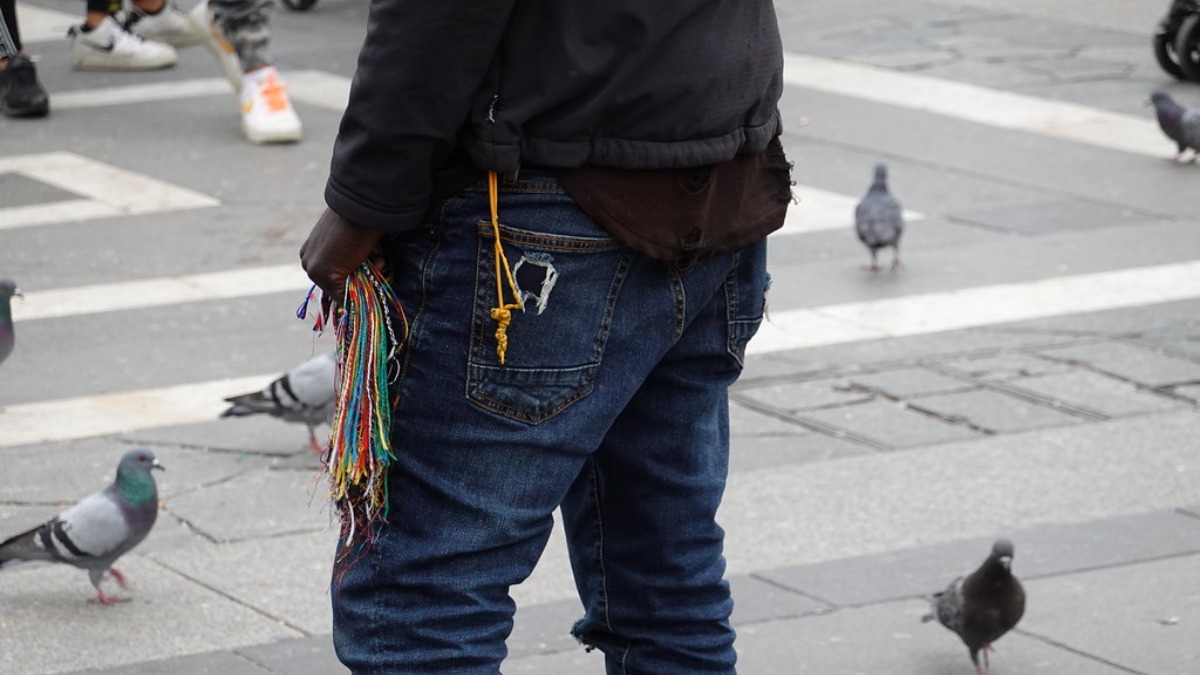

A tourist recently turned the tables on someone attempting the well known free bracelet scam, and the encounter has spread widely online. As detailed by the Daily Dot, the scam is a familiar nuisance in major tourist hubs, including cities like Paris and Rome. A man approached the tourist and insisted on gifting him a bracelet, claiming it was for good luck, and the tourist accepted the offer.
In a video reshared by X user @muskytylerey, the man pivots from a friendly demeanor to demanding payment for the item he had just called a gift. The tourist told him, “Nah, nah, it’s a free gift, bro,” and added, “If it’s free, you always take it. You never give them anything in return.” The man kept insisting he was owed money because handing out the bracelets was his job, and he grabbed at the tourist’s wrist in an attempt to force a transaction.
The tourist compared the situation to declining to return a free sample once it had been eaten, using the analogy to explain why he would not be paying for something he was told was free. When the man continued pressing him for money, the tourist reached into his pocket, raised his middle finger, and told him, “F— off, mate,” ending the exchange.
The free bracelet scam typically follows a predictable pattern
The free bracelet scam typically follows a predictable pattern. A stranger approaches, often with a compliment, before offering a bracelet that is frequently made of nothing more than a piece of string, and once the item is accepted, the person demands payment for what was described as a gift. In many cases the scammers do not act alone, working in groups that surround tourists and create pressure to hand over cash just to leave the situation.
Travel experts recommend not accepting items from strangers regardless of how persistent the offer is, since accepting anything opens the door to a demand for payment. Utah shoppers have faced a comparable tactic at a Costco parking lot scam that also relied on manufactured urgency to pressure a payout.
According to Paris je t’aime, travelers in the city should stay alert to pickpockets in crowded areas and keep bags securely closed and visible. The guidance also recommends favoring card or mobile payments over carrying large amounts of cash, and staying wary of distractions such as fake petitions or street games like bonneteau, which are often used to divert attention while an accomplice targets belongings.
Other scams built around a moment of stress have played out well outside Paris, including a delayed flight scam that led one traveler to freeze her family’s bank accounts. If a traveler in Paris feels unsafe or is assaulted, Paris je t’aime advises making noise to draw attention and getting to a safe location, then contacting police by calling 17 or emergency services by calling 112.
The guidance also recommends keeping digital copies of identity documents on hand, and notes that the assistance system for foreign victims allows visitors to file a complaint in their native language.




Published: Jul 3, 2026 05:30 am