



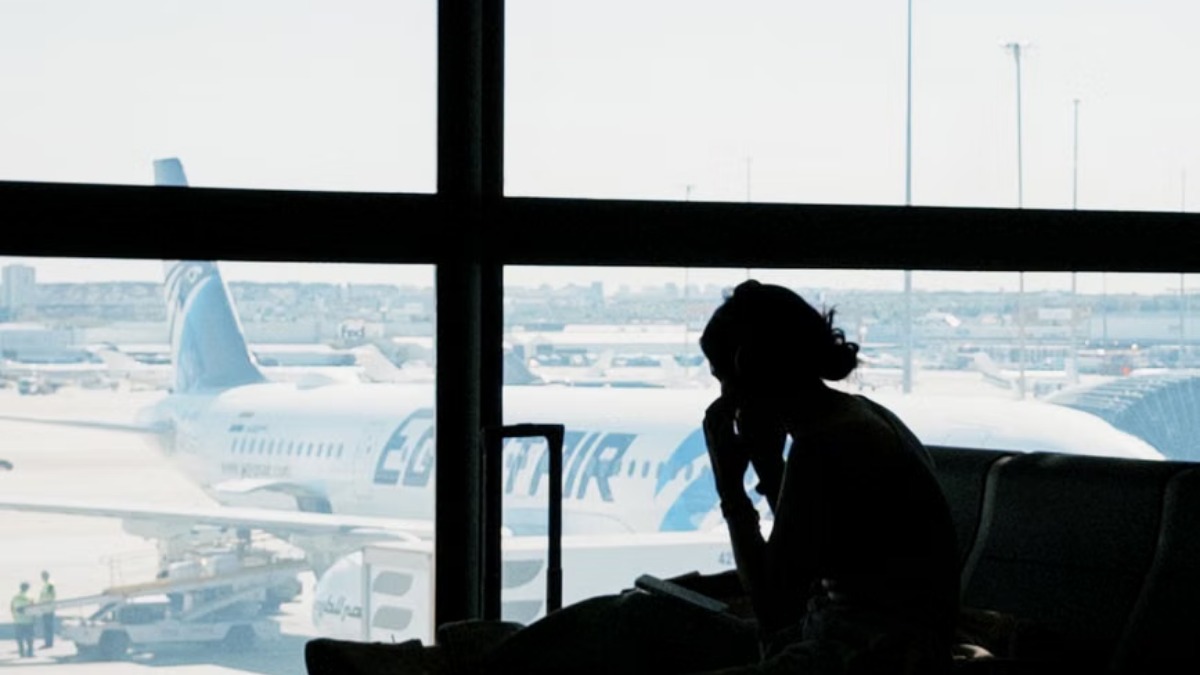

A traveler had to freeze her family’s bank accounts after a simple social media post about a delayed flight turned into a sophisticated scam. Michelle Schindell shared her experience after a trip involving American Airlines became an ordeal. Her flight to Miami faced five separate delays, and she decided to vent her frustration by tagging the airline in a sarcastic post on Facebook.
The situation got worse when she received a phone call from someone claiming to be a supervisor at the airline. The caller gave her what seemed like inside information, telling her the flight would likely be canceled.
This timing felt like a relief to her, especially since an agent at the airport had already mentioned that a cancellation was possible. The caller promised her reimbursement for the trouble, but there was a catch. To get this compensation, she was told to download an app and provide personal documents along with her phone number.
A request for debit card details set off the alarm
She followed the instructions and even booked a hotel based on guidance from the caller. It was only when the person on the phone asked for her debit card information that her instincts kicked in. She realized something was wrong and immediately cut off contact. American Airlines passengers have faced other unusual headaches recently, including one traveler who learned the gate agent had lost her luggage.
She changed her account passwords that same night, but the possible damage was already done. By the next day, she had to take the drastic step of closing the family accounts and placing a 90-day freeze on each one to keep their funds safe.
This experience shows how easily scammers can take advantage of people during vulnerable moments. A tired traveler could easily see a proactive call as a helpful service, and the scammer relied on the fact that she was already stressed and looking for solutions.
Because her children had accounts linked to her own, they were also caught up in the fallout of this security breach. Schindell said, “One daughter, who is trying to rent an apartment and proudly show off the savings she has worked so hard to build, will now be dealing with fraud alerts.”
According to the PEW Research Center, 73% of U.S. adults have come across an online scam. Of those people, 48% said fraudsters misused their credit or debit card information, while 24% were tricked into sharing personal details through a phone call or text. Not all in-flight frustrations involve fraud, though some travelers have dealt with passengers accused of delaying a flight for other reasons entirely.
Readers responded to the post with their own reactions and warnings. One commenter wrote, “Thanks for sharing. Imagine how the good the world would be if these scammers put their smarts into something worthwhile.” Another said, “It is tempting to trust someone trying to help you. I came close to getting scammed this year. But finally they asked for one thing too many and I stopped short of disaster.”
Several commenters focused on safety lessons from the experience. One wrote, “You are fortunate that your house wasn’t robbed while you were out of town. Never post vacay details until you return home.” Another pointed, “An important read about how easily identity theft can happen. Be aware, ask questions, be suspicious. It’s just TOO easy to get scammed in today’s world.”






Published: Jun 30, 2026 01:15 pm