



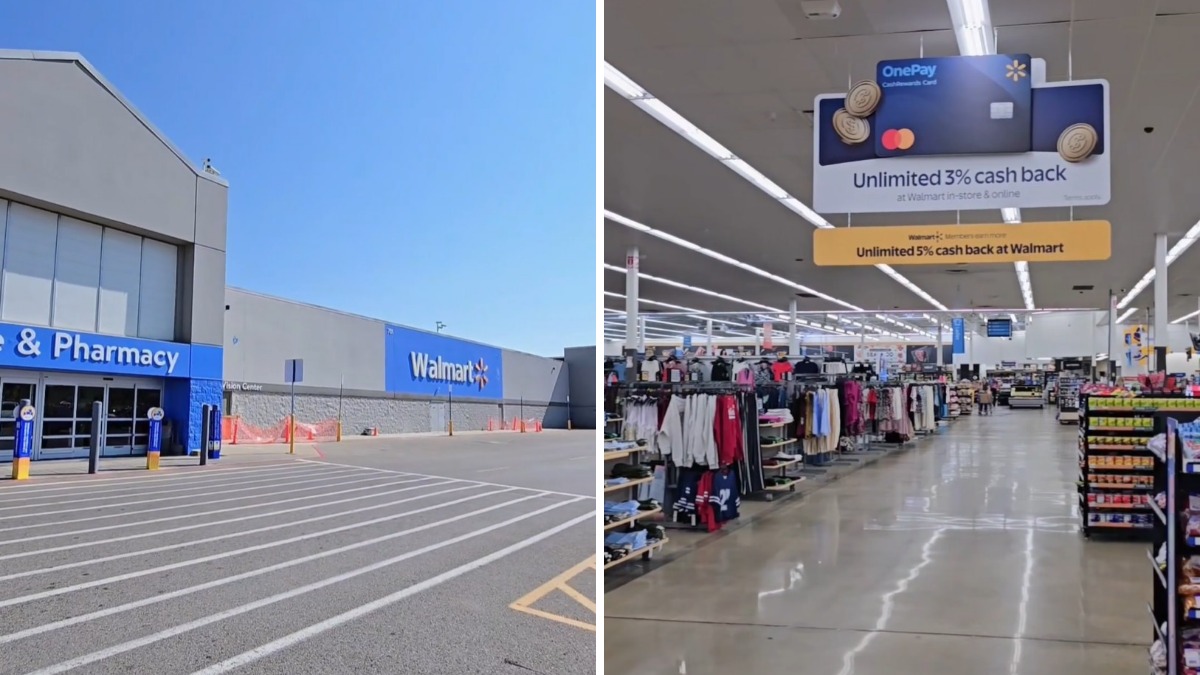

A video shared on X by @WallStreetApes has crossed 850,000 views (first covered by Daily Dot), sparking a heated discussion about retail theft, store security, and the factors driving these changes. The footage presents a side-by-side comparison of two different shopping experiences at Walmart.
It begins with a woman walking through what she labels an American White Walmart, noting that the store is quiet, clean, and organized. She highlights that common items such as laundry detergent and deodorant are sitting on open shelves without any security locks.
The video then shifts to Walmart locations in California, specifically mentioning Union City in Alameda County. In these clips, the viewer sees shelves stocked with basic food and household goods tucked behind locked security cases. The narrator of the video draws a direct line between these security measures and racial demographics, claiming that stores located in areas with high diversity require more merchandise to be locked away. The video also features a clip of a Black family mentioning they are eating food from the store and hiding the containers.
Organized retail theft is a documented issue in Alameda County
Ursula Jones Dickson, the district attorney for Alameda County, visited a Walmart in Union City on April 7, 2026, alongside shop officials. The goal of this tour was to gain a better understanding of how the company combats organized retail crime to help improve future prosecutions.
Jones Dickson explained her perspective to ABC7, noting that her primary concern is coordinated theft rather than instances of individuals stealing on their own. According to her, “boosting” is the practice of professional shoplifters stealing goods to resell.
This security trend is not unique to Walmart. Other retailers in the Bay Area have also moved goods into secured displays to prevent theft. A 2024 report highlighted that both Walmart and Target have resorted to locking away everyday items like underwear and socks. This has clearly been a major pain point for shoppers who find it frustrating to wait for staff members to unlock cases just to purchase basic necessities.
The online reaction to the video has been intense and varied. Many users on X challenged the narrator’s focus on race, suggesting that other socioeconomic factors are the real drivers of store security policies. One commenter stated, “White people make [things] about race; too (…) annoying.” Another user argued that the differences in store environments are likely related to poverty and crime rates rather than race, writing, “It’s not the race of the neighborhood, it’s the character of the people who live there.”
Others pushed back on the conversation by pointing toward broader societal issues. One user commented, “A society that created an impoverished class cannot blame that same class for poverty.”




Published: Aug 10, 2026 05:45 pm