



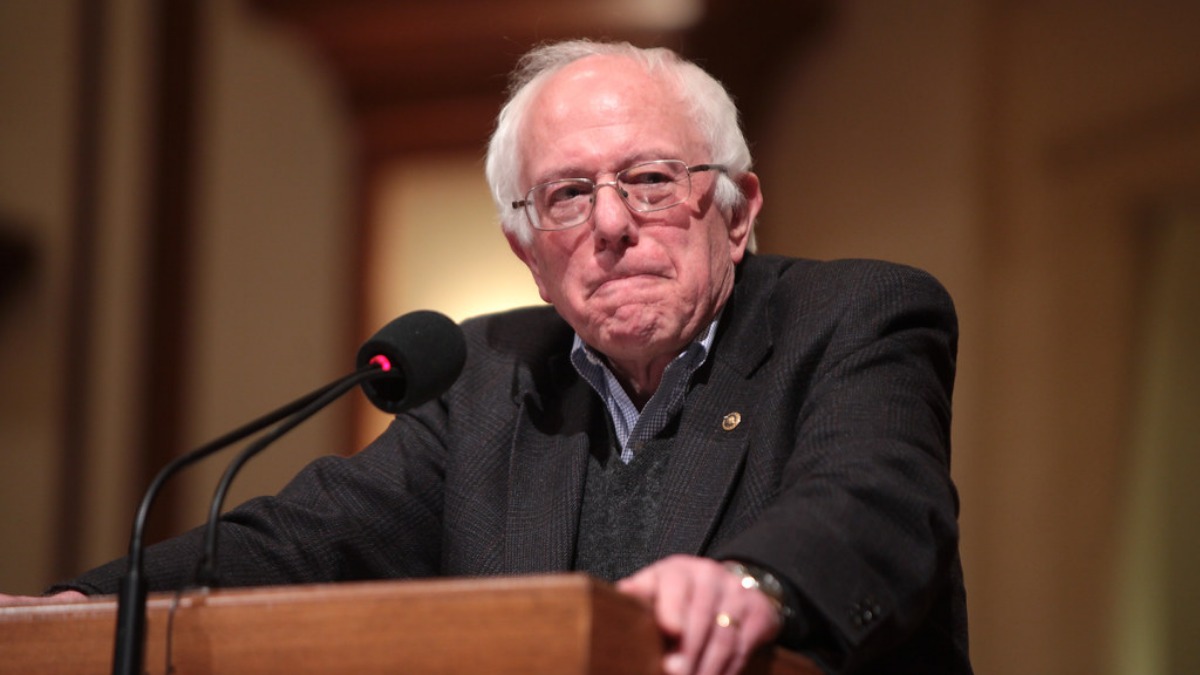

Senator Bernie Sanders is pushing Democratic leadership to implement a ban on super PAC involvement in party primary elections. The Vermont senator sent a letter to Senate Minority Leader Chuck Schumer, House Minority Leader Hakeem Jeffries, and Democratic National Committee Chair Ken Martin on Sunday to demand action against the influence of outside money, The Hill reported.
The catalyst for this push is the reported involvement of the American Israel Public Affairs Committee, known as AIPAC, in the Michigan Senate race. Sanders has been a vocal supporter of candidate Abdul El-Sayed, a physician who is currently running as a Democrat.
Sanders noted that AIPAC previously backed Representative Haley Stevens in the primary, and the group is now expected to support the Republican nominee, former Representative Mike Rogers, in the upcoming November election against El-Sayed. He added that these groups are more focused on specific agendas than the success of the Democratic Party as a whole.
This request highlights a growing tension within the party regarding how primary candidates are funded
Sanders did not hold back in his assessment of the situation in his letter to party leadership. “What is particularly obscene is not only the outrageous amount of money coming into Democratic primaries from billionaire-funded super PACs, but the reality that these special interests have no particular desire to see Democrats win,” Sanders wrote.
He continued by noting the absurdity of the current system. “It is absurd that they spend tens of millions of dollars to try to determine who the Democratic nominee is and, if they fail, then proceed to support the Republican candidate in the general election.” He concluded this thought by stating, “That is not democracy,” and “That is not what Democratic voters want.”
The ideological split within the party has become increasingly apparent, particularly regarding the war in Gaza. El-Sayed, who is Muslim, has been a vocal critic of the Israeli government and Prime Minister Benjamin Netanyahu. He has explicitly accused Netanyahu of committing genocide against Palestinians in Gaza, a stance that has drawn significant attention.
During a debate last month, El-Sayed challenged his primary opponent, Representative Haley Stevens, by highlighting her vote to send $3.3 billion in aid to Israel, a move that was opposed by 100 other House Democrats. He framed this financial support as a direct result of outside influence, stating, “That is the pro quo that comes with a quid of $30 million spent by AIPAC.”
AIPAC has remained firm in its opposition to El-Sayed. Following the results of the Michigan Democratic Senate primary, the group released a statement declaring that its “members remain determined to ensure that voters reject Dr. El-Sayed and his radical anti-Israel agenda in November.” This sets the stage for a contentious general election where the influence of outside lobbying groups will likely remain a central theme.
Beyond this specific race, Sanders is using the moment to renew his long-standing fight against the Supreme Court’s 2010 decision in Citizens United v. Federal Election Commission. He views this ruling as a major obstacle because it protects corporations and labor unions from restrictions on political campaign spending. Sanders is urging Democratic leaders to push for legislation that would move the country toward the public funding of elections to level the playing field.
He finished his letter with a clear call to action for his colleagues. “While there are ideological differences of opinion within the big tent of the party, I would hope that we can all agree that Republican special interests should not play a role in determining the outcome of Democratic primaries,” he wrote. “The time to act is now.”






Published: Aug 10, 2026 04:45 pm