



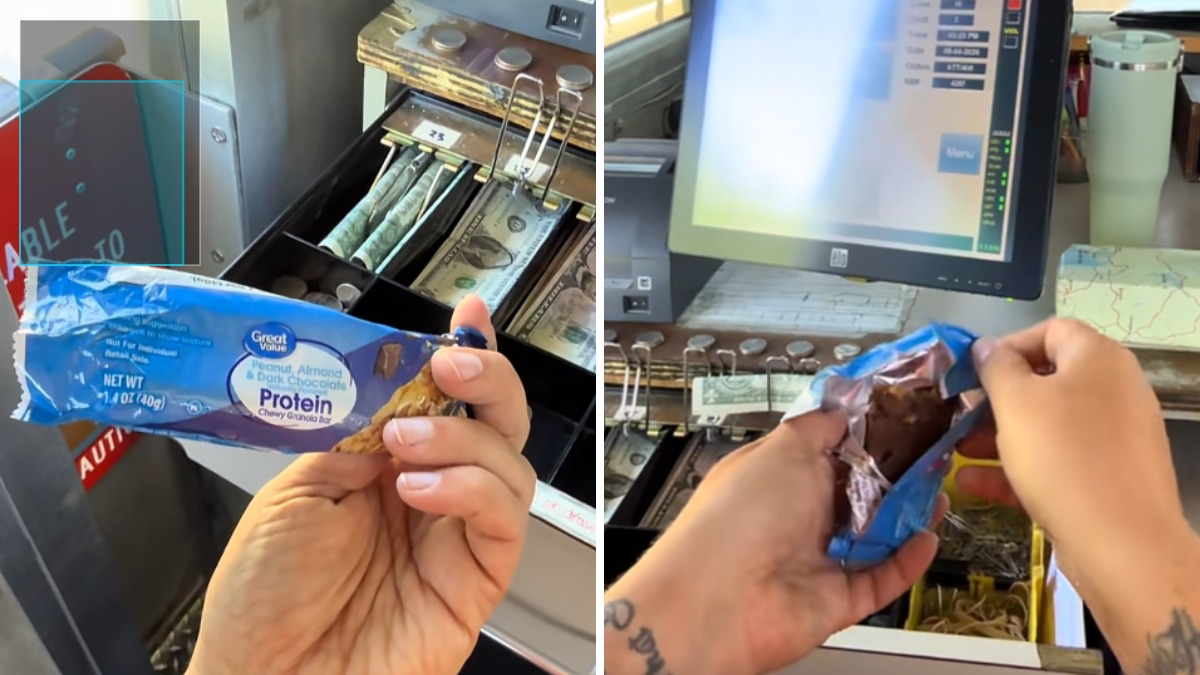

Morgan Cloutier recently discovered what appeared to be bug shells baked directly into a Great Value Peanut, Almond and Dark Chocolate Protein Chewy Granola Bar. According to BroBible, the Arbonne Consultant was working behind a cash register when she realized the snack she was consuming contained something that definitely did not belong in a granola bar. In the video, Cloutier holds up the bar and states, “I just already ate half of this.”
Cloutier is certainly not the only shopper to deal with this kind of issue. Another shopper previously found a small bug inside a container of smoked paprika, leading to the frustrating realization that they might need to inspect every single spice in their pantry for creepy crawlers.
Even dried beans have faced similar complaints from customers who report finding sticks and rocks mixed in with their food. On Reddit, one customer noted that they regularly encounter these extra items in their bags of beans. A similar pattern showed up when a Walmart shopper found razor blades baked into loaves of fresh bread, leading to criminal charges.
Trust in food safety is taking a hit
The public sentiment reflects a deeper concern about the safety of our food supply. A survey conducted by Gallup in 2025 found that while 73 percent of U.S. adults trust that the food available in grocery stores is safe to eat, there is a clear drop in confidence regarding oversight. The data shows a new low of 53 percent of Americans express confidence in the federal government’s regulation of food safety, following consecutive declines in previous measures.
If you ever find yourself in a situation where you discover a physical hazard in your food, it is important to know how to handle it. The FDA has an official consumer reporting path for these types of incidents. You can reach out to the Food and Cosmetic Information Center directly or file a report through the agency’s Safety Reporting Portal.
There is also the option to call an FDA Consumer Complaint Coordinator or file a Voluntary MedWatch form online. While the Reportable Food Registry exists as a mandatory portal for manufacturers to track cases where food might cause serious health consequences, the consumer side of reporting is vital for bringing these issues to light.
The FDA and USDA maintain a physical hazard framework that helps them determine if an object qualifies as a regulatory adulterant. These agencies list specific hazards, such as metal, glass, and stones, in their Code of Federal Regulations. However, deciding whether an item rises to the level of a regulatory concern often requires a case by case judgment call by the agencies themselves.









Published: Aug 10, 2026 05:30 pm