



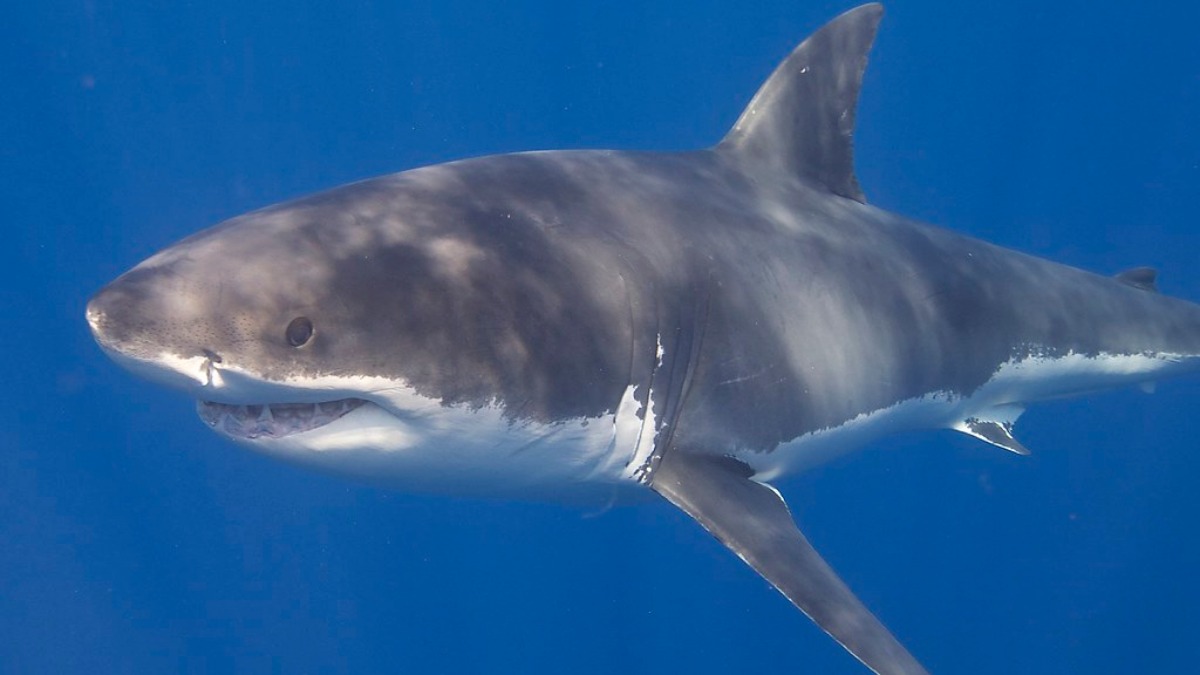

A fisherman on Nantucket found himself in an intense situation when he inadvertently hooked a great white shark while casting from the shore. Elliot Sudal, an angler who has spent the last 13 years fishing on the island, was out on the south shore with his apprentice, Stone Fornes, and fellow angler Nathan Skerritt when the unexpected catch occurred, BroBible reported.
While the group originally set out to test the water conditions and look for species like sandbar sharks, duskys, sand tigers, or roughtail rays, the situation escalated quickly once they realized they had snagged something much larger. The moment of realization hit when Sudal noticed a distinct fin flashing in the waves.
He described it as a “big one,” and the flash of a spotted pectoral fin confirmed it was a great white shark. Because it is illegal to actively fish for great white sharks in the United States, the encounter became a delicate operation to ensure the animal was released safely. Sudal explained that he was not targeting the species, noting, “By no means was targeting that white, you can’t control what picks up your bait.”
A beachgoer captured the entire event on video
The footage shows Sudal wading into the surf to drag the shark toward the shore. In a move that required a steady hand and quick thinking, he climbed onto the back of the shark to stabilize it. With a pair of pliers, he worked to remove the hook, a process that reportedly took around 25 seconds. The shark remained surprisingly calm throughout the extraction, and after the hook was removed, Sudal released the animal back into the ocean. Sudal noted the shark, “swam off strong, not something we will ever forget.”
This encounter serves as a reminder of the complex relationship humans have with these predators. It has been more than 50 years since the release of the movie Jaws, which left a lasting, often irrational fear of sharks in the public consciousness. The film, which was famously shot on Martha’s Vineyard, contributed to a decades-long narrative that painted great whites as aggressive, bloodthirsty threats.
Even Peter Benchley, who wrote the novel that inspired the film, spent his later years trying to undo that perception. Benchley, along with director Steven Spielberg, eventually expressed regret over the cultural impact of the work, acknowledging that the intense fear fostered by the movie likely contributed to a rise in hunting and a significant decline in the global great white population.
Despite the persistent cultural anxiety surrounding sharks, the waters around Martha’s Vineyard and its neighbor, Nantucket, which sits roughly 30 miles to the east, continue to be common habitats for these animals during the warmer months. Sudal emphasized the importance of responsible fishing practices when encountering such powerful creatures.
“I posted that video because I feel like I did everything right in that situation,” he stated. He advocates for the use of appropriate heavy tackle and barbless circle hooks for those who participate in shark fishing. He also suggests that anglers should take formal courses and participate in tagging programs to better understand and protect marine life.
Sudal’s experience highlights the difference between the cinematic myths of the past and the reality of marine interactions. While the sight of a person climbing onto a great white might seem chaotic or dangerous to the average viewer, the fisherman handled the situation with a focus on conservation. He described the shark as an “amazing creature” and expressed that he felt “humbled to be blessed with the opportunity to interact with one.”
As the waters around Nantucket continue to host various shark species, stories like this one provide a look at how experienced anglers are adjusting their behavior to prioritize the safety of the animals. By acting quickly and respecting the limitations of the environment, Sudal was able to rectify a difficult situation without harm to the shark. It is a stark contrast to the dramatic, often exaggerated portrayals of shark encounters that have dominated pop culture for over half a century.








Published: Jun 11, 2026 07:00 pm