


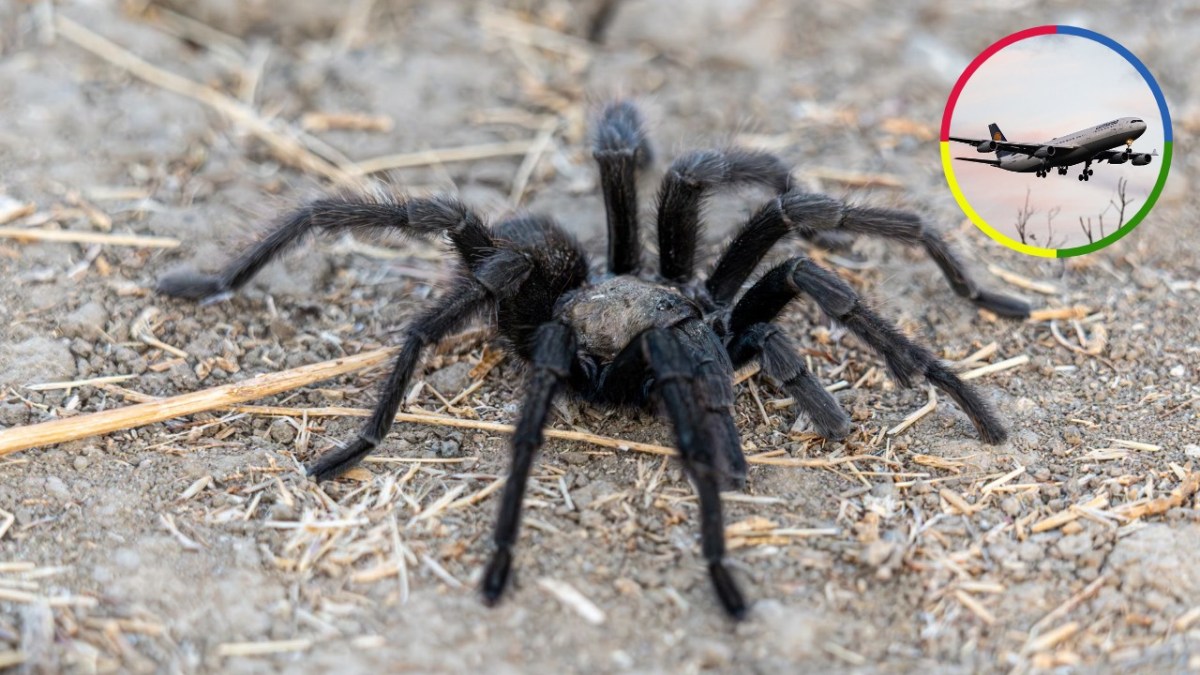

Most suitcases checked at Lima’s main airport hold clothes, gifts, and maybe a few souvenirs from the trip. Officials at Jorge Chávez International Airport in Lima say they found more than 3,000 tarantulas stuffed into socks inside three suitcases that were headed for Germany, according to France 24.
The luggage belonged to two German citizens and a Polish citizen, according to Peru’s National Forestry and Wildlife Service, known as SERFOR. The three travelers were detained by Peru’s environmental crimes police and now face criminal proceedings led by a specialized environmental prosecutor’s office. In Peru, wildlife trafficking can carry three to five years in prison, rising to seven when protected species are involved.
The spiders were spread across dozens of socks, with between 15 and 22 socks packed into each suitcase. The tarantulas ranged from eggs and hatchlings to fully grown adults, and they came from several regions of the country, per SERFOR. The number of spiders varied from sock to sock, as the socks held different species in different quantities. The discovery came as the travelers prepared to board their flight to Germany.
Officials say some of the tarantulas were still moving inside the socks
Agents noticed unusual wriggling inside the luggage during the inspection, which led them to open the suitcases. “We noticed that some of them were moving. There were small ones and large ones,” Cora Suarez, a SERFOR wildlife control technician, said. Other accounts of the seizure said the search followed an anonymous tip that reached authorities before the travelers checked in.
Investigators identified tarantulas from the Brachypelma, Pamphobeteus, and Avicularia genera, all of which are prized in the exotic pet trade for their looks and value. Among them was Pamphobeteus antinous, one of South America’s largest tarantulas and a species that is legally protected in Peru. That detail matters for the case, as protected species can push the potential prison term higher.
The haul also carried a steep potential price tag. Each tarantula can fetch about 500 euros in Europe, which means the haul could have been worth around 1.5 million euros if sold. Illegal wildlife trafficking generates roughly $20 billion a year worldwide, according to Interpol, and it is considered one of the primary causes of biodiversity loss around the world.
The same airport stopped a tarantula smuggler in 2024, when a 28-year-old South Korean man was caught with 320 tarantulas, 110 centipedes, and nine bullet ants strapped to his body. Security staff grew suspicious of his swollen belly, and officials said the animals had been packed into small sealed bags taped to belts around his waist before he tried to board.
Socks have also turned into a recurring hiding spot for smugglers moving live animals through airports. However, the Lima seizure is far larger than a recent case from Japan, as a 23-year-old man at Tokyo’s Haneda Airport was arrested in August with about 200 lizards packed into 22 pairs of socks in his suitcase.
Customs officers keep finding live animals in unlikely places, including the Miami case of live birds hidden in a traveler’s underwear. The Lima travelers, however, allegedly tried to move thousands of animals at once, with more than 3,000 tarantulas spread across three suitcases and dozens of socks bound for Europe.
Authorities are still investigating where the tarantulas came from and who they were meant for, and the three travelers could face up to seven years in prison if protected species are confirmed.








Published: Nov 6, 2026 10:30 am