



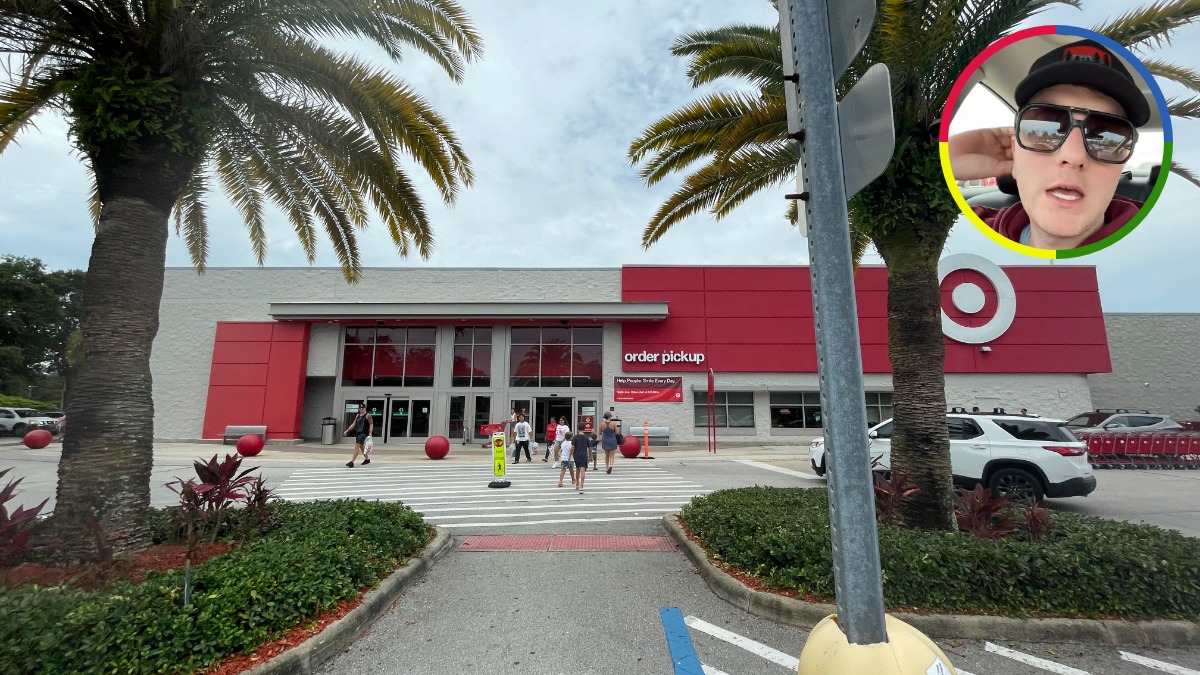

A Kansas City Target location has recently become the subject of intense internet discussion, with many social media users labeling it the scariest store in America. This reputation stems from a tragic event that occurred at that very site back in 2007. A TikTok user recently posted a video from his car outside the store, which has since garnered over 426,000 views and was covered by BroBible.
In the clip, the user explains that he simply cannot get over what happened to Kelsey Smith in that parking lot, noting that “every time he visits, he gets the heebie-jeebies.” The story begins on the evening of June 2, 2007. Kelsey Smith, an 18-year-old recent high school graduate, told her father, Greg Smith, that she was heading out to shop for an anniversary gift for her boyfriend, John Biersmith. She left her home at about 6:30 PM, planning to be back in an hour for a date.
When she failed to return and stopped answering her phone, her family and boyfriend grew deeply concerned. They went to the Target store in Overland Park, Kansas, to search for her, but they found no sign of her or her vehicle. Her father even contacted authorities to see if her car had been involved in any accidents, but there were no reports.
The recent viral video has brought these memories back to the surface for many
Hours later, the search led them across the street to a Macy’s parking lot. That is where they finally found Kelsey’s car. It was empty, and her phone and keys were missing. Police noted that the car had been scrubbed clean of fingerprints. As the investigation unfolded, authorities ruled out her family and boyfriend as subjects.
They turned their attention to surveillance footage from the Target store. The footage revealed an unidentified man following Kelsey throughout the store. While he wasn’t seen approaching her inside, the video captured him forcing her into her car as she exited. Later, the same man was recorded getting out of her car in the Macy’s parking lot.
Using the footage, police released a photo of the suspect to the public. Tips poured in, and authorities were eventually able to identify the man as Edwin Hall. Four days after Kelsey disappeared, her body was discovered in a wooded area near Longview Lake in Missouri. This was the location where her cell phone was last pinged.
Authorities later determined she had been sexually assaulted and strangled to death. Hall was taken into custody, and investigators linked him to the crime through fingerprints found on the steering wheel of Kelsey’s car. DNA evidence also played a major role, as Kelsey’s DNA was found on Hall’s shorts, and a bloodstain of hers was discovered on his shoe.
In July 2008, Hall, who was 27 at the time, pleaded guilty to capital murder, aggravated kidnapping, rape, and aggravated sodomy. By entering a guilty plea, he avoided the death penalty and was sentenced to life in prison without the possibility of parole.
During his sentencing hearing, Hall offered a brief statement, saying, “I can’t find the right words to say today. I am so sorry for what I have done. That’s it. That’s all I can say.” According to court information, Hall admitted he had targeted Kelsey after seeing her in the store and deciding he wanted to abduct her.
The aftermath of this tragedy sparked a significant push for legislative change. The Smith family was frustrated by the initial delay in obtaining cell phone records from Verizon, which they believed hindered the search for their daughter.
This led to the creation of what are now known as the Kelsey Smith Laws. These laws require cell phone companies to provide location information to law enforcement in emergency situations where a person is at risk of serious physical harm or death. In 2009, the Kansas legislature passed the act, and similar legislation has since been adopted in over 30 states.
Beyond these legal changes, the family founded The Kelsey Smith Foundation. The organization aims to “honor and perpetuate the life of Kelsey Smith by empowering families, friends, and communities to proactively protect one of its most precious resources, namely its youth and young adults.” Her brother, Stevie McLeod, noted in 2022 that while the situation remains incredibly difficult, he is glad her story has helped others through the legislation that followed.
The recent viral video has brought these memories back to the surface for many. In the comments section, people who lived through the event firsthand shared their lingering unease. One user wrote, “I went to school with her. Graduated a year ahead and had classes with her for 3 of the 4 years in HS. Nearly 20 years later I still think of her every time I’m over there.” Another person shared, “My family and I were literally at the mall the day this happened… and we were never allowed to go to that target again. Even as a 27 year old… I don’t go in.”





Published: Apr 23, 2026 06:00 pm