



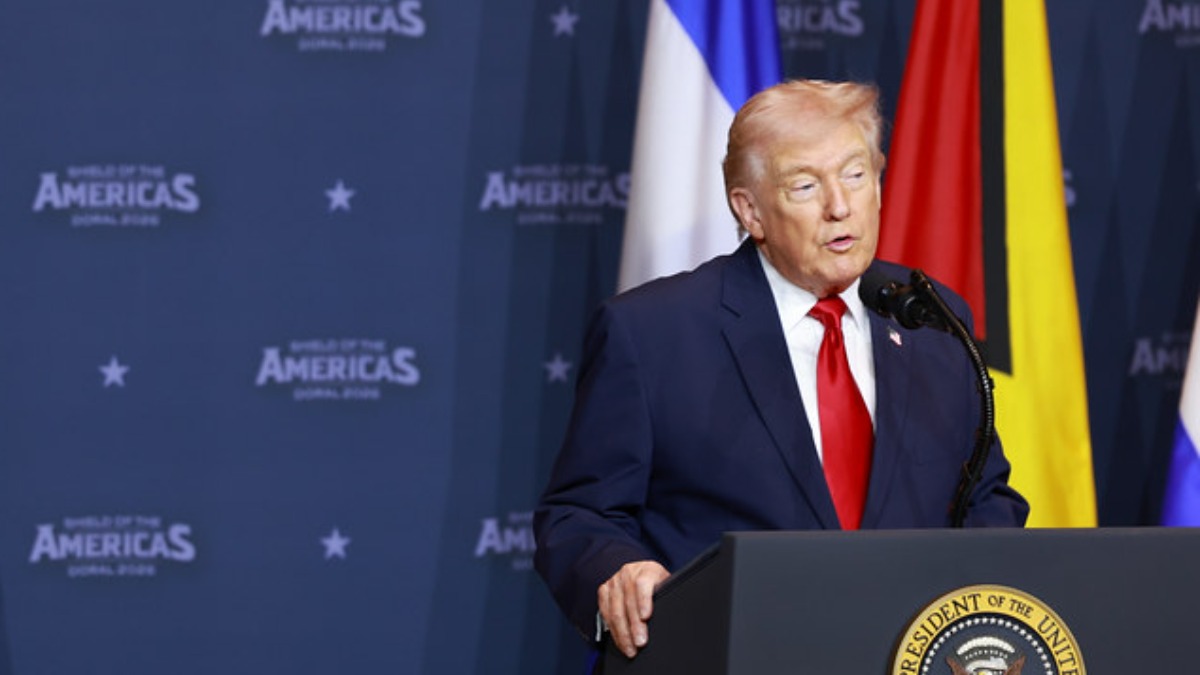

Iran has refused to back down in the ongoing conflict, blocking tankers from the Strait of Hormuz and striking cargo ships. This directly contradicts President Donald Trump’s earlier assurances to his team that Tehran would likely give in before closing the vital shipping lane. The move has triggered a global surge in oil prices and an energy shock rippling around the world.
According to The Wall Street Journal, before the U.S. went to war, General Dan Caine, chairman of the Joint Chiefs of Staff, specifically warned President Trump that an American attack could prompt Iran to close the strait. In several briefings, General Caine outlined how Iran could deploy mines, drones, and missiles to shut down the world’s most crucial shipping route.
Despite acknowledging the risk, Trump moved forward, telling his team that Iran would likely give in and that even if they tried to close the strait, the U.S. military could easily handle it. Now, just two weeks into the war, the Strait of Hormuz has become Tehran’s most powerful leverage point. U.S. forces are actively targeting Iran’s mine-laying ships and factories to prevent the country from lining the waterway with more explosives.
The human and economic cost of the war has been far greater than Trump anticipated
The human cost has been steep. At least 13 Americans have been killed, including six in a recent Air Force refueling plane crash, making this the deadliest military operation of Trump’s two terms. Another 140 Americans have been wounded. A U.S. investigation also found that a strike on a girls’ school, likely launched by U.S. forces, killed approximately 175 people, mostly children.
The operation is draining billions of dollars each week, and the growing risk of a prolonged war is raising warnings of stagflation – a combination of stagnant economic growth and high inflation. White House Press Secretary Karoline Leavitt stated that the Pentagon has been planning for Iran’s “desperate and reckless closure of the Strait of Hormuz for decades,” adding that the U.S. operation is “quite literally intended to deprive them of their ability to close the Strait.”
Despite these assurances, the Pentagon is seriously concerned that American warships escorting tankers through the nearly closed strait would become easy targets. Democrats have also pushed back hard on the administration’s handling of the conflict, with efforts by lawmakers to limit Trump’s war powers gaining attention in Congress.
While Trump publicly stated “We’ve won,” his aides privately admit there are no immediate plans to end the war. Trump also announced that the U.S. bombed targets on Iran’s Kharg Island, where Iran exports 90% of its crude oil, but spared the oil infrastructure.
He warned on Truth Social: “However, should Iran, or anyone else, do anything to interfere with the Free and Safe Passage of Ships through the Strait of Hormuz, I will immediately reconsider this decision.” The president has also been making waves domestically, with his move to push out a sitting Republican drawing widespread attention and debate.
Iran’s new Supreme Leader Mojtaba Khamenei has vowed to keep ships from the strait, and U.S. and Israeli intelligence suggest the regime remains firmly in control. Iran specialist Karim Sadjadpour commented that the administration “has kicked hard, but not destroyed, a hornet’s nest.” U.S. officials privately confirm there are no plans to withdraw forces, with more Marines and warships heading to the region, and some expect fighting to last for weeks or even longer.








Published: Mar 14, 2026 10:15 am