



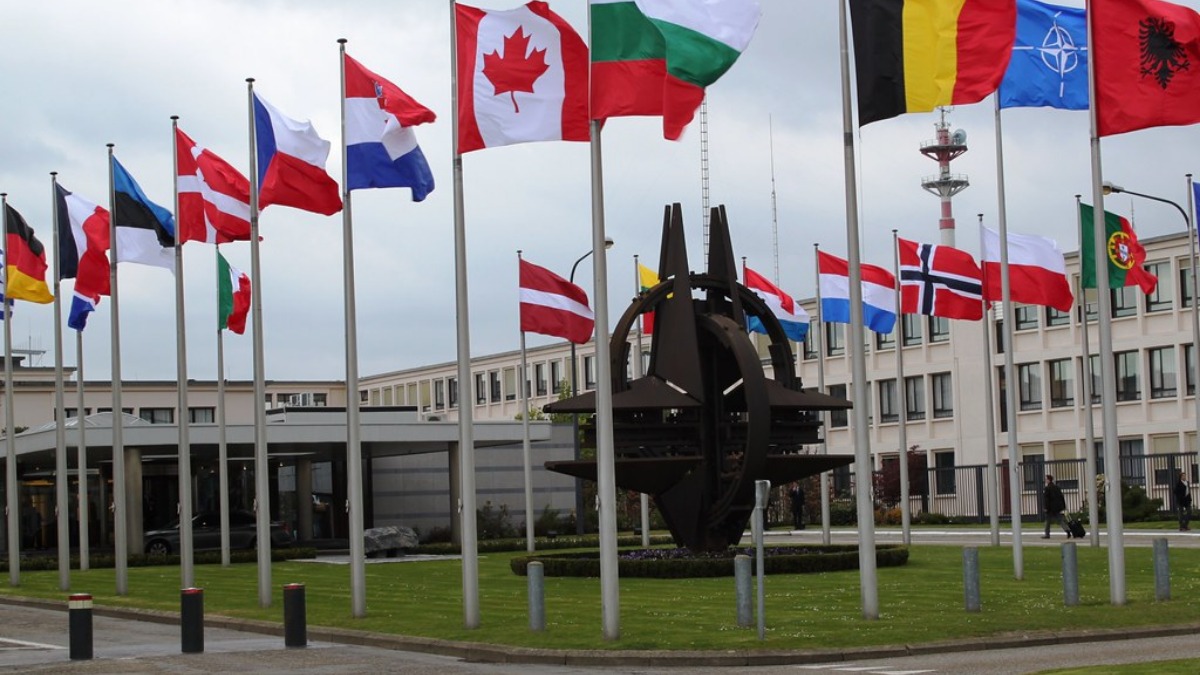

The Pentagon recently leaked plans to expand its military footprint in Greenland on the same day President Donald Trump escalated his criticism of NATO. As reported by CNBC, analysts are pointing to the timing as deliberate, arguing that while the base expansion may not signal an imminent invasion, it functions as a tool of intimidation. The U.S. is reportedly in active discussions with Denmark to gain access to three additional military bases in Greenland, which would mark the first significant American expansion in the region in decades.
This news arrives as the relationship between Washington and its European allies is under serious strain. In a post on Truth Social, Trump stated that NATO was not there when the U.S. needed support and that the alliance might not be there in the future. He also called Greenland a poorly run piece of ice, consistent with broader recent rhetoric that has included labeling the 32-member alliance a paper tiger and openly discussing the possibility of a full U.S. withdrawal.
The friction is largely driven by the war in Iran, which has now been ongoing for over a month. Many NATO allies have pushed back on U.S. requests ranging from securing the Strait of Hormuz to access to military bases. Spain closed its airspace to U.S. military planes involved in the conflict, with Prime Minister Pedro Sanchez describing the war as unjustifiable, prompting threats of trade cuts from the Trump administration. Italy denied U.S. bombers access to a base in Sicily, France refused to allow planes carrying military supplies to Israel to cross its territory, and the United Kingdom, while permitting some defensive use of its bases, has maintained that the conflict is not in its national interest.
The Greenland leak and the NATO attack landing on the same day is not a coincidence, analysts say
Michael Feller, chief strategist at Geopolitical Strategy, believes Trump cannot continue to attack the alliance without making it hollow. Feller argues that the timing of the Pentagon leaks about the Greenland bases is likely intentional, a signal that the U.S. is prepared to act independently of its traditional partners. This sentiment is echoed by Secretary of State Marco Rubio, who has noted that the current arrangement, where the alliance focuses on defending Europe without reciprocal support for the U.S., must be re-examined.
The situation is further complicated by the fragile state of the ceasefire in Iran. Parliamentary speaker Mohammad Bagher Ghalibaf claimed that Washington had violated the terms of the deal, and Israel has reportedly conducted heavy strikes on Lebanon, with Netanyahu separately declaring that the two-week truce does not extend to Israeli operations there. U.S. requests for a naval coalition to reopen the Strait of Hormuz have continued to be rejected by Germany, France, and Greece, underscoring the growing isolation of Washington from its traditional partners.
Trump himself has disputed accounts of the ceasefire’s terms, with his administration pushing back on reports about what was agreed to, even as Iran’s own foreign ministry confirmed the documents in question. The full picture of how the ceasefire was reached and what it covers remains disputed between the parties involved.
As first highlighted by Al Jazeera, the administration appears to be betting that a combination of economic pressure, potential military expansion, and a willingness to walk away from long-standing agreements will force a change in how allies interact with American interests. Experts have warned, however, that this approach risks permanent damage to the transatlantic bonds that have defined Western security for generations.








Published: Apr 10, 2026 06:00 pm