



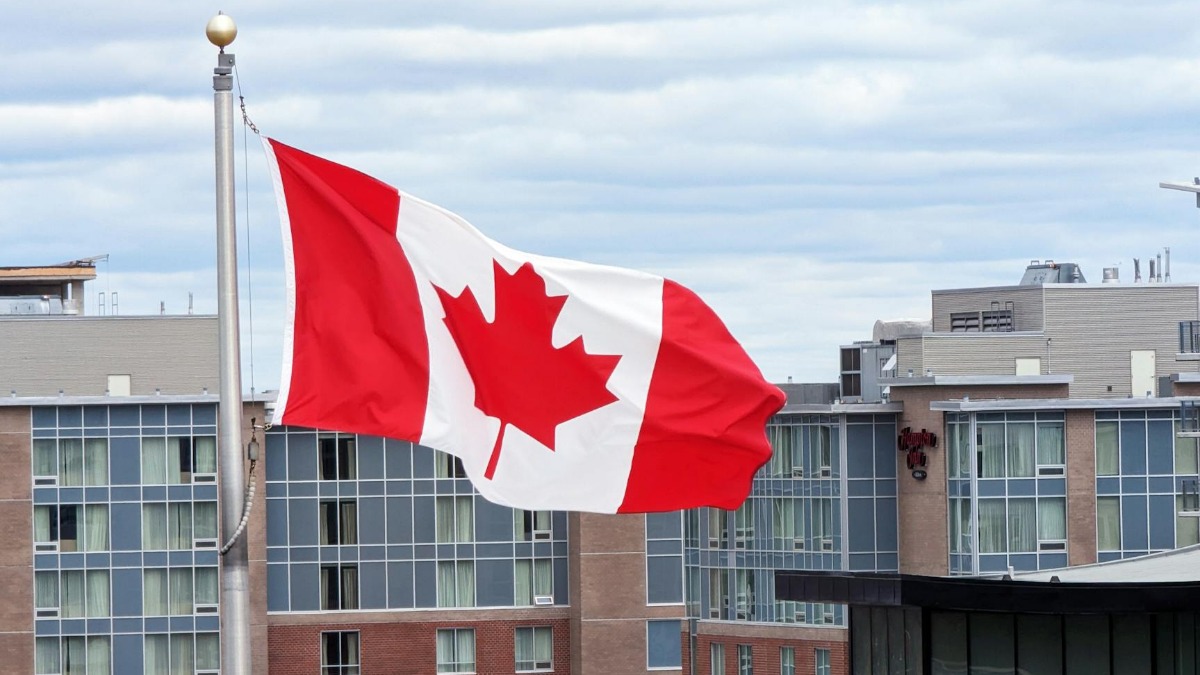

Millions of Americans are now eligible to claim Canadian citizenship thanks to a recent change in the law that removed the restrictive first-generation rule. This shift, brought about by the passage of Bill C-3 of Canada’s Citizenship Act, effectively reverses a policy that had been in place since 2009, CNN reported.
The legal landscape shifted back in 2023 when Canadian courts ruled the previous first-generation limit unconstitutional. This change officially took effect in December, allowing citizens to pass their status down to children born abroad. Immigration, Refugees and Citizenship Canada expects to see tens of thousands of applications as a result.
For people like Ellen Robillard, a 52-year-old resident of New York, this is a game-changer. Back in 2016, she looked into citizenship because of her mother’s roots in Nova Scotia, but found she couldn’t pass that status to her son.
It’s a massive change that’s suddenly opened a pathway for countless people to secure a second passport, often as a backup plan during times of uncertainty.
With the rules now updated, Robillard is actively applying for both of them. Robillard, who serves as the leader of her local Democratic Committee, has become increasingly disillusioned with the political climate in the US. Between dealing with burnout and receiving threats, she sees this as a crucial safety net. “If things start deteriorating here with our economy, I know that I can just get in the car and go. It’s an option anyway,” she says.
The surge in interest is being felt by experts across the industry. Cassandra Fultz, an Ottawa-based regulated immigration consultant, has seen her caseload jump from 10 to 100 applications per month. She’s been in the industry for 17 years and notes that this wave is different from anything she’s witnessed before.
While interest usually fades shortly after an election cycle, this current uptick has remained steady since November 2024. Archive services are seeing the impact too. The National Library and Archives of Québec reported that requests for vital records from the US jumped from 100 in February 2025 to 1,500 in February of this year.
Not everyone is looking for an exit strategy, though. Some applicants are simply motivated by a desire to reconnect with their heritage. Timothy Beaulieu, a 45-year-old from New Hampshire, has been exploring his French-Canadian roots for years. He even founded PoutineFest in 2016 to celebrate that culture. For him, the application is about a connection to his family’s history. “It really means a lot to me to be able to feel more connected to the place where our family came from,” he says.
Others, like 34-year-old Rachel Rabb, see the citizenship as a vital lifeline. After moving abroad to escape policies she feared, she found herself feeling insecure again due to recent geopolitical tensions. Discovering she had Canadian ancestry through a great-great-grandmother felt like a stroke of luck. She currently views Canada as her essential exit plan. “It was heaven-sent to discover that I have this Canadian ancestry, given the current political climate,” she says.
While some Canadians have expressed frustration online about the easier path for Americans, Fultz emphasizes that this update was all about correcting an unconstitutional and discriminatory policy. She points out that the goal is to foster equality, noting that many of these applicants are highly skilled professionals. As she puts it, “Basically, the outcome of this case is that a Canadian is a Canadian is a Canadian.”
Right now, the processing time for citizenship certificates for those applying from the US sits at 10 months. With over 50,000 people currently waiting for a decision, it’s clear that many Americans are taking this opportunity seriously, whether they plan to pack their bags immediately or just want the peace of mind that comes with having a Plan B.









Published: Apr 17, 2026 05:30 pm