



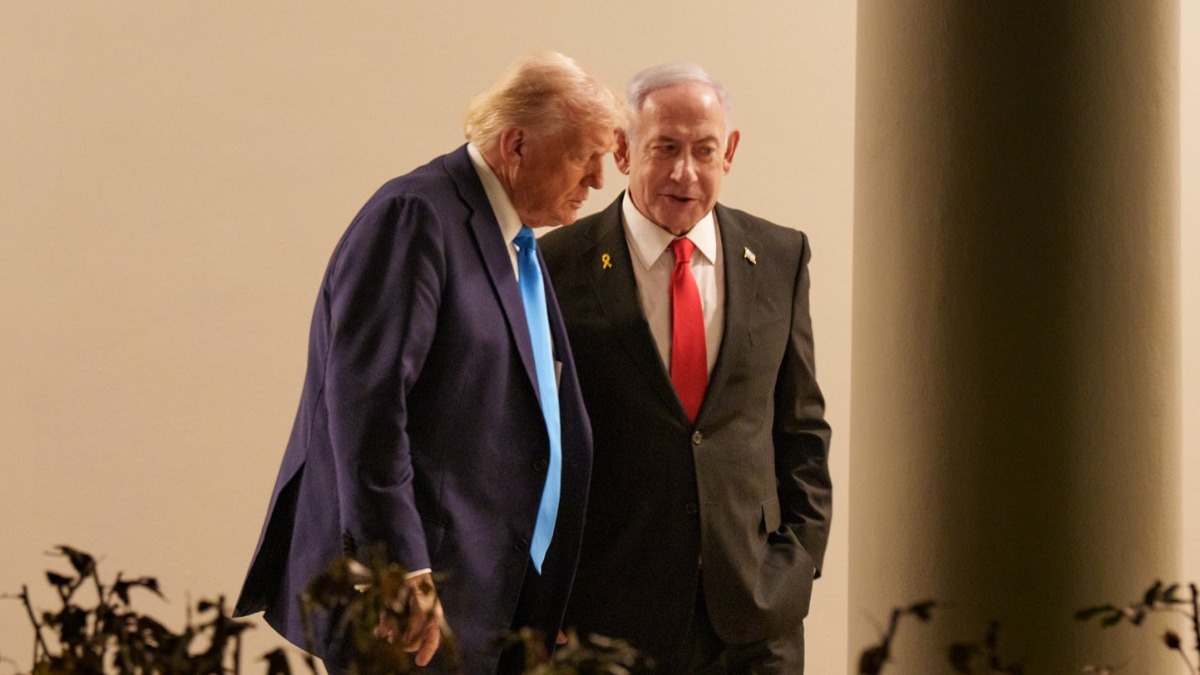

Israeli Prime Minister Benjamin Netanyahu and his team were caught off guard when President Trump posted on social media declaring that Israel was “prohibited” from conducting airstrikes in Lebanon. They found out the same way everyone else did: through the media. As detailed by Axios, Netanyahu was personally stunned, and his advisers were reportedly shocked as well.
Trump’s post used stark language: “Israel will not be bombing Lebanon any longer. They are PROHIBITED from doing so by the U.S.A. Enough is enough!!!” The declaration implied a direct order of a kind that would have been unthinkable under previous U.S. administrations.
The statement directly contradicted the ceasefire agreement between Israel and Lebanon that the State Department had published just the day before. That agreement explicitly stated Israel reserved the right to take military action “in self-defense, at any time, against planned, imminent, or ongoing attacks.” Israel had committed not to launch offensive military operations against Lebanese targets, but that self-defense clause was a core part of the deal.
Trump’s post threw Israeli officials into immediate damage control
Netanyahu’s government had already emphasized how politically sensitive the ceasefire was, making clear that Israel was not constrained from striking Hezbollah if necessary. Trump then doubled down in an interview: “Israel has to stop. They can’t continue to blow buildings up. I am not gonna allow it.”
Behind the scenes, Netanyahu’s aides, including Israeli Ambassador to Washington Yechiel Leiter, immediately worked to determine whether U.S. policy had shifted. Israeli officials asked the White House for clarification, stressing that Trump’s comments appeared to contradict the terms of the agreement. A U.S. official ultimately explained that the ceasefire agreement preserved Israel’s right to self-defense against planned, imminent, or ongoing attacks, bringing the position back in line with the original text.
Shortly before Trump’s interview, an Israeli drone conducted a strike in southern Lebanon on Friday evening. An Israeli source claimed Hezbollah had violated the ceasefire by attacking Israeli forces within the security zone, adding, “Our forces acted in self-defense to remove the threat in accordance with the ceasefire agreement reached with the United States and Lebanon.”
The 10-day ceasefire had officially begun on Friday, April 16, 2026, at 12:00 AM. It was intended to pause fighting between Israel and Hezbollah and potentially boost efforts toward a wider ceasefire involving Iran, the United States, and Israel. Notably, Hezbollah was not formally a party to the agreement, as Israel’s conflict has been with the Iranian-backed group operating within Lebanon, not with the Lebanese state directly.
The ceasefire’s start was met with a mix of celebration and caution. Residents in Beirut fired gunshots into the air just after midnight, and displaced families began moving toward southern Lebanon and Beirut’s southern suburbs. Officials warned them not to return until it was clear the truce would hold.
Netanyahu had publicly stated his agreement to the ceasefire was “to advance” peace efforts, while making clear Israeli troops would not be withdrawing. Israeli forces had pushed into southern Lebanon to establish a “security zone” extending 10 kilometers into Lebanon. Netanyahu declared, “That is where we are, and we are not leaving.” Hezbollah stated that Israeli occupation of Lebanese land “grants Lebanon and its people the right to resist it.”
The U.S. State Department’s wording preserved Israel’s freedom to strike in self-defense, but this time Hezbollah vowed to respond to any Israeli strikes. Even up to the start of the ceasefire, Hezbollah was still firing rockets at northern Israeli towns, with air raid sirens blaring less than 10 minutes before midnight in some border communities. It remains unclear when the roughly 1 million people displaced by the war will be able to safely return home.
The ceasefire came about following a meeting between Israel’s and Lebanon’s ambassadors in Washington and a series of calls from Trump and Secretary of State Marco Rubio. It marked the first direct diplomatic talks in decades between the two countries, which have technically been at war since Israel was established in 1948. Hezbollah had opposed these direct talks.
According to a White House official, Trump spoke with Netanyahu on Wednesday evening, who agreed to a ceasefire under specific terms. Rubio then contacted Lebanon’s president, Joseph Aoun, who also agreed. Trump then spoke with Aoun again, and then with Netanyahu once more, while the State Department worked with both governments to draft a memorandum of understanding.
Lebanon had insisted on a ceasefire before engaging in further talks, while also committing to disarming Hezbollah. Trump extended an invitation to both Israeli and Lebanese leaders to the White House for what he called “the first meaningful talks” between the countries since 1983. He expressed his belief that “Both sides want to see PEACE, and I believe that will happen, quickly.”
A Hezbollah official indicated the ceasefire was a result of Iran’s negotiations with the U.S., with Iran insisting Lebanon be included, and that Pakistan served as a mediator. Pakistan’s army chief met with Iran’s parliament speaker as part of broader international efforts to push for an extension to the ceasefire, which had paused almost seven weeks of war between Israel, the U.S., and Iran. The White House suggested future talks regarding Iran would likely take place in Islamabad, though no final decision had been made.
Amid the Strait of Hormuz restrictions impacting global oil flow, oil prices had fallen amid hopes for an end to the fighting, and U.S. stocks surpassed records set in January. Officials reported that the United States and Iran had an “in-principle agreement” to extend the ceasefire to allow for more diplomacy. Mediators were actively working toward a compromise on three major sticking points: Iran’s nuclear program, the Strait of Hormuz, and compensation for wartime damages.
The human cost has been severe, with at least 3,000 people killed in Iran, over 2,100 in Lebanon, 23 in Israel, and more than a dozen in Gulf Arab states, along with 13 U.S. service members. Trump suggested the ceasefire could be extended, telling reporters, “If we’re close to a deal, would I extend? Yeah, I would do that.” The war had jolted global markets and disrupted shipping worldwide, though the Trump administration’s broader foreign policy moves have kept diplomatic pressure elevated on multiple fronts.








Published: Apr 17, 2026 07:30 pm