



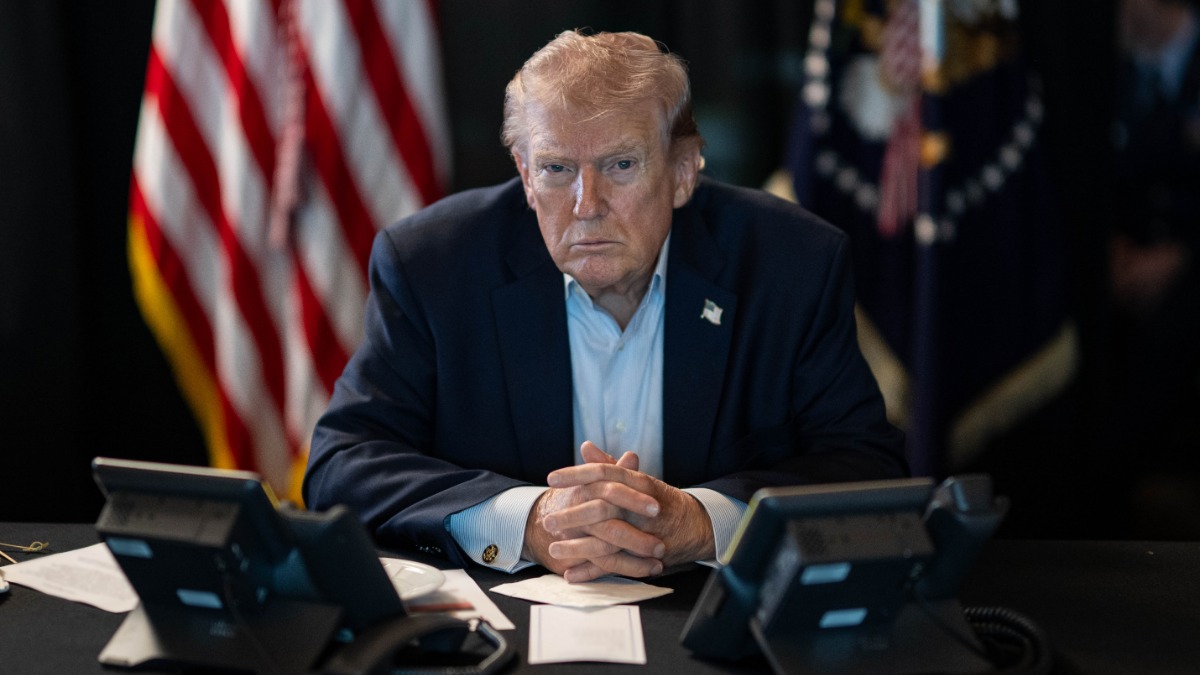

Donald Trump has officially announced plans to review US troop levels in Germany, a move that comes days after German Chancellor Friedrich Merz publicly suggested the American administration was being outplayed in its Iran negotiations. As first highlighted by The Guardian, the announcement has sharpened an already tense rift between Washington and its traditional European allies.
In a post on his Truth Social platform, Trump stated that his administration is studying and reviewing a possible reduction of troops in Germany, adding that a determination will be made over the next short period of time. The move arrives amid a period of sustained friction between the US and Europe, during which Trump has repeatedly threatened to withdraw from NATO altogether.
The dispute between the two leaders became public earlier this week. On Monday, Merz suggested the Trump team was being outplayed in its Iran negotiations, which were aimed at ending the ongoing conflict and reopening the Strait of Hormuz. Merz was blunt, noting that the Iranians are obviously skilled at negotiating, or rather at not negotiating, letting the Americans travel to Islamabad and then leave again without any result. He reiterated the criticism on Wednesday, pointing to the economic damage Europe has suffered from the continued closure of the strait.
The troop threat fits a pattern of actions designed to pressure European allies without formally leaving NATO
Trump, for his part, did not take the chancellor’s comments lightly. On Tuesday, he accused Merz of thinking it’s “OK for Iran to have a nuclear weapon” and said the chancellor “doesn’t know what he’s talking about.” Despite the exchange, Merz later claimed the relationship remains as good as ever.
This is not the first time Trump has signaled a shift in military posture toward Europe. On April 1, he stated he was “absolutely without question” considering withdrawing the US from NATO, citing European allies’ failure to support the US-Israeli operation aimed at securing the Strait of Hormuz. While outright withdrawal is considered unlikely by many observers due to a 2024 law requiring a two-thirds Senate majority or an act of Congress, experts have noted the White House could instead take steps that undermine the alliance without technically leaving it, such as pulling significant numbers of troops from the continent. Canada has drawn its own conclusions from the direction of US foreign policy, amid Carney’s sovereign wealth fund push intended to reduce dependence on a US partnership it no longer sees as reliable.
The scale of the American military presence in Europe is substantial. As of 2025, the US had nearly 84,000 servicemembers stationed across the continent, operating from more than 40 bases. Germany serves as the primary hub, housing the largest contingent of roughly 39,000 troops. Many of these bases are NATO interoperable, meaning US forces work directly alongside alliance officials across technology, information networks, and operations. Troops at Büchel Air Base, for instance, manage some of the B-61 nuclear bombs stored there.
Following Russia’s full-scale invasion of Ukraine in 2022, the US deployed an additional 20,000 soldiers to states neighboring Russia, Belarus, and Ukraine, bringing the total number of US personnel in Europe to fluctuate between approximately 75,000 and 105,000. That deployment was framed as a containment measure and a show of commitment to the region. The strategic rationale for that presence has not changed, even as the political signals from Washington have.
If the administration moves forward with a significant reduction, the process would be far from simple. The US and European militaries have spent decades integrating, and disentangling that relationship would be a complex undertaking. European allies currently pay about 34 percent of the operating costs for US bases, and the prospect of a withdrawal has already prompted several countries to increase their own defense spending. The Trump administration, for its part, has made clear it expects a larger share of costs from its partners. The broader political climate has also been shifting in ways that reflect growing European unease, with new US passports featuring Trump’s image adding to the sense that the administration is reshaping the symbols and structures of American power.
Some experts have warned that removing US troops would weaken the credibility of NATO’s Article 5, the collective defense commitment that underpins the entire alliance. There is also the question of the nuclear umbrella. Roughly 100 tactical nuclear weapons are currently housed across Germany, Belgium, Italy, the Netherlands, and Turkey, and the removal of that deterrent could leave a gap that other powers might seek to exploit.




Published: Apr 30, 2026 06:30 am