



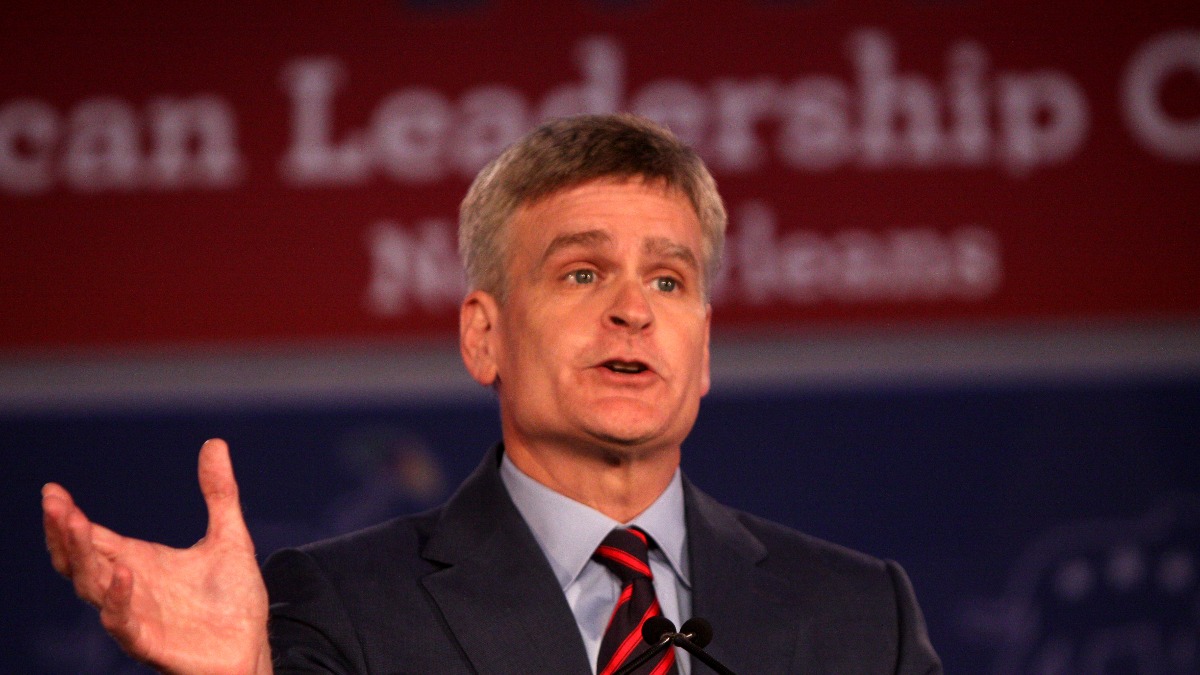

Republican Senator Bill Cassidy has lost his primary in Louisiana, paving the way for a runoff election after Donald Trump pushed hard to remove him from office. This is a major blow to Cassidy, who was seeking a third term in the deep-red state but was put in a difficult spot because of his vote to convict Trump following the January 6 insurrection.
The Guardian points out that Cassidy’s re-election campaign had already been struggling, but things got worse when he voted to advance vaccine skeptic Robert F. Kennedy Jr.’s nomination to lead the Department of Health and Human Services. This went against Cassidy’s own background as a physician and his long-standing support for vaccines. The move was widely seen as an attempt to win back Trump’s favor, but it did not work.
Trump’s push to remove Cassidy started earlier this year when he encouraged US Representative Julia Letlow to enter the Senate race. Trump endorsed Letlow and went after Cassidy on social media, calling him “a disloyal disaster” and “a terrible guy.” Trump also brought up Cassidy’s impeachment vote, predicting he would “get CLOBBERED” and saying Letlow was “a winner who will NEVER let you down.”
Trump’s endorsement of Letlow proved to be the deciding force in Louisiana’s Senate primary
With 98% of the vote counted, the Associated Press reported that Letlow received 45.2% of the vote. John Fleming, the state treasurer and former US Representative, came in second with 28.3%. Cassidy trailed behind with 24.4%, which still earned him a spot in the runoff election scheduled for June 27.
In her victory speech, Letlow thanked Trump directly, saying, “There is no greater endorsement than the endorsement of President Trump. We’ll always be singing that from the mountaintops.” She also pointed to Cassidy’s impeachment vote, stating, “Louisiana was not pleased with that vote. They took that as a sign that he had turned his back on the Louisiana voters.” Trump’s political reach has extended well beyond Senate races, as seen in how Trump’s family profits from airport naming deals that have raised serious questions about conflicts of interest.
Cassidy, for his part, responded without mentioning Trump by name, saying, “Insults only bother me if they come from somebody of character and integrity, and I find that people of character and integrity don’t spend their time attacking people on the internet.” He added that “our country is not about one individual” and that it’s about “the welfare of all Americans, and it is about our Constitution.”
Cassidy’s defeat is a clear warning to Republicans about what can happen when they break with Trump on big issues. Earlier this month, five of the seven Republican Indiana state senators who blocked a Trump-backed gerrymandering effort lost their own primaries. In North Carolina, Republicans are also scrambling to hold on to a Senate seat after Thom Tillis chose to retire following his break with Trump over a key domestic policy bill.
Louisiana’s Republican Party had censured Cassidy after his impeachment vote, joining six other Republican senators who voted to convict Trump, most of whom have since left office. Cassidy’s troubles only grew when he later backed an independent commission to investigate the January 6 insurrection and called on Trump to drop his 2024 re-election bid after Trump was indicted for allegedly keeping classified materials.
Meanwhile, Trump’s influence on the global stage continues to draw attention, particularly as the US and China edge closer to conflict in a standoff that experts have been warning about for years. Changes to Louisiana’s primary system, introduced by Republican Governor Jeff Landry in 2024, may have also hurt Cassidy’s chances. Under the new rules, candidates are nominated only by party members and unaffiliated voters, which likely made it harder for Cassidy to survive.








Published: May 17, 2026 07:30 am