



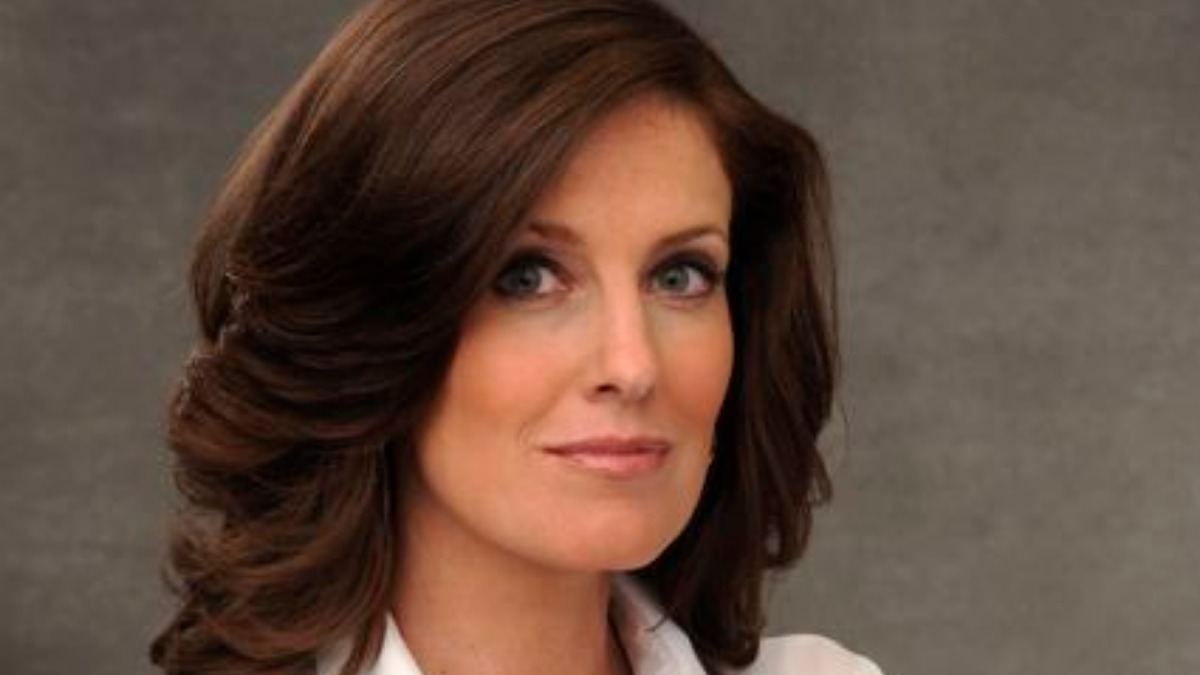

CBS News has decided not to renew its contract with “60 Minutes” correspondent Sharyn Alfonsi, a move that comes six months after her segment on Salvadoran prisons was abruptly pulled from airing by the news division’s editor in chief, Bari Weiss, the New York Times reported. Alfonsi’s deal officially expired on Saturday, and she shared in a phone interview that her agent’s attempts to reach CBS News in recent weeks had been met with complete silence.
“It sends a chilling message to the entire newsroom,” Alfonsi said. “I think it was a deliberate choice to penalize a journalist for refusing to sanitize accurate reporting.” While she’s still technically employed by CBS, without a contract, she doesn’t expect to return to “60 Minutes.” She’s not backing down though, stating, “I’m not resigning. If they want me gone because I did my job, they’ll have to fire me.” CBS News, for its part, has declined to comment on Alfonsi’s remarks.
Alfonsi found herself in the middle of a major controversy back in December. Weiss, who was appointed by CBS’s new owner David Ellison, pulled a 13-minute segment Alfonsi had reported. The segment was about the harsh conditions faced by Venezuelan men who had been deported by the Trump administration.
The segment eventually aired in its entirety about a month later, with additional comments from the Trump administration included
Alfonsi didn’t hold back, calling the decision “political” in an email to her colleagues. Weiss, however, pushed back on that accusation, saying the reporting “was not ready.” She had suggested some last-minute editorial changes, including trying to get an interview with Stephen Miller, who was a key figure in President Trump’s immigration policy.
Meanwhile, Weiss, an opinion journalist whose time at CBS has really drawn a lot of attention, is apparently gearing up for a significant shake-up at “60 Minutes.” Her ideas reportedly include bringing in a bunch of new contributing journalists, adding shorter digital segments, and even developing “60 Minutes”-themed live events, kind of like The New Yorker Festival, where viewers could actually meet star correspondents such as Lesley Stahl. There’s also some uncertainty surrounding the program’s executive producer, Tanya Simon, with Weiss considering bringing in an outside journalist to either oversee or work alongside Simon.
Any re-engineering of “60 Minutes” by Weiss would be a pivotal moment in her tenure and a pretty big gamble. This show, which first hit the airwaves way back in 1968, is still the country’s highest-rated television newsweekly. Its viewership this season was actually up 9 percent from the previous year, according to Nielsen.
This stands in contrast to Weiss’s other major initiative, the remaking of “CBS Evening News,” which has struggled with low viewership and some embarrassing errors. For example, the network couldn’t even secure a visa for the show’s anchor, Tony Dokoupil, to visit China for President Trump’s recent diplomatic trip. That even led to some mockery from the former CBS late-night host Stephen Colbert.
“60 Minutes” has always had this long tradition of autonomy within CBS News, which has caused tension for network executives for generations. Alfonsi expressed her anxiety about the program’s future in the interview. “For the last 60 years it’s been the same formula: tell the truth, hold the power accountable, don’t blink,” she said. “And it’s unclear what next season looks like.”
She added, “There’s a feeling that the wall has come down between editorial independence and corporate interests. The concern is we’re going to end up with a broadcast that looks like ‘60 Minutes’ but doesn’t have the courage or the character to produce ‘60 Minutes’ journalism that actually matters.”
The uproar over that Salvadoran prison segment was partly fueled by Alfonsi’s email criticizing management, which is a rare move in the network news business. Some CBS executives privately called her actions insubordinate. But Alfonsi isn’t regretting it at all. “I know they said that I was being difficult, but I believed I was doing my job,” she shared.
Alfonsi would be the second “60 Minutes” correspondent to leave since Weiss joined CBS. Anderson Cooper announced in February that he would be departing the program after two decades. In a farewell appearance this month, Cooper told viewers that he hoped “’60 Minutes’ remains ‘60 Minutes,’” and added some comments that many perceived as a subtle jab at CBS: “The independence of ‘60 Minutes’ has been critical. The trust it has with viewers is critical to the success of ‘60 Minutes.’”






Published: May 27, 2026 06:00 pm