



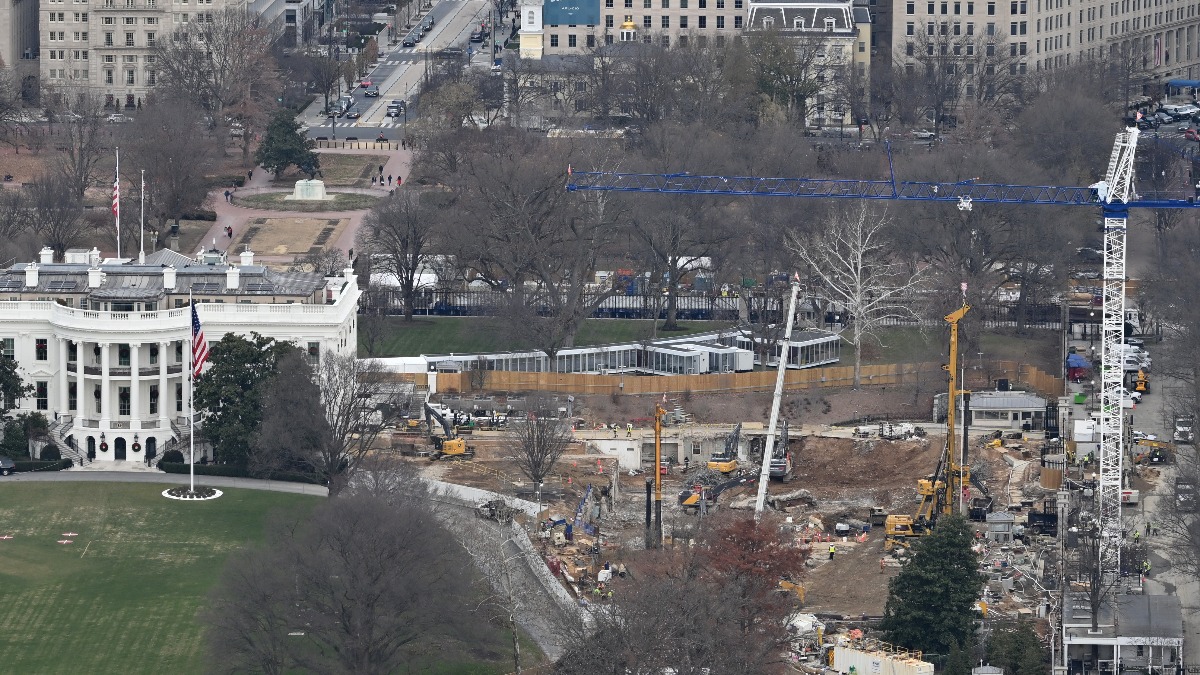

Politico reports that the Justice Department is arguing that courts do not have the power to stop construction of the new White House ballroom, even if the project is found to be illegal. During a hearing, government lawyers said the project has moved too far along and involves important national security interests that outweigh legal challenges.
This argument was made before a three-judge panel of the U.S. Court of Appeals for the District of Columbia Circuit. The judges showed strong doubt about the administration’s claim that it can act outside of court oversight simply by moving quickly.
Judge Patricia Millett questioned the idea that the government could carry out actions that cannot be undone, such as tearing down the East Wing, without facing any consequences. When Judge Millett asked whether the government could in theory knock down the Statue of Liberty and stay safe from court action because of how fast it moved, Justice Department attorney Yaakov Roth replied, “I think that’s right, yes.”
The lawsuit and the parties behind the legal dispute
Roth went on to confirm that if the government acts fast enough to make something a done deal, he believes the courts cannot step in. The legal fight centers on a lawsuit filed by the National Trust for Historic Preservation. The group says the White House grounds are protected and cannot be changed for a new use without clear approval from Congress.
The Trust argues that the size of the ballroom project, which required tearing down the East Wing, is very different from earlier, smaller additions like tennis courts or a pool. Tad Heuer, an attorney for the National Trust, said the Constitution gives Congress control over federal property and argued that the administration is avoiding the law-making process.
President Donald Trump has rejected the lawsuit, reportedly saying in a social media post that it was “brought by a woman walking her dog, who has absolutely No Standing to bring such a suit.” The Justice Department has faced other legal action over withheld audio recordings in separate matters.
According to court records, the case is brought by the National Trust, which set up its standing through Alison Hoagland, a historian and retired professor. Those records show that Hoagland’s declaration makes no mention of a dog.
During the hearing, Roth said the concerns about appearance raised by the National Trust must come second to the national security needs cited by the White House. He argued that the balance of interests strongly favors the project, describing the dispute as a matter of architectural preference versus the safety of the President.
According to Roth, if a court found the project illegal, the only proper fix would be for Congress to step in, not the courts. He pointed to the large size of the construction, noting that workers have already installed about 3 million pounds of steel rebar.
The D.C. Circuit had earlier paused a lower court ruling from March that first halted construction, which let the work continue while the case moves forward. Judge Bradley Garcia joined Judge Millett in questioning the administration’s broad view of executive power, while Judge Neomi Rao asked whether the National Trust had the grounds to sue at all.
The administration’s approach to clemency has also drawn attention, including reports that Trump’s pardon attorney reviewed a clemency bid personally. The administration continues to treat the ballroom’s completion as a personal goal for President Donald Trump.









Published: Jun 6, 2026 10:15 am