



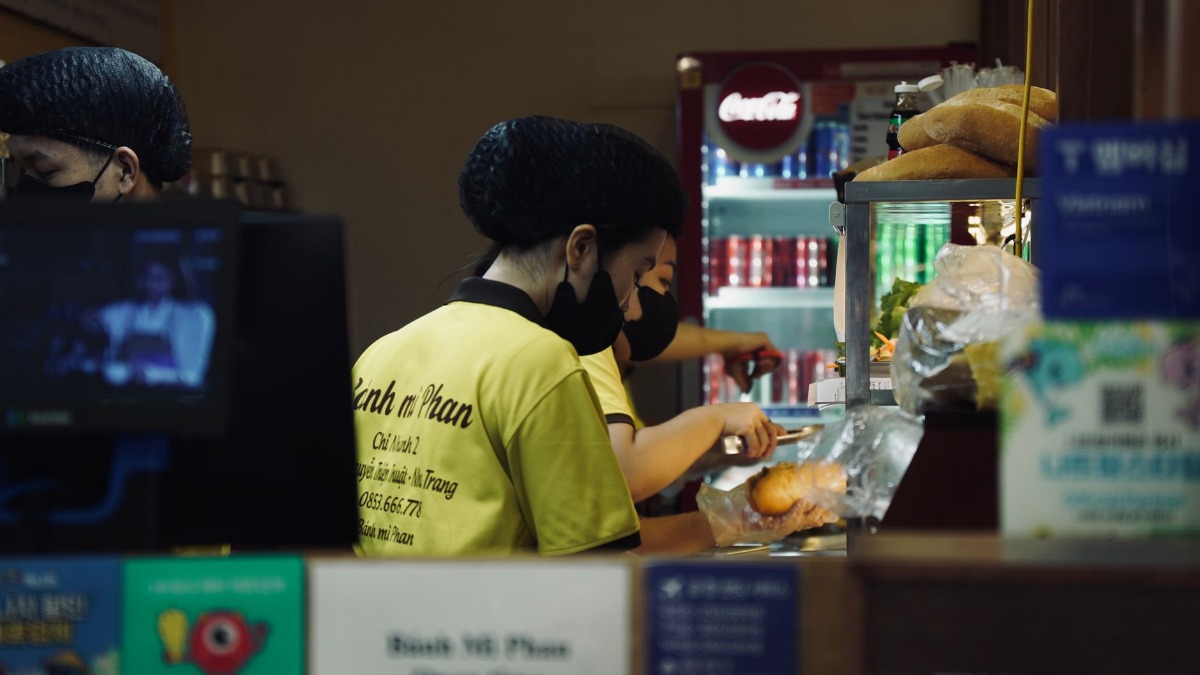

A new worker was fired just three hours into their first-ever shift at a fast-food restaurant after the owner decided they were not packing burgers fast enough. The story gained traction when reported by the Daily Dot, after a Reddit user going by @Educational-Keys4235 posted about the experience on the r/RecruitingHell community.
The worker had been given brief training before being left to handle tasks on their own once customers started arriving. Their main struggle was matching the owner’s expected pace while wrapping and packing burgers, an issue that would lead to their dismissal after serving just four customers.
According to the U.S. Bureau of Labor Statistics, food and beverage serving roles typically require only short-term on-the-job training and no prior experience or formal education. Building speed through repetition is considered a standard part of the learning curve for these positions.
The owner’s reasoning left more questions than answers
After pulling the employee aside, the owner told them the job was not a good fit because they lacked basic knowledge. The owner added that it was a role where workers are supposed to “learn on instinct,” a phrase that drew widespread confusion online. The owner apologized for the worker’s wasted time and confirmed they would be paid for the three hours worked. The employee closed their post by writing, “I guess you’re not allowed to make mistakes or be slow during your first day ever at a new job.”
The post has since drawn nearly 10,000 upvotes and over 1,700 comments, with the overwhelming majority of Reddit users siding with the worker. Many pointed out that speed is a product of repetition and muscle memory, not something a first-day employee can reasonably be expected to have.
One commenter wrote, “Do these managers understand it can take a little time for ‘muscle memory’ to kick in?” Another added, “Speed takes time and repetition to build, even if you have a sense of urgency.” The reaction echoed similar frustration seen in other workplace stories, including the recent viral story of a TikToker’s Burger King complaint about fast-food quality standards.
Others pushed back on the idea that a first-shift termination could be justified without a behavioral or safety concern. One user noted, “Any reasonable boss would give someone a full day at least to get up to speed, unless the employee snapped back in a way that was perceived in a bad way.” Amid broader conversations about professional learning curves, a Michigan tattoo artist’s on-the-job error recently went viral after she described the permanent consequences of a spelling mistake made early in her career.
The Bureau of Labor Statistics notes that food and beverage serving employment is projected to grow, with millions of workers currently filling these roles across the country. The worker confirmed they were paid for the three hours they spent on the job.








Published: Jun 11, 2026 09:30 am