



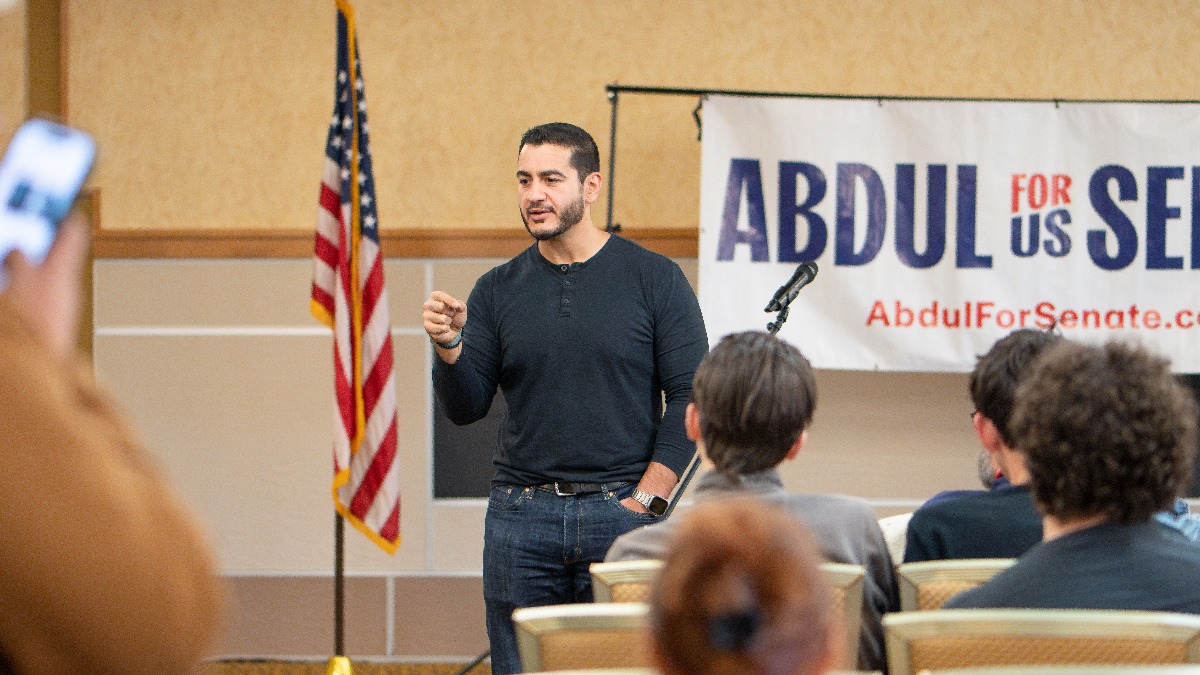

According to Mediaite, Sen. Tim Scott (R-SC) faced questions from CNN’s Manu Raju on Capitol Hill about a new attack ad targeting Michigan Senate candidate Abdul El-Sayed. The ad, released by the National Republican Senatorial Committee (NRSC) on Friday, refers to El-Sayed by his full birth name, Abdulrahman Mohamed Abdul El-Sayed, instead of the name he commonly goes by.
Scott chairs the NRSC, which works to get Republican candidates elected. The committee is backing Rep. Mike Rogers (R-MI), who is running against El-Sayed, a Democrat, in the Michigan Senate race.
Raju asked Scott directly whether using El-Sayed’s full name in the ad was meant to draw attention to his religion. Scott responded, “Not at all,” and said the ad was focused on El-Sayed’s political positions.
Scott defends the ad’s focus on El-Sayed’s policy views
During the interview, Scott said El-Sayed was making it easier for a Republican to win the Michigan Senate seat. He explained this was because El-Sayed holds positions that do not align with most Michigan voters. Scott listed some of these positions, including support for defunding the police, defunding Immigration and Customs Enforcement (ICE), and eliminating the concept of a border.
Raju then pointed out that the ad used El-Sayed’s full name, Abdulrahman Mohamed Abdul El-Sayed, even though the candidate commonly goes by Abdul El-Sayed. Raju asked, “And I saw your early attack ads against him. You’re using his full name in these attack ads, which has gotten some attention: Abdulrahman Mohamed Abdul El-Sayed. He goes by Abdul El-Sayed. Are you trying to say ‘hint, hint’ to voters, ‘He’s Muslim?'”
Scott replied, “Not at all. What we’re only saying to voters is a simple thing. He’s saying he’s the most dangerous candidate you can find. He’s right.” He added, “We should trust his words, not ours.”
El-Sayed won a competitive primary earlier this year, and voters can read more about his path to winning the primary despite facing millions in outside spending against him.
Raju followed up by asking why the campaign did not simply use the name El-Sayed goes by. Scott responded, “Well, listen. I go by Timothy Eugene. And, so, I get called that all the time.”
He then shifted the conversation back to El-Sayed’s public statements and associations, saying, “Here’s what I know without question: it’s about what he stands for. And we’re going to focus and bring attention to the fact that not only is he sympathetic for Hamas, not only does he run around with Hasan Piker – someone who said that Americans deserved 9/11 – he should be held account for exactly where he stands and what he’s for.”
The ad itself shows El-Sayed standing next to Hasan Piker, a left-wing internet personality who has drawn criticism for his commentary. A voiceover in the ad states, “Abdulrahman Mohamed Abdul El-Sayed, the most radical Senate candidate in America.” The ad then shows an edited clip of El-Sayed saying, “I’m pretty damn dangerous!”
According to the article, El-Sayed’s full quote was said in a different context. His complete statement was, “If you’re Chuck Schumer, I’m pretty damn dangerous.”
El-Sayed has since said he meant that he is a challenge to established political figures and institutions, not a threat in a general sense. This is not the first time El-Sayed has responded publicly to criticism from political opponents; he also pushed back against a similar attack from Trump earlier in his campaign.
Critics have compared the ad’s use of El-Sayed’s full name to a tactic once used by Donald Trump, who frequently referred to former President Barack Obama by his full name, Barack Hussein Obama. Some saw that repeated use of Obama’s middle name as an attempt to highlight his connection to Islam through his family background.
The exchange between Raju and Scott took place during a Capitol Hill interview and centered on the ad’s wording and Scott’s explanation for it. Scott maintained throughout the conversation that the ad’s purpose was to inform voters about El-Sayed’s political stances, not to reference his religion.




Published: Aug 10, 2026 09:30 am