




Tesla has officially rolled out its Full-Self Driving (Supervised) system in China, but a rather bizarre and concerning trend has emerged alongside it. Drivers are finding clever, albeit dangerous, ways to bypass the in-cabin monitoring systems that are supposed to keep them focused on the road.
Instead of keeping their eyes glued to the pavement, some Tesla owners in China are using miniature plastic doll heads to trick the car’s camera into believing an attentive human is behind the wheel, Wired reported. It is honestly wild that such a high-tech system can be fooled by something you might find in a toy store.
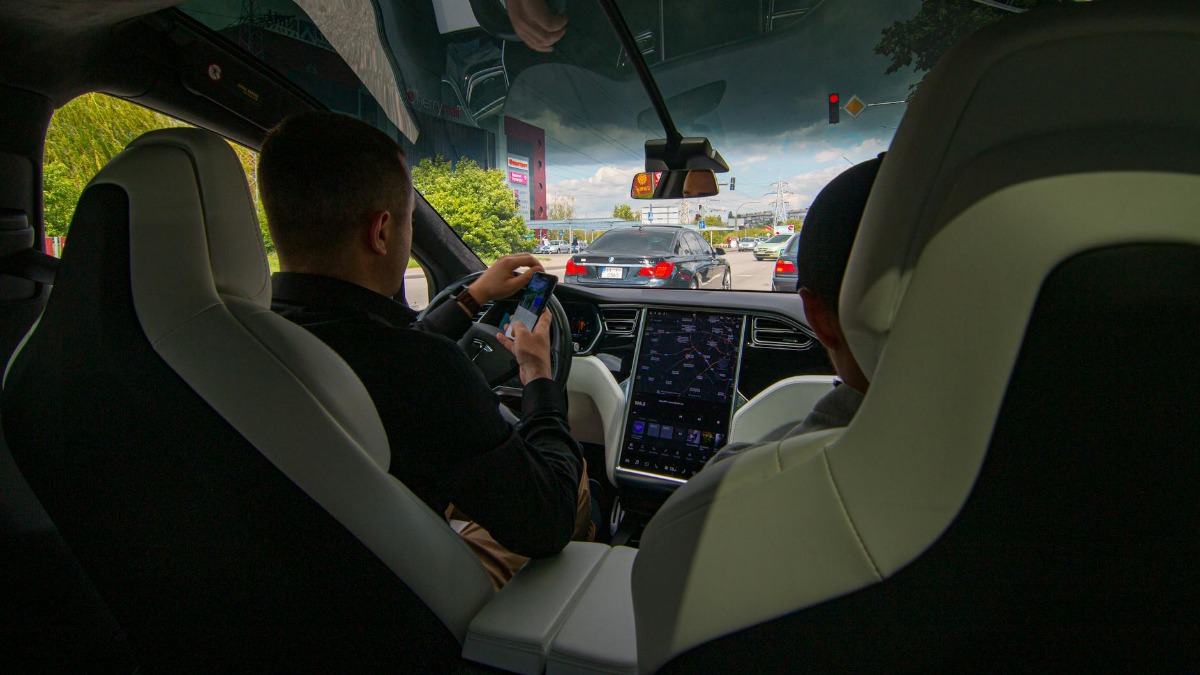
For anywhere from $10 to $40, you can pick up a small replica of a celebrity head, with popular options including The Rock, Cristiano Ronaldo, and Lionel Messi. These figurines are typically about the size of a ping pong ball. Drivers carefully position them on the car’s ceiling, windshield, or the rearview mirror to obstruct the view of the actual driver. Because Tesla places its driver-monitoring camera above the rearview mirror rather than on the A-pillar or behind the steering wheel like most other automakers, this placement effectively blinds the system to the driver’s true behavior.
The setup is remarkably simple and cheap
One anonymous Tesla Model 3 owner shared that he used a miniature head resembling The Rock during a recent road trip. He claimed it worked perfectly for about 250 miles of a 400-mile journey. By using the fake head to block the camera, he was able to go 30 minutes at a time without the car interrupting him, even while he was busy snacking on sunflower seeds or filming his drive. During his own experience sharing tips on a Chinese video platform, he noted, “You should buy a toy head about the size of a ping pong ball.” He added, “If it’s too small, the camera won’t be able to focus on the toy.”
This is not the only way drivers are subverting these safety safeguards. Some owners have turned to even simpler methods, like taping photographs in front of the camera. Others are using lenticular images, which are those classic novelty prints that change appearance when viewed from different angles. By using these, the images can appear to blink or shift as the car moves, creating a convincing illusion of life for the sensor.
Perhaps the most advanced workaround involves using tiny, pocket-sized display panels that play a looped video of a person’s face blinking and moving naturally. One seller claimed these screens have a zero percent error rate and have already been sold to users in the United States, Canada, and Korea.
It is worth noting that Tesla’s current driver-assistance features in China are not fully autonomous. They include cruise control, autosteering, and autopilot for certain roads. Because these are supervised systems, the car is designed to monitor the driver constantly.
If the camera detects that a driver is looking away for a few seconds, it issues a warning. If the driver fails to comply, the car can shut off the autopilot mode or even issue a week-long ban on using the assistance features. This cat-and-mouse game between Tesla’s software updates and these DIY hacks has been ongoing since October, when Tesla pushed an update to activate distracted-driver monitoring in the country.
Drivers have a long history of trying to circumvent these safety controls. In other markets, people have experimented with wearing sunglasses to hide their eyes or attaching weights to their steering wheels to mimic the sensation of a hand resting on the wheel. Some users have even sought out older vehicle models that feature less sophisticated sensors. When Tesla initially tried to combat these tricks by warning owners that driver-assistance features would stop working if the camera was obstructed, it only seemed to push users toward more creative solutions like the doll heads.
It is surprising that such a sophisticated AI-based system can be so easily fooled by a plastic toy. While these gadgets currently appear to be a niche market with only a few dozen units sold per listing, the potential for harm is clear. Many people on Chinese social media have been vocal about their disapproval, comparing these workarounds to devices that allow drivers to bypass seatbelt alarms. It is a massive trade-off, where people are choosing temporary convenience over their own safety.
So far, Tesla has not released any public statement regarding these doll heads or whether they plan to issue a software update to specifically detect and prevent these workarounds. It is hard to imagine they will let this continue indefinitely, but for now, the cat-and-mouse game continues. If car companies really want to convince the public that their driver-assistance systems are safe and reliable, they have a lot more work to do to secure these monitoring technologies against such simple tricks.


Published: Jun 16, 2026 05:30 pm