



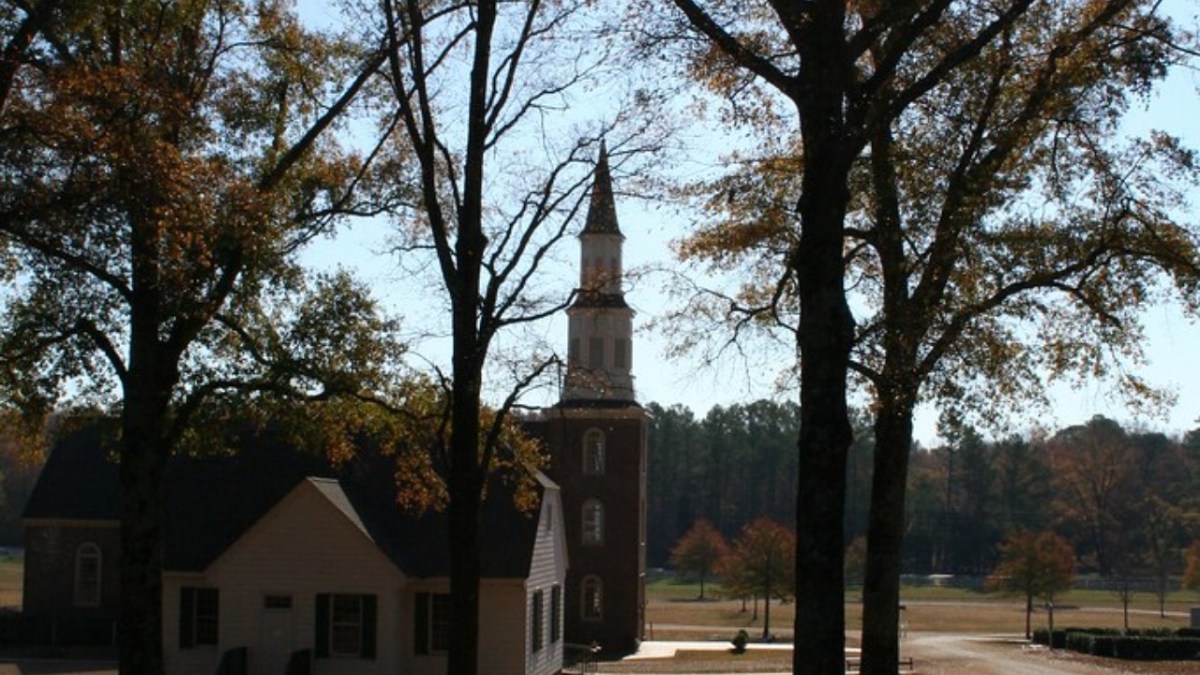

A new Associated Press-KFF survey of 2,241 rural registered voters found that about half said the economy is worse now than when President Donald Trump returned to office. The interviews ran from Aug. 12 to Aug. 24, 2026, using a sample drawn from the probability-based SSRS Opinion Panel. The margin of sampling error for the full sample was plus or minus 3 percentage points.
According to Associated Press, about half of those rural voters also approved of Trump’s job performance. That share was higher than the one-third who approved in a July AP-NORC poll of U.S. adults overall. An earlier KFF-Washington Post survey had put rural approval at 56%.
Only about 4 in 10 rural voters approved of Trump’s work on the economy. They gave him a similar rating on his handling of the Iran war. Pocketbook issues and government program fraud ranked higher for them than gun policy or abortion when they were asked what they wanted candidates to discuss.
Grocery, gas and healthcare costs rank as the leading worries
The poll found broadly negative views of both the national economy and local conditions, including among many Republicans. Groceries, gas, and healthcare were listed as the main pressure points. A larger share of rural voters than voters overall said they worried about paying for groceries or gas.
About three-quarters of rural voters rated the cost of living in their communities as “only fair” or “poor.” That was 25 percentage points higher than the answer to a similar question in a 2017 KFF-Washington Post survey. Tim Slack, a sociology professor at Louisiana State University and co-author of “Rural and Small-Town America,” said rural wages have lagged suburban and metro pay for decades.
“Many folks are connecting the cost-of-living crisis to many of the Trump administration’s policy choices: the war in Iran, tariffs, trade wars,” Slack said. “None of those things are going to bring down prices at the pump or the local Walmart.” He also said, “Trump promised to lower prices on Day 1, and instead the cost of living’s continued to climb. And that’s especially painful in rural America.”
Rural Republicans described the national picture more positively than rural Democrats or independents. This disconnect between national and local perceptions is part of a broader national pessimism, as a recent poll shows only 23% of voters rate the economy excellent or good.
About 6 in 10 rural Republican voters said Trump has improved the national economy, compared with about 2 in 10 independents and fewer than 1 in 10 Democrats. Only 45% of rural Republican voters said he has made their local economies better off. About 1 in 4 said there are fewer good-paying jobs where they live than five years ago.
Only 17% of rural voters said the administration’s healthcare policies have had a “positive impact” on their healthcare costs. Another 41% said the policies have had “no impact,” and 41% said they have had a “negative impact.” More than 8 in 10 said they had heard “a little” or “nothing at all” about the Rural Health Transformation Program in last year’s tax and spending law. About 60% said they had heard nothing.
Nine in 10 rural voters said it was “extremely” or “very” important for candidates to talk about healthcare costs. More than half called it “extremely important.” Kathleen Hanning, a 71-year-old Democrat in Woolwich, Maine, said she stopped voting for Republican Sen. Susan Collins in 2020. Collins and Trump are “intertwined,” Hanning said. “She is not independently voting on what’s best for Maine.” She also said, “hospitals up here in Maine are consolidating.”
Rural voters generally named their own party when asked whom they trusted more on healthcare costs or the cost of living. About 8 in 10 Democratic voters said they trust Democrats on healthcare costs. Closer to 6 in 10 Republican voters said they trust Republicans on the same issue. About 48% of rural voters said the GOP respects people like them “a lot” or “some.” Forty-five percent said that about Trump, and 37% said it about the Democratic Party.
Ed Westrick, 59, a registered Republican and veteran near Commerce, Texas, called Trump’s job performance “mediocre, middle-of-the-road.” He said he was not sure he would vote in the midterms. “I hear the politicians talk about making groceries more affordable and making healthcare more affordable, but yet none of them are addressing the issues,” Westrick said.
Brittainy Sosebee, a 37-year-old independent in St. Johns, Michigan, said she was not sure she would vote in the state’s fall election. She said she once had money left for a vacation or a new pair of jeans, and now watches every expense. “We hunt, so we have a lot of venison and things like that, so we don’t have to buy meat from the grocery store, but it’s still crippling,” she said.
Wanda Rogers, a 66-year-old Republican in Manassas, Georgia, said she thinks the administration is doing the best it can. “I kind of think people think like I do, that he knows what needs to be done,” she said. “It’s just taking them a while to get it there.” She also said, “gas prices, they’re eating me alive right now.”
Pamela Shaw, 59, an independent near Asheville, North Carolina, said, “When hamburger is over $7 a pound and steak is $15 or more a pound, a lot of people are not able to buy some of the things that they are used to buying.” Asunta Washington, 38, a truck driver in South Texas, said, “Like a lot of people that are giving us promises and the moment they get elected, all that’s out the window.”
Nate Lawrence, a middle-school English teacher and registered Republican in New Concord, Ohio, said he filled his Chevy Equinox for $57 and wants candidates to talk about spending power. “I need to be able to go to the store and feed my family on what I make as a teacher,” Lawrence said. “I should be able to pay for a house on a teacher’s salary.” He also said, “Trump said that, and it didn’t happen.”
Nicholas Jacobs, a political scientist at Colby College and co-author of “The Rural Voter,” said close Senate races in states with large rural populations may give Democrats an opening. “But it’s nothing more and it’s nothing less than that – an opportunity,” Jacobs said. “And time and time again, Democrats have shown a certain proclivity for not seizing that opportunity.”


Published: Sep 24, 2026 10:00 am