


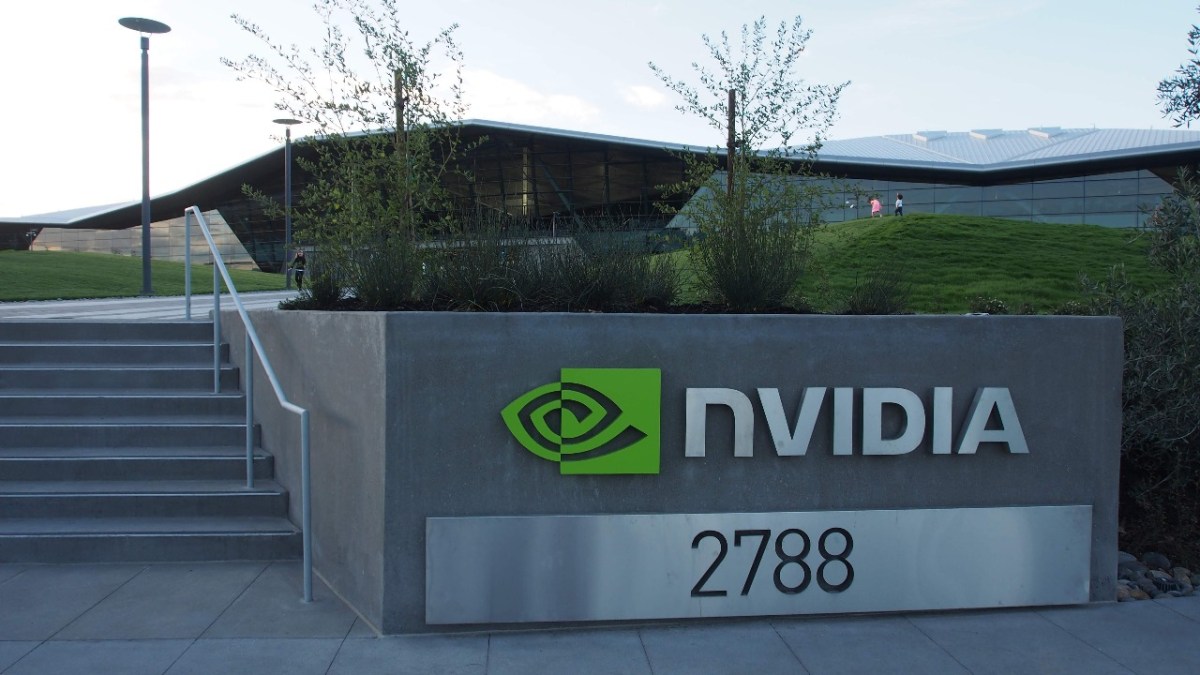

Jensen Huang has returned as Nvidia’s chief executive after stepping away following an extramarital affair with Alice Huang, an executive at customer company Megaspeed International. Some U.S. officials suspect Alice Huang of having worked with Chinese intelligence. She no longer works at Megaspeed and could not be reached for comment.
Huang resigned from the company but was brought back after President Trump intervened with Nvidia’s board. U.S. officials also informed the board that he did not pose a national security risk. Upon his return, he disclosed additional affairs to the board and told employees he had violated the company’s code of conduct.
Separately, Nvidia sales executive Jay Puri dated and later married Cenly Chen, who held a senior role at Super Micro Computer, according to the Wall Street Journal. Co-workers at both companies said the relationship lasted several years while Super Micro sought greater access to Nvidia’s chips. The couple married on March 7 in Big Sur, California, according to records.
Federal charges and company statements surrounding Super Micro and Nvidia ties
Chen, as chief growth officer, regularly worked with Puri and joined Super Micro’s chief executive on visits to Nvidia offices to request chip supplies, employees said. In sales meetings, she told colleagues to come to her with any Nvidia-related questions.
She declined to discuss her personal life, writing in an email, “I never had to rely on personal relationships for professional gain.” Nvidia and Puri did not respond to comment requests. A shareholder lawsuit and a Muddy Waters research report drew attention to the relationship earlier this month. The Information had reported on it previously.
The Justice Department unsealed charges on March 19 against a Super Micro co-founder, a sales manager, and a third-party broker. Prosecutors allege the men conspired to smuggle more than $500 million in servers containing high-end Nvidia chips into China. Super Micro, which was not charged, described itself as a victim of the scheme.
Chen was not named in the indictment and said federal law enforcement has not contacted her. FBI agents recently interviewed someone familiar with the company and asked about top executives, including Chen, according to the person interviewed. The China concerns also reached Nvidia’s top office, where U.S. officials believed Huang’s lover fed Beijing information.
The indictment claims co-founder Yih-Shyan “Wally” Liaw and two others directed an unidentified Southeast Asian company to place orders for roughly $2.5 billion in Super Micro servers during 2024 and 2025, then diverted at least $510 million worth to China. Liaw has pleaded not guilty and left the board in March.
The third-party broker pleaded guilty under an agreement with prosecutors. The Taiwan-based sales manager has not appeared in court. Federal prosecutors in the Southern District of New York brought the case, which was signed by Jay Clayton, now President Trump’s director of national intelligence.
In August, Super Micro said an independent board review of customer transactions found no evidence that any current senior management member knew about the alleged diversion. The company added that its compliance staff acted in good faith to limit the risk of products reaching restricted locations.
Chen, age 50, spent nearly two decades at the San Jose company after joining in 2008. She previously graduated from Fudan University in China and worked at U.S. telecom and technology firms. In her role, she oversaw sales efforts with some of Super Micro’s largest customers.
In an email to the Journal, Chen wrote, “I dealt with Super Micro’s customers and the customer decided the chips they bought.” She added, “I was not involved in the selection or procurement of the chips.”
Puri, 72, joined Nvidia in 2005 after earlier positions at Sun Microsystems and other technology firms. At the time of the relationship, he led global sales and helped decide chip allocations to customers. He announced on LinkedIn in July that he was stepping back from that role while remaining a senior adviser.
Super Micro stated that Chen “did not manage Supermicro’s overall relationship with Nvidia or our procurement of Nvidia GPUs. Our relationship with Nvidia spans dozens of teams, functions and projects.” Allocation decisions involved multiple departments, the company said. At Nvidia’s March conference, Chen said in a Super Micro YouTube video, “We have the next generation of AI factories based on Nvidia’s technology.”
She left Super Micro weeks later and became chief executive of ChronoScale, a cloud services firm spun out of Applied Digital, another Nvidia partner. Applied Digital chief executive and ChronoScale chairman Wes Cummins said Chen helped set up Applied Digital’s cloud business and “went to bat” with Nvidia for customers.
He called her highly competent and noted that server salespeople aim to get products to customers. Cummins said the personal relationship created the appearance of a conflict but that he saw no special treatment. He added that Nvidia treats conflicts of interest seriously and that the disclosed relationship has limited some Nvidia customer assistance for ChronoScale and Applied Digital.
People who worked with the couple described the relationship as an open secret. Photographs from 2024 show them together, arm in arm, at the San Francisco Opera’s annual masked gala. In April, after the marriage and the unsealing of the indictment, they appeared at a California Academy of Sciences gala with other Nvidia executives and spouses.






Published: Nov 26, 2026 01:00 pm