



Over the weekend, senior figures in the Trump administration gathered to talk about Nvidia, the artificial intelligence company that had been under pressure, according to The Washington Post. During those talks, Pentagon leaders considered whether a 1950 law known as the Defense Production Act could be used to push the company to bring Jensen Huang back as chief executive, according to three people familiar with the debate.
The Defense Production Act gives the president broad power to intervene in the economy. In the past, it has been used to direct private companies to supply the military during wars or national emergencies. During the COVID-19 pandemic, the first Trump administration invoked it to have General Motors produce ventilators.
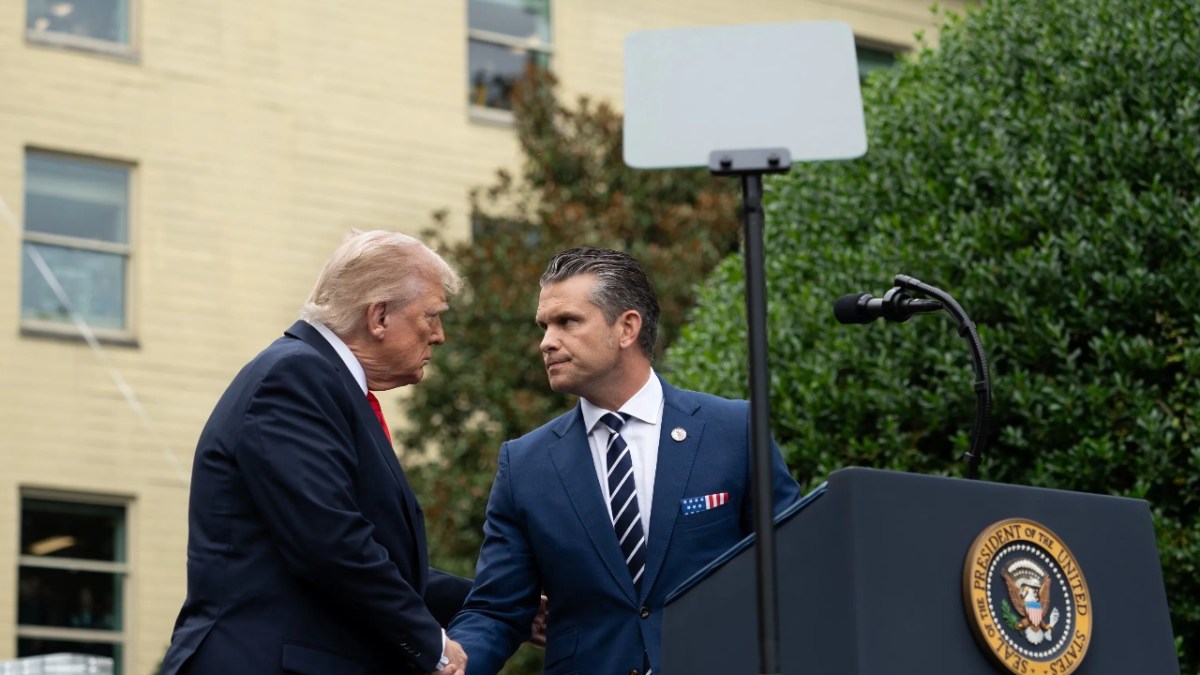
Before Nvidia’s board announced on Monday that Huang would return, Defense Secretary Pete Hegseth and his senior deputy Steve Feinberg were among the officials who discussed treating the law as leverage. The three people said the officials argued that restoring an executive was important because the company is critical to U.S. national security. They spoke on the condition of anonymity to describe sensitive talks.
Experts weigh in on possible uses of the law and the company responds
The law does not offer a clear path to install a new chief executive. One of the three people, a Trump administration official, said it could still serve as a warning. “Essentially they could use the DPA to force Nvidia to shift more of its production to military projects,” the official said. Such a move could have limited the chipmaker’s production plans and its profit.
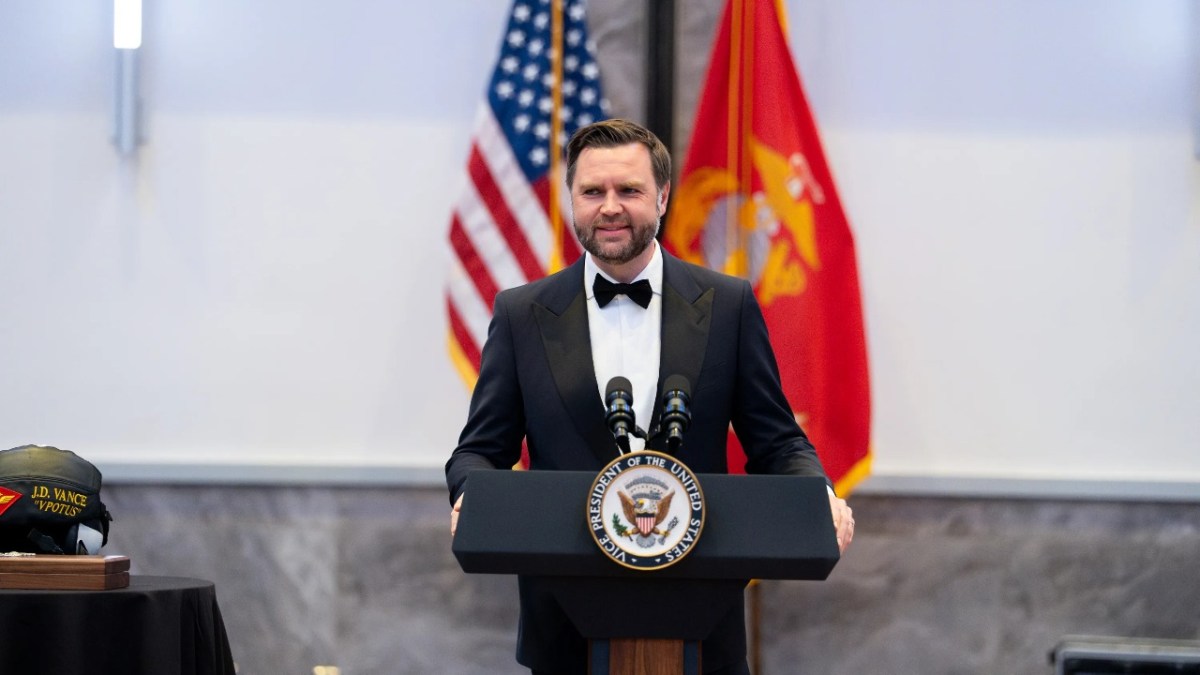
It remains unclear what, if anything, was passed along to Nvidia itself, or whether the arguments reached President Donald Trump and Vice President JD Vance. Both eventually decided Huang needed to be back in the job. Trump later said he personally convinced the board to reinstate him.
They were prepared to use the muscle of the federal government as part of a “full-court press” by Cabinet officials over the weekend, one of the people said. Hegseth and Feinberg took part in that effort, according to two of the people.
Officials stressed that restoring Huang mattered for national security. Nvidia’s board did not view the discussions as a threat, according to a person familiar with the board’s thinking. Trump and Vance came to see Nvidia as important to the economy and Huang as uniquely able to steady financial markets, two other people familiar with the discussions said. Those people also spoke on condition of anonymity.
Trump personally asked Vance to help broker Huang’s return while the scandal was dragging down the stock market. Huang returned to the company on Monday morning. The White House referred questions about the strategy to the Pentagon.
A Pentagon official who declined to be named said, “The conversations described between DOW senior leaders never happened and no such proposal was made by the Secretary, Deputy Secretary, or Under Secretary.” “DOW” is the administration’s preferred name for the Defense Department. Nvidia spokesman Patrick Rutherford declined to comment.
Under Hegseth, the Pentagon has made artificial intelligence a central part of its military strategy. In a memo issued early this year, he called for the military to become an “AI-first warfighting force” and said that “AI-enabled warfare and AI-enabled capability development will redefine the character of military affairs over the next decade.”
Countries are competing to develop those capabilities because many believe the nation with the fastest data processing power and the best models will hold an advantage in future conflicts.
Hegseth has turned modernization over to Emil Michael, a former Uber executive who is undersecretary of defense for research and engineering and the military’s chief technology officer, and to Feinberg, a billionaire who co-founded the private equity firm Cerberus Capital Management and serves as the department’s number two.
The two have moved the military closer to Silicon Valley firms such as Anduril and Palantir and to startups working in artificial intelligence, quantum computing, and critical minerals by issuing loans and, in some cases, investing directly in companies. Michael also took part in the internal talks about the Defense Production Act, two of the people said.
Pete Harrell, an attorney and visiting scholar at Georgetown’s Institute of International Economic Law, said it is not clear how the act could be used to put Huang back in the top job. He said the idea raises concerns about how far the administration is willing to go in dealing with private companies. “It’s not really interested in setting out … regulations,” he said. “It’s interested in getting five companies in a room and kind of telling them what to do.”
Bill Greenwalt, a senior fellow at the American Enterprise Institute who studies the Defense Production Act, said the law’s main authority is to put U.S. government orders ahead of other customers. He said the idea of using it to lock Nvidia into government contracts is not supported by the text of the act. Export controls, he added, would have been a more effective way to apply pressure without invoking the act. After Huang stepped down, the notion of using the Defense Production Act to restore him drew interest in Silicon Valley.
Last week, cryptocurrency investor Balaji Srinivasan, a former partner at Andreessen Horowitz, posted that if the board did not immediately bring Huang back, “there’s actually a scenario where the Department of War steps in on Jensen’s side. Why? Given the likely cyberattacks on Microsoft, flights, banks, and now NSA, it’s arguably a matter of US national security to immediately return the most important person in AI to his role at the top AI company. Defense Production Act, but for the restoration of Jensen Huang.”
On Tuesday, tech investor Shervin Pishevar, who worked with Michael at Uber, posted a long thread on X about Huang’s return.
He pointed to past uses of the law and argued that the Defense Production Act, if “properly applied, offers an important existing framework for strengthening America’s industrial base.” “Now that Jensen Huang is back, we should recognize that NVIDIA and America’s leadership in artificial intelligence are not simply matters of corporate governance or shareholder value,” he wrote. “They are matters of national security, economic competitiveness, and geopolitical power.”






Published: Nov 26, 2026 01:30 pm