



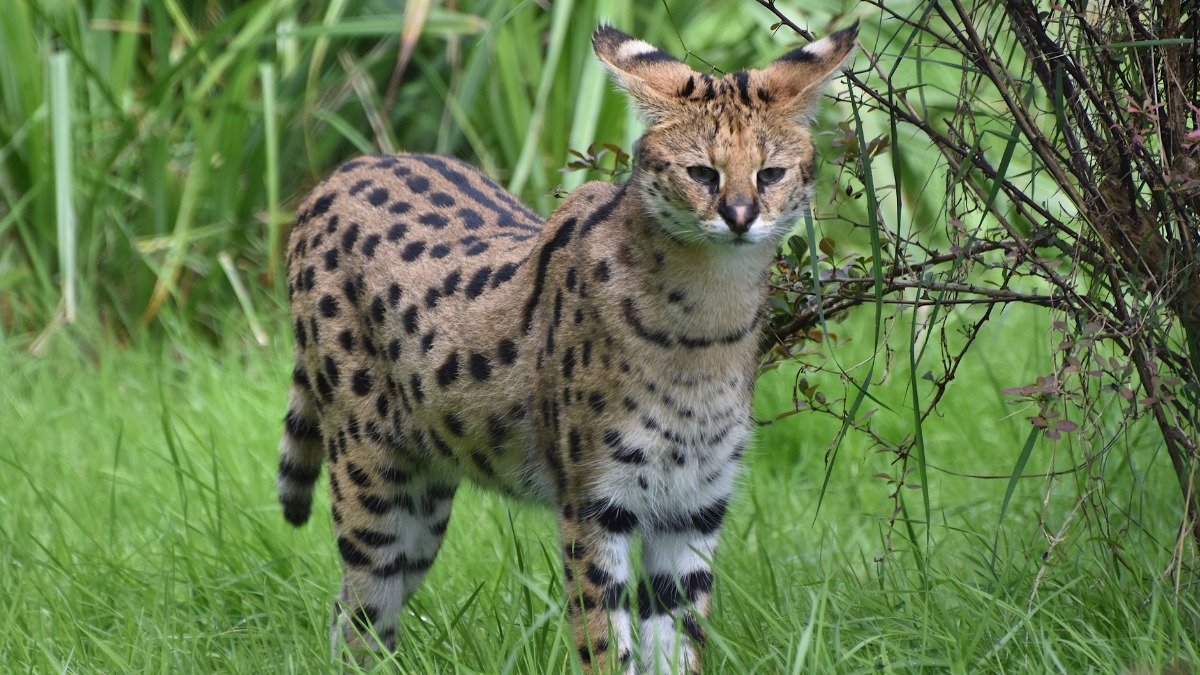

Most East Vancouver residents aren’t expecting to find a wild predator hiding among their holiday decorations, but that’s exactly what happened on a recent Sunday night. Local police and conservation officers were dispatched to a home after receiving reports of a large, unusual animal lurking under a porch. Upon arrival, they discovered a full-grown African serval, a wild cat significantly larger than a standard housecat.
The Vancouver Police Department shared the incident on Facebook as a pointed reminder for local pet owners, as reported by UPI. The department’s post noted that “someone found a serval under their porch. Not a typo,” adding a call for owners to alert neighbors when a pet escapes. The post also included a video of the cat hissing from its spot beneath the porch, surrounded by seasonal decor. The serval was eventually returned to its owner.
The incident follows a significant shift in British Columbia’s approach to exotic feline ownership, as detailed by the provincial government. As of May 1, 2026, the province implemented a ban on the breeding, transport, and future ownership of various non-native and non-domestic cats under the Controlled Alien Species Regulation. The list covers servals, caracals, ocelots, and several other species, as well as hybrid cats not part of a recognized domestic breed that possess a wild ancestor within four generations.
BC’s new exotic cat ban puts current owners on the clock with a year to secure permits
Exotic cats are skilled hunters that can threaten native birds and small mammals if they escape or are released, while also damaging sensitive habitats. Large cats such as lions and tigers have been regulated in the province since 2010, but the new rules extend those restrictions to a much broader range of felines. Amid a wave of wild animal encounters drawing online attention, a diver’s viral dolphin rescue off the Los Angeles coast earlier this year generated more than 13 million views.
Those who already owned these animals before the rules took effect have a path to keep their pets. Owners have until May 1, 2027, to apply for a free permit allowing them to keep the animals for the remainder of their lives. To qualify, owners must provide proof of identification such as a microchip or tattoo, confirm the animal has been sterilized, and meet specific care and safety standards including secure enclosures.
Permit holders are also required to restrict public contact with their animals, meaning the cats cannot be displayed or allowed to interact with anyone outside the owner’s household. Those who miss the one-year application window risk being denied authorization and could face penalties under the Wildlife Act ranging from $2,500 to $250,000 CAD (approximately $1,825 to $182,500 USD), or imprisonment.
The province arrived at these rules after gathering feedback from more than 3,000 respondents, including the BC SPCA and other animal welfare organizations. Amid recent incidents of wild animals turning up unexpectedly in human spaces, a baby seal’s surprise bar visit in New Zealand in late 2025 drew widespread attention. Recognized domestic hybrid breeds such as Bengals and Savannah cats are not included in the ban and can continue to be kept as pets without a permit.







Published: Jun 10, 2026 10:00 am