



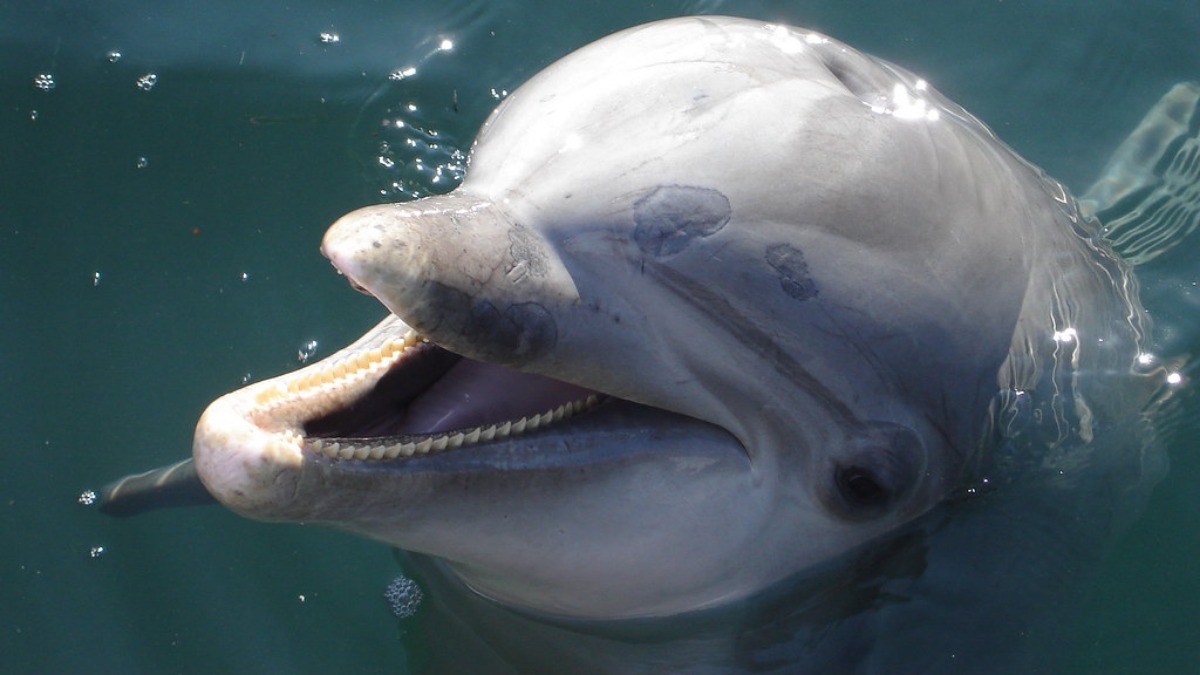

Nicole Isaacs was out on a boat off the coast of Los Angeles when a dolphin approached her vessel in visible distress. As first highlighted by Daily Dot, there was blood in the water and the animal was convulsing. Upon closer inspection, Isaacs discovered that two remoras, parasitic suckerfish, had burrowed directly into open wounds on the dolphin and were actively feeding on it.
Isaacs, who was pregnant at the time, faced an immediate dilemma: whether to enter the water with a distressed wild animal. She turned to her companion and asked, “Should I get in with him?” The entire sequence was captured on video and shared to her TikTok account, @nicoleisaacsofficial, on January 28, 2026.
The footage has since garnered 13 million views. Amid a wave of viral health footage on TikTok drawing massive audiences, this clip stood out for a different reason entirely: the level of cooperation displayed by the dolphin left viewers stunned.
The dolphin went completely still the moment she entered the water
The moment Isaacs entered the water, the dolphin stopped thrashing and rolled belly-up, effectively signaling that it was ready for assistance. Isaacs later wrote, “She began to fully cooperate and turn over for us to make it easy to grab the remoras.” The task itself was far from simple, as remoras are designed to hold on tight with specialized suction disks, making them slippery and difficult to remove.
Things turned chaotic when Isaacs managed to pull one remora free and swam it to the surface to hand to the boat captain. He dropped it, and the remora immediately turned around and latched onto Isaacs instead. She noted in the video, “I was pregnant and freaking out.” Eventually, both remoras were removed for good.
The dolphin’s reaction was immediate. It launched out of the water, and the rest of the pod, which had been circling at a distance, suddenly reappeared. Isaacs described the scene, writing, “All of the dolphins reappeared out of nowhere and swam around us to celebrate.” She has been clear that she does not normally advocate for touching wild animals, calling this a judgment call made in the moment because she felt there was no other option. She added, “The most insane day of my life on the ocean. I trusted my instincts and did what I thought was right.”
The behavior shown by this dolphin highlights the complex relationship between marine life and these parasites. Remoras use a suction disk to attach themselves to hosts like dolphins and sharks, irritating the skin and creating significant drag that forces the animal to expend more energy to swim. Scientists have noted that spinner dolphins often perform aerial spins to dislodge these hitchhikers, as the centrifugal force from the spin and the impact with the water surface can generate enough force to peel a remora off. Research published via ReseachGate on remora removal mechanics details how this works at a physical level.
The mechanism relies on the remora’s suction disk being vulnerable to lateral shearing. When a dolphin spins, it forces the remora to orient itself radially, increasing stress on the edge of the disk, and when the dolphin hits the water broadside, the lateral drag helps dislodge the parasite. These maneuvers are not always successful, and in cases where untreated physical irritation compounds, the consequences can be severe, much as with symptoms written off as minor in other contexts. In this instance, the dolphin had likely reached a point where it could no longer manage the parasites on its own.
One viewer on TikTok summed up the public reaction: “A totally untrained dolphin cooperating and letting you tend to her just out of sheer trust and desperation. I’m just shook.”





Published: May 1, 2026 12:00 pm