



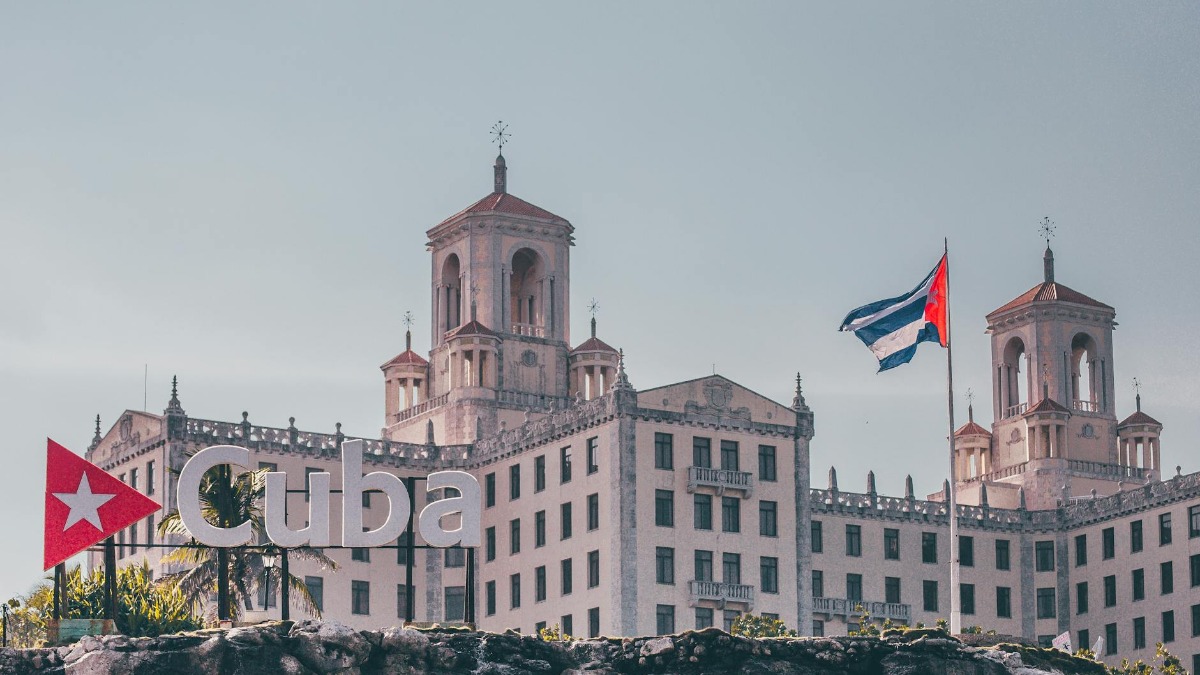

Classified intelligence has revealed that Cuba is considering using hundreds of armed military drones to strike targets on U.S. soil. This comes as the Trump administration continues its maximum pressure campaign against the Cuban government, pushing for political and economic reforms.
According to Axios, the intelligence reports that Cuba has been acquiring attack drones from Russia and Iran since 2023, stored in locations across the island. Possible targets include the U.S. base at Guantanamo Bay, U.S. military ships, and Key West, Florida, which is only 90 miles from Havana.
CIA Director John Ratcliffe traveled to Havana on May 14 to deliver a direct warning to the Cuban government. According to a CIA official, “Director Ratcliffe made it clear that Cuba can no longer serve as a platform for adversaries to advance hostile agendas in our hemisphere.” Photos released by the agency showed a meeting at a protocol house, where the faces of U.S. intelligence officers were blurred to protect their identities.
Cuba is facing pressure from multiple directions as its economic crisis deepens
Reports suggest that the Department of Justice could announce a criminal indictment against 94-year-old former Cuban president Raul Castro as early as this week. Although Castro is officially retired, he is still widely seen as the key figure behind the Cuban government. The potential indictment is believed to be connected to a 1996 incident in which the Cuban military shot down two planes belonging to a Cuban exile organization, killing three American citizens.
Such a move would likely lead to a complete break in diplomatic relations between the two countries. In a separate development, Cuba recently announced it would release 51 inmates in a move tied to the Vatican, though key details about the agreement remain undisclosed.
Life in Cuba is becoming increasingly difficult due to a severe energy crisis. A U.S. oil blockade has caused long power outages, fuel shortages, and rising food prices. People in Havana have been seen protesting in the streets, with some banging pots and pans to show their anger.
The government has also been under pressure to address the growing frustration among citizens who are struggling to meet their basic daily needs, as access to food and medicine continues to shrink. The Cuban government has circulated a family guide advising citizens on how to act during a possible military attack, telling people to prepare backpacks with non-perishable food items.
State media has also been showing civilians receiving military training, promoting a strategy the government calls “the war of the entire people,” which focuses on guerrilla-style resistance, reports CNN. Military historian Hal Klepak has noted that despite lacking modern weapons, Cuba’s forces could still put up a strong fight on the ground.
The island’s military strategy has long relied on the idea that a prolonged ground resistance could wear down any invading force, even a far more powerful one. That thinking appears to be driving the government’s current preparations, as it pushes civilians to take part in military drills and readiness exercises.
However, the mood among ordinary Cubans is one of deep exhaustion. With food spoiling during blackouts and basic medicines running short in hospitals, many people are simply trying to survive each day. Some Cubans feel that even the uncertainty of a conflict might be better than what they are already going through.
As the Trump administration keeps up its pressure, Cuba remains in a state of high alert, with both officials and ordinary citizens bracing for what may come next. Cuba’s top diplomat has also drawn a firm line on issues non-negotiable to the island as the country braces for the possibility of a U.S. invasion.








Published: May 18, 2026 09:15 am