



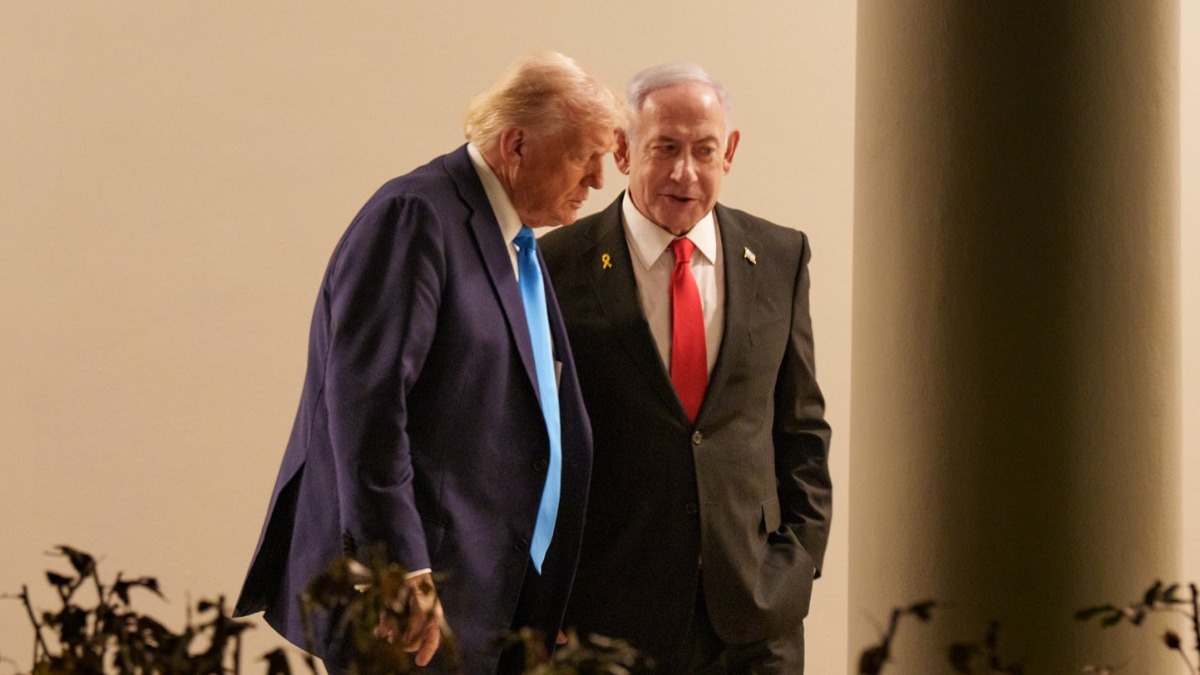

The deal Donald Trump is currently negotiating with Iran has set off a firestorm of “alarm, dismay and anger” in Israel, The Guardian reported. This sounds especially wild since it follows a significant pre-emptive war launched by the US in partnership with Israel just a few months ago.
Back in February, when Trump initiated what the US called “Operation Epic Fury” and Israel dubbed “Operation Roaring Lion,” many in Israel were hailing it as a massive triumph for Benjamin Netanyahu’s political and diplomatic career. The idea was to confront Iran head-on. Fast forward three months, and not only is the regime in Tehran still firmly in power, but Trump is now actively pursuing an agreement to reopen the Strait of Hormuz to oil tankers. The reported terms of this emerging deal are what’s really got people in Israel riled up.
What’s particularly frustrating for Israel is that it’s been completely shut out of these negotiations, not even receiving updates on their progress. This has forced the Israeli government to lean on its regional allies and their espionage networks just to keep tabs on Iran’s leadership. It’s a tough spot to be in, feeling so reliant on another nation’s decisions.
Commentators in Israel are not holding back their opinions
Nahum Barnea, writing in Yedioth Ahronoth, didn’t pull any punches, stating, “Israel is completely beholden to the decisions of a capricious, hollow and desperate American president.” He went on to criticize Netanyahu’s strategy during the campaign, adding, “The greater the fury, the greater the roar, the greater the defeat.” Barnea also warned about the financial implications, saying, “If the agreement currently being talked about is signed, the damage will be even worse. The billions that will flow into the regime’s pockets will go a long way.”
The big concern is that the deal Trump’s team is working on, while it might place some constraints on Iran’s nuclear program, is widely believed to be less restrictive than the 2015 agreement reached by Barack Obama’s administration. You might remember Netanyahu himself criticized that earlier deal, known as the Joint Comprehensive Plan of Action (JCPOA), when it was first being discussed. Now, it looks like this new one could be even weaker.
Ben Caspit, writing in Ma’ariv, echoed these fears, stating, “The emerging agreement is far worse than the previous one.” He highlighted the very real risk that the fallout from the war and subsequent ceasefire deal could actually accelerate Iran’s nuclear program, which is the exact opposite of Netanyahu’s promise to dismantle it. Caspit delivered a stark warning, saying, “If they [Iran] do come to possess a nuclear bomb, it will be Bibi’s bomb.” He also noted that while the assassination of Supreme Leader Ayatollah Ali Khamenei removed the person who established the nuclear program, it also removed the one who held off the final stage of creating a weapon.
Adding to Israel’s worries, other critical issues like Iran’s regional proxy network and its ballistic missile arsenal, which caused significant damage across Israel during the conflict, don’t appear to be part of the negotiations at all. It’s like those concerns have been completely ignored.
This situation is putting immense pressure on Netanyahu from within his own coalition. Far-right members are urging him to confront the US president directly over a partial ceasefire with Hezbollah in Lebanon, which was implemented under Washington’s insistence. Itamar Ben-Gvir, the national security minister, posted on social media on Monday, saying, “It is time for the prime minister to bang on Trump’s table and inform him that we are returning to war in Lebanon.” It shows just how much frustration is boiling over.
Public opinion in Israel reflects this complex sentiment. Initially, there was strong support for going to war with Iran, even after weeks of missile attacks. However, after the ceasefire, more than a third of Jewish Israelis expressed unhappiness, compared to just over a quarter who were happy the fighting had stopped, according to the Israel Democracy Institute.
As the conflict dragged on without the promised regime change, support for the government also dipped. Even in April, when there might have been some hope for continued US pressure on Iran, Israelis were largely disappointed with how the government handled the war, with only about a third rating its performance positively.
While not all criticism is aimed solely at Netanyahu, and not everyone unhappy with the deal regrets the war itself, Trump’s apparent plan is finding very few supporters in Israel. Ariel Kahana, writing in Israel Hayom, offered a somewhat balanced view, giving Trump “credit” for at least trying. He wrote, “His bold willingness to unleash the United States’ tremendous firepower on Iran is tens of times preferable over the historic impotence that was shown by all of his predecessors.”
However, Kahana concluded with a sobering assessment: “The bottom line is that Iran can and is presenting to the world a victory picture by dint of the very fact that it is still standing. Trump, for the time being, does not have a similar counter-picture of his own to show. That isn’t very good news for the Israeli people.”







Published: May 26, 2026 05:15 pm