



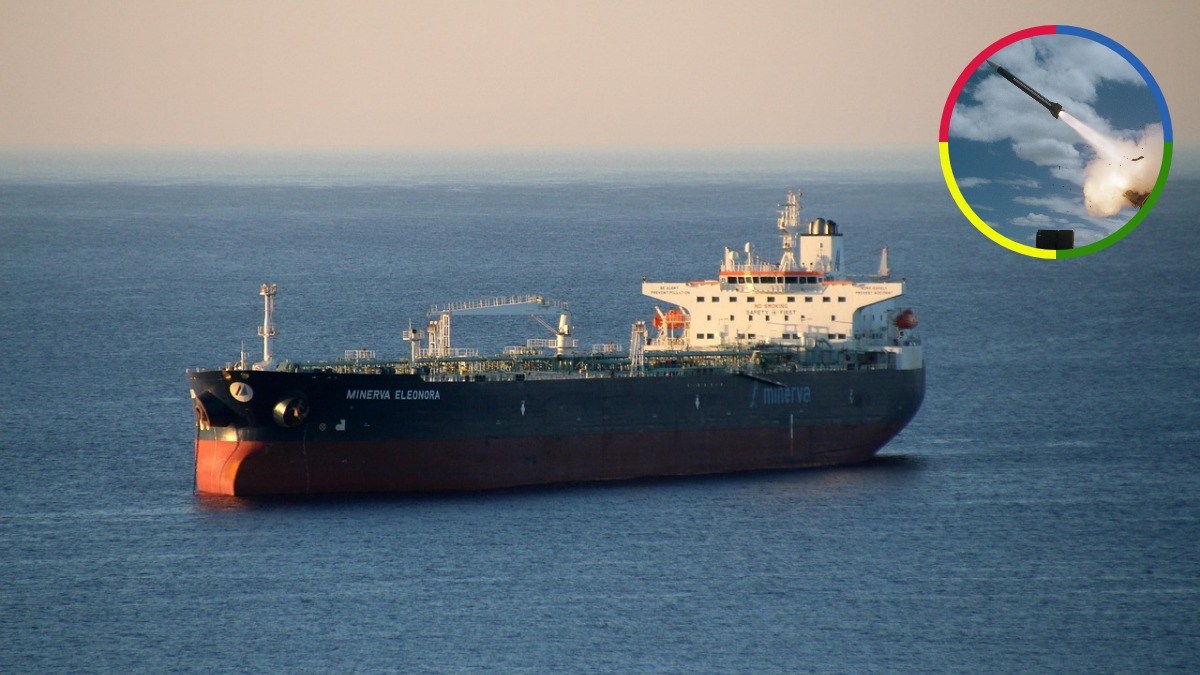

The Strait of Hormuz carries roughly a fifth of the world’s oil, and six months of war between the United States and Iran have turned it into the central battleground. That fight has now moved onto commercial shipping. Iran says it struck 10 vessels near the strait after US forces destroyed five Iranian crude carriers.
The Revolutionary Guard claimed two American vessels and eight oil tankers among the 10, according to The Hill. US Central Command called the claim that two Navy destroyers were hit completely false, saying no American warship had been struck and that every attempted attack failed.
It’s important to note that while several attacks on commercial shipping have been independently confirmed, Iran’s tally of 10 has not been verified. The exchange is the largest wave of attacks on shipping since the war began in February, as both sides now target the other’s economic lifelines.
The US decided to start sinking Iran’s oil tankers
The trigger was a series of Revolutionary Guard attempts to hit a US Navy warship with ballistic missiles. Washington responded by turning Iran’s oil export network into a military target, as Central Command says US forces have destroyed 10 Iranian tankers over the past week.
Secretary of State Marco Rubio said the US would keep targeting tankers for as long as Iran keeps trying to hit American naval vessels. Four of the five carriers destroyed this week were reportedly attacked in the Gulf of Oman, and the fifth was hit near Kharg Island, Iran’s most critical oil export terminal.
Iran’s response quickly moved beyond threats. One crew member was killed and another remains missing aboard the oil products tanker Hercules Star, which was at anchor off Dubai when it was struck. The New Andros, carrying about 2 million barrels of Iraqi fuel oil, caught fire after a drone strike in Iraqi waters.
A liquefied natural gas tanker was also damaged at Khor Fakkan in the United Arab Emirates. Iran launched 20 ballistic missiles toward a US military base in Jordan, and Jordan’s armed forces said 18 were intercepted while two fell in unpopulated areas. No casualties were reported.
Before fighting resumed on August 30, oil flows through the strait had recovered to roughly 8 million to 9 million barrels per day, according to Rystad Energy. Those flows have since fallen below 2 million. Tracking firm Kpler recorded six commodity vessels crossing the strait on Tuesday, down from nine the previous day.
Brent crude settled at $101.21 a barrel, pushing above $100 for the first time since late July. For American consumers, the more immediate impact is at the pump, as regular gasoline averaged $4.22 a gallon, roughly 42 percent above prewar levels. Diesel reached a record $5.94.
The Revolutionary Guard said it will release maps showing a larger off-limits maritime zone stretching as far as Chabahar, near Pakistan. The US has issued threats of its own, with Trump saying it could strike Pickaxe Mountain, a fortified site near the damaged Natanz nuclear complex.
Trump made the remark at the Republican midterm convention in Dallas, an event some Republicans have skipped after House members were asked to pay $25,000 to attend. With Iran-backed Houthis also renewing attacks near the Bab el-Mandeb Strait, the conflict is now putting pressure on both of the region’s major energy shipping routes.
Trump told reporters he expects the war to end immediately after the November 3 midterm elections, saying Iran would not be able to hold out much longer.









Published: Sep 10, 2026 11:15 am