




The Treasury Department announced new sanctions targeting an Iranian agency that is attempting to exert control over the Strait of Hormuz, The Hill reports. The agency in question, the Persian Gulf Strait Authority, was formed by the Iranian government earlier this month. Its stated goal is to manage the passageway, but the United States government views this as a blatant attempt by the Islamic Revolutionary Guard Corps to monetize its campaign of state-sponsored terror by extorting vessels.
Treasury Secretary Scott Bessent pointed directly to this development as evidence that the administration’s strategy is working. “The Iranian military’s latest attempt to extort global maritime trade is proof that Economic Fury has left the regime desperate for cash,” Bessent said. He further emphasized the administration’s stance on the matter, noting that “Through Economic Fury, the United States has imposed a financial stranglehold on the world’s leading state sponsor of terrorism. Treasury has deprived the Iranian regime of revenue for their weapons programs, terrorist proxies, and nuclear ambitions.”
The implications for international shipping are serious. According to the Treasury Department, anyone cooperating with this authority faces a major risk of sanctions because they could be providing support to, or receiving services from, the Islamic Revolutionary Guard Corps. The Strait of Hormuz is a vital artery for global energy, and the current situation has already led to a noticeable increase in oil and gas prices. You might have noticed this impact at the pump, as gas prices have climbed past $4 per gallon in all but six states as of Tuesday, according to AAA.
It is worth noting that under international law, ships are supposed to travel through international waterways without having to pay tolls
While most of the world follows these rules, Iran is not a signatory to the United Nations Convention on the Law of the Sea, which is the treaty that guarantees the right of unimpeded passage. Secretary of State Marco Rubio highlighted the isolation of the Iranian position recently. “The Russians are not in favor of a tolling system, the Chinese are not in favor of a tolling system,” Rubio said. “I mean, there’s no country in the world that’s in favor of a tolling system except the regime in Iran. So that’s not acceptable, that cannot happen. The straits need to be open, unimpeded, without tolls.”
Earlier this month, the Persian Gulf Strait Authority outlined its intended reach on social media. They claimed that the boundaries of their management area stretch from the line connecting Kuh Mobarak in Iran and the south of Fujairah in the United Arab Emirates in the east, to the line connecting the end of Qeshm Island in Iran and Umm al-Qaiwain in the UAE in the west. They also stated that “Frequencies in this range for passing through the Strait of Hormuz require coordination with the Persian Gulf Waterway Management and a permit from this entity.”
The situation on the water has been tense for some time. Since the United States and Israel launched strikes on Iran at the end of February, the Islamic Revolutionary Guard Corps has restricted shipping through the area. In response to this, the United States initiated a naval blockade of Iranian ports in April. By Saturday, U.S. Central Command reported that forces had successfully redirected 100 commercial vessels as part of this operation.
Negotiations between the United States and Tehran are still ongoing, and the status of the strait remains a central topic. Reports have surfaced suggesting that Iran and Oman have discussed partnering on a system to charge fees for vessels passing through the water. While Oman is a signatory to the United Nations Convention on the Law of the Sea, which makes their involvement in such a scheme particularly noteworthy, the U.S. administration remains firm.
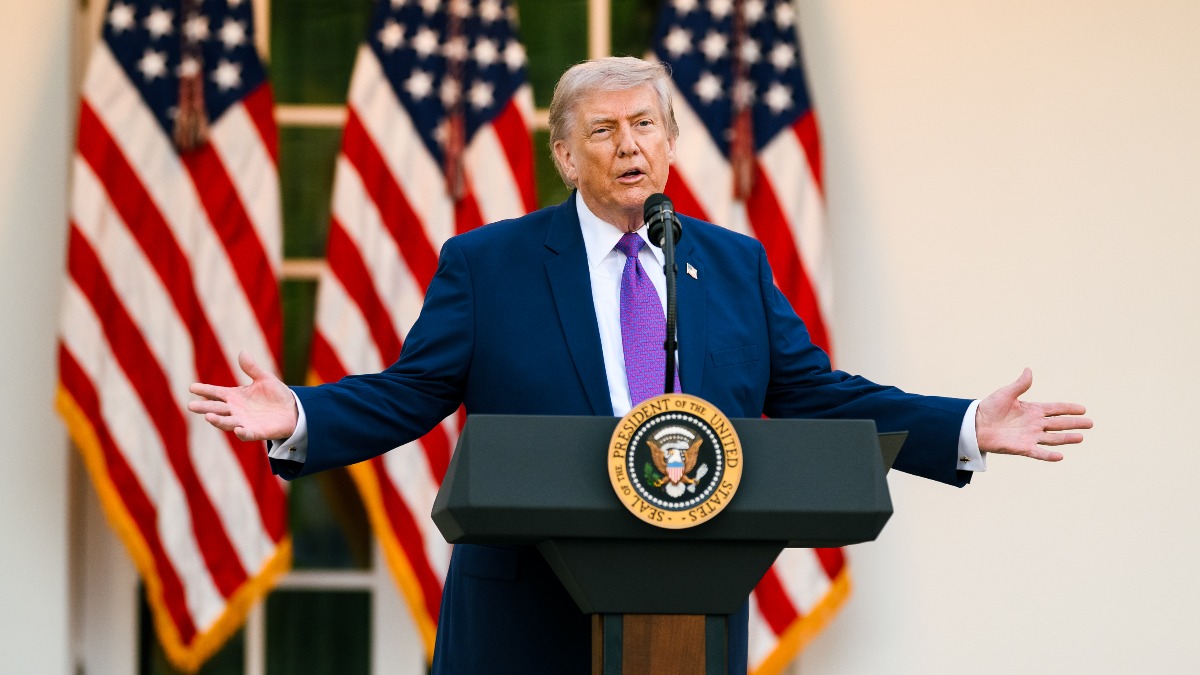
President Trump has been clear about his expectations for any potential agreement. On Monday, he wrote on his Truth Social platform that an agreement “will either be a great and meaningful one, or there will be no deal.” Secretary Rubio echoed this sentiment on Tuesday, stating that the administration is “either going to make a good deal or no deal” and that the process might take a few more days.








Published: May 28, 2026 07:15 pm