



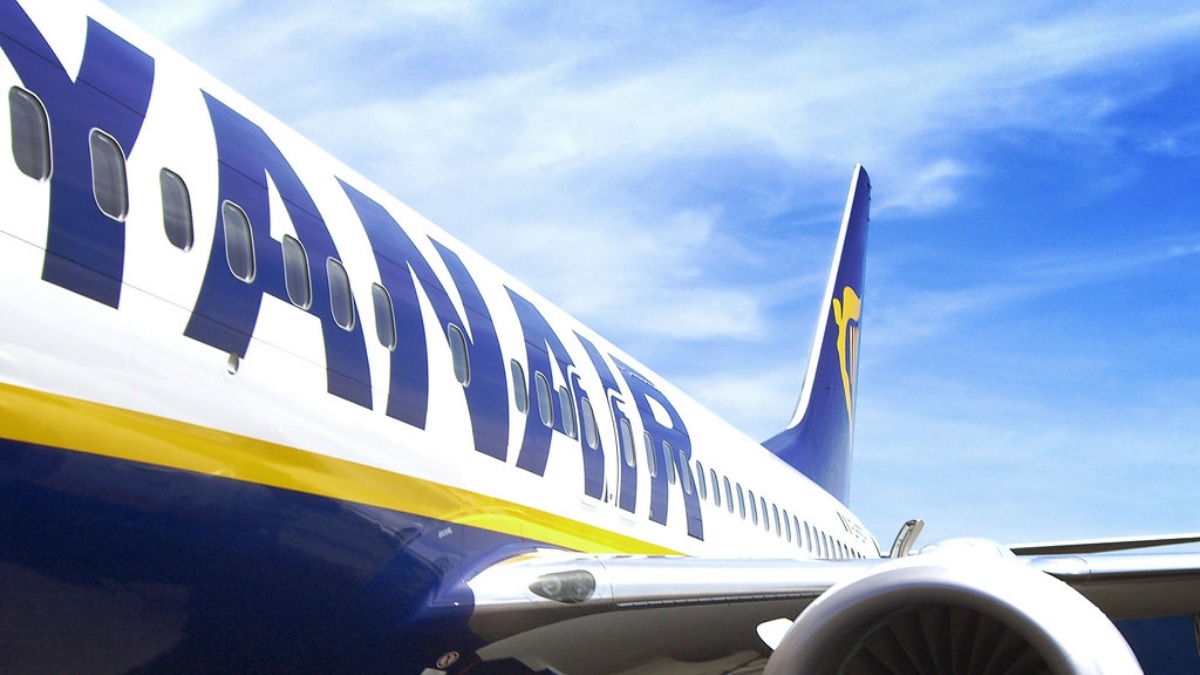

Ryanair has confirmed that summer flights will not be cancelled due to the ongoing jet fuel crisis. Despite the closure of the Strait of Hormuz sending global fuel markets into turmoil, the airline is pressing ahead with its full schedule for both the upcoming summer and the winter period. As detailed by LADbible, the carrier’s protection from that volatility stems from a supply arrangement it put in place well in advance.
CEO Michael O’Leary shared the company’s outlook on May 18, as Ryanair released its annual results for the 2026 financial year. Passenger numbers climbed from 200.2 million to 208.4 million, while revenue rose from £13.95 billion ($17.57 billion USD) to £15.54 billion ($19.56 billion USD). The figures confirm the airline is operating at a scale that gives it significant leverage over its supply chain.
The protection comes from a strategy called fuel hedging, through which Ryanair locked in a fixed price for a large portion of its fuel supply well in advance. While jet fuel on the open market has spiked from around $90 per barrel to as high as $200 per barrel, Ryanair hedged 80 percent of its needs through April 2027 at $67 per barrel. O’Leary described the approach as a conservative strategy that “will insulate earnings in the current very volatile oil markets and widen the cost advantage over EU competitors for the remainder of FY27.”
Ryanair’s fuel hedging is doing the heavy lifting this summer
Beyond hedging, O’Leary pushed back on the idea that the Hormuz closure represents an insurmountable supply problem. He noted that the Strait is just one of many routes for fuel, and that Europe remains well supplied with significant volumes arriving from Norway, the Americas, and West Africa. Amid wider airline industry concerns over rising ticket costs linked to the fuel crisis, Ryanair’s position stands out as notably more stable than most of its competitors.
CFO Neil Sorahan added that he is “increasingly confident that we will not see any supply shocks this summer.” He acknowledged to CNBC that contingency plans exist for a worst-case scenario, but said he does not see that outcome materialising. Sorahan confirmed the airline is operating a full schedule for summer and intends to carry that into the winter.
The company’s financial position reinforces that confidence. Ryanair ended March 2026 with a net cash position of €2.1 billion ($2.35 billion USD) and a fleet of 647 aircraft. The broader airline sector has seen serious disruption over the same period, including Spirit Airlines shutting down entirely after the fuel cost surge pushed it past the point of recovery.
Ryanair is also positioned for longer-term growth, with 300 new Boeing 737 MAX-10 aircraft on order. Those planes offer 20 percent more seats and burn 20 percent less fuel than older models, a combination that will only strengthen the airline’s cost advantage as the market stabilises.
The company’s latest figures show it remains the most fuel-efficient large airline in Europe. Ryanair is currently operating its full summer schedule with no cancellations linked to the fuel crisis.








Published: May 18, 2026 01:45 pm