



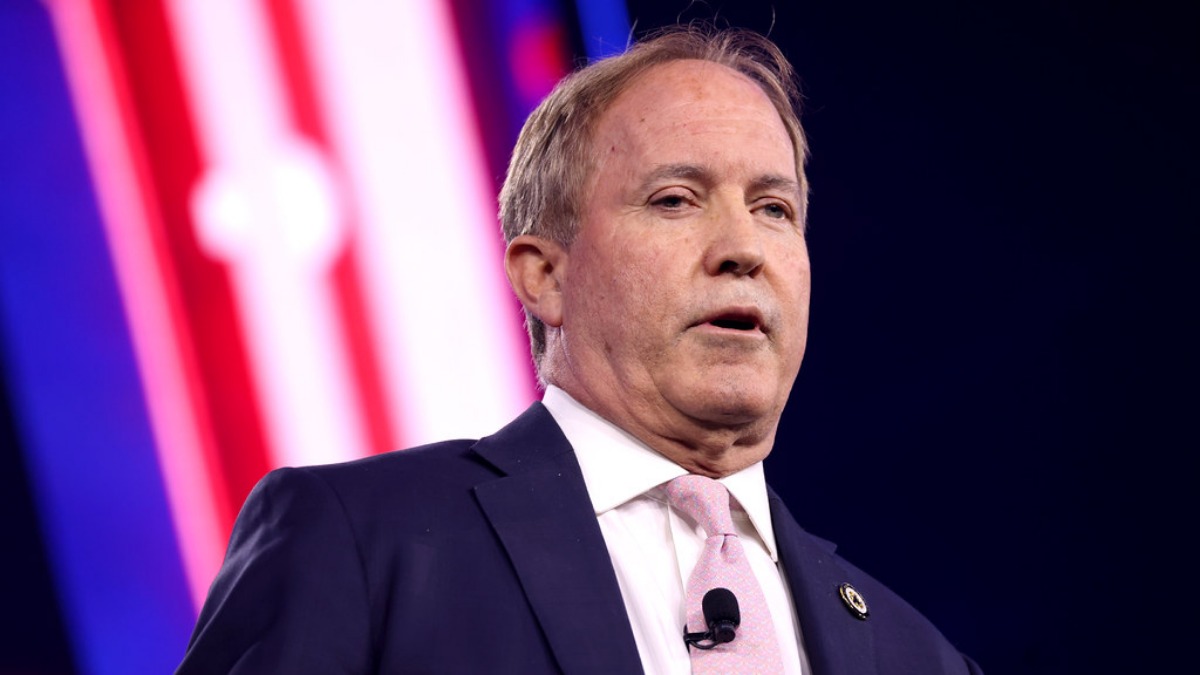

Texas Attorney General Ken Paxton appears to have voted in six elections over the past two years using an address where he may no longer live, according to ProPublica. The discovery comes after Paxton publicly pushed against what he has called illegal voting, going as far as setting up a tip line for residents to report suspected fraud.
In a February news release, Paxton warned voters that misrepresenting a residence on election records is illegal. He stated that “free and fair elections are a cornerstone of a thriving republic, and with the authority granted to my office by the Legislature, we will stop at nothing to uncover and stop any illegal voting activity.” His office also made clear that voters must register using the address where they actually reside.
Records suggest Paxton has not been living at his registered address, a home in Collin County, for some time. In a 2025 divorce filing, State Sen. Angela Paxton accused the attorney general of adultery and stated that he moved out of their shared home a year prior. A source close to the couple confirmed he has not returned since leaving, yet he continues to list that address on his voter registration.
Paxton’s Denton County connection dates back to February
Reporting has linked the attorney general to a home in Denton County since February. A trust purchased the property, and the address for a blind trust shared by Ken and Angela Paxton was changed to that Denton County location shortly after the sale.
A reporter spotted an envelope addressed to Warren Paxton, the attorney general’s given name, at the mailbox of the Denton County home. Video from a June podcast appearance also showed Paxton sitting in front of a fireplace that appears to match the one in the Denton County property’s real estate listing.
Voting in an election while ineligible is a second-degree felony in Texas, carrying a penalty of up to 20 years in prison and a fine of up to $10,000. David Becker, a former Justice Department voting rights lawyer, noted that Paxton should be expected to know the residency laws he has made a priority to enforce, given his role as the state’s top law enforcement officer.
Paxton’s campaign spokesperson, Madison Cercy, did not answer specific questions about the registration. Instead, she issued a statement saying the attorney general has a long record of defending Texas elections, and described the findings as a “baseless, lie-filled tabloid story.” In another case, Paxton dismissed scandal allegations by comparing his critics to those targeting Donald Trump.
This is not the first time Paxton has focused on residency-related voting issues. In 2018, his office arrested nine people on suspicion of using residential addresses where they did not live to vote in an Edinburg municipal election. Those charges were eventually dismissed after prosecutors failed to secure a conviction.
Election law experts point out that state law does allow for temporary absences, such as those for military service or college attendance, but a permanent move generally requires a voter to update their registration.
Joshua Blank of the Texas Politics Project said that when elected officials tasked with enforcing these laws struggle to navigate the process themselves, it raises serious questions for the public. A similar political context shows Trump-backed Ken Paxton defeating John Cornyn in a Texas GOP primary.







Published: Jul 8, 2026 10:15 am