



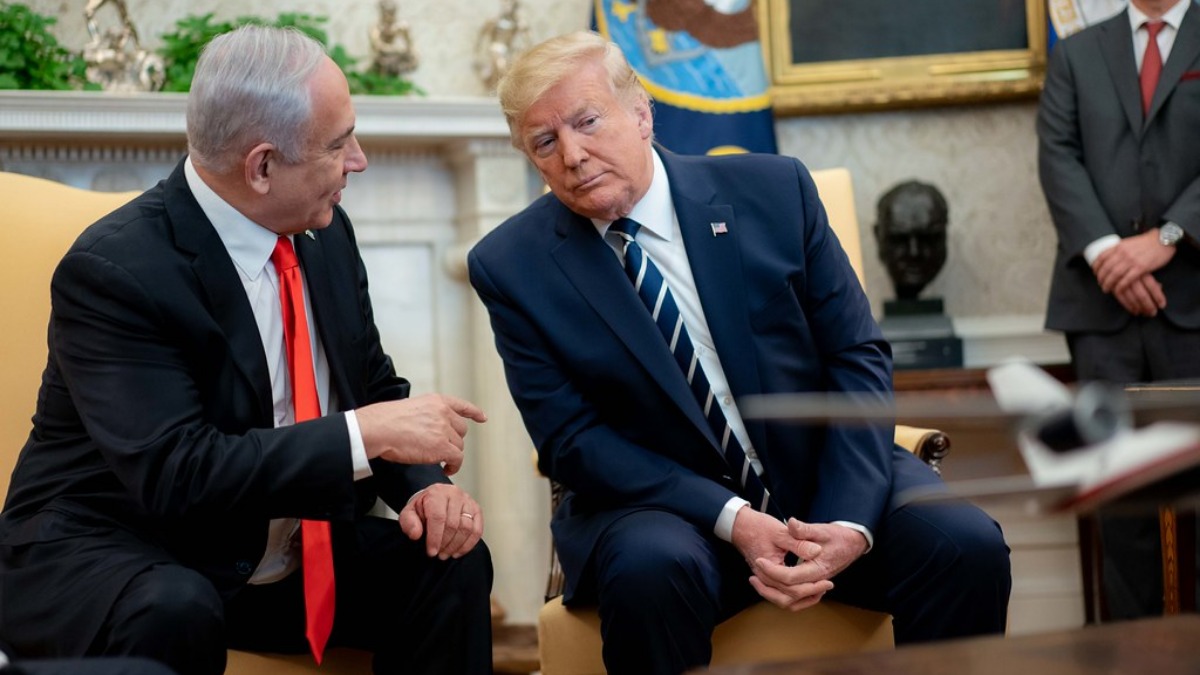

Israeli Prime Minister Benjamin Netanyahu confirmed that the conflict involving Iran is far from finished, as he pushes for the complete dismantling of Tehran’s nuclear enrichment infrastructure. During an interview that aired on Sunday, the prime minister emphasized that while significant progress has been made, the core issues regarding the country’s nuclear program remain unresolved, The Hill reported.
“I think it accomplished a great deal, but it’s not over, because there’s still nuclear material, enriched uranium that has to be taken out of Iran,” Netanyahu stated during his appearance on CBS News’s “60 Minutes.” He expanded on this list of requirements, noting that beyond just the material, there are specific enrichment sites that require dismantling. Furthermore, he highlighted that Iran continues to support various proxies and maintains a focus on the production of ballistic missiles, all of which remain points of significant tension for his administration.
This firm stance aligns with the current position of the Trump administration, which has made the total cessation of uranium enrichment a non-negotiable condition for achieving peace in the region. President Trump voiced his own frustration with the latest developments on Sunday, specifically addressing the response received from Iranian representatives. Using his Truth Social platform, the president wrote, “I have just read the response from Iran’s so-called ‘Representatives.’ I don’t like it — TOTALLY UNACCEPTABLE!”
Netanyahu pointed directly to the presence of nuclear material and enriched uranium as primary concerns that must be addressed before any sense of stability can return to the region
The diplomatic back-and-forth has been intense, involving mediators like Pakistani Prime Minister Shehbaz Sharif, who has been working alongside his army chief Asim Munir and Foreign Minister Ishaq Dar to facilitate discussions between Tehran and Washington, D.C. Despite these efforts, the gap between the two sides remains wide. While the administration’s proposal reportedly offered a path toward lifting sanctions in exchange for a moratorium on enrichment and the reopening of the Strait of Hormuz, the Iranian response has fallen short of these expectations.
According to reports, the proposal submitted by Tehran focuses on an immediate end to the fighting and a gradual restoration of shipping access in the Strait of Hormuz. The waterway has been a major point of contention since the conflict began on February 28, with the Iranian military laying mines and threatening non-allied vessels, while the U.S. Navy has maintained a blockade of Iranian ports since April 13.
While Tehran has offered to dilute some of its highly enriched uranium and potentially transfer the remainder to a third country, this comes with a catch. They have requested that the material be returned if future negotiations fail or if the U.S. decides to exit the agreement at a later date.
Netanyahu is not satisfied with these conditional offers. He envisions a more direct approach, suggesting that someone needs to physically go into Iran to remove the enriched uranium if a solid agreement cannot be reached.
“I’m not going to talk about military means, but what President Trump has said to me, I want to go in there, and I think it can be done physically. That’s not the problem,” Netanyahu remarked during the interview. He believes that if an agreement is reached, the physical removal of the material is the most effective path forward. “If you have an agreement, and you go in, and you take it out, why not? That’s the best way,” he added.
The pressure on Iran to comply remains high, but officials in Tehran have shown little inclination to fold. On Friday, Iranian Foreign Minister Abbas Araghchi, who has been leading the negotiations alongside Parliament Speaker Mohammad Bagher Qalibaf, declared that his country will “never bow to pressure.” He further asserted that the Iranian military maintains “1,000%” readiness to “defend our people” as these high-stakes discussions continue.
As it stands, the timeline remains a point of contention. While the administration’s original memo outlined a 30-day window for negotiating nuclear issues, the current stalemate suggests that the road to any lasting peace is going to be incredibly difficult. The combination of the U.S. demands for a complete end to enrichment and the Iranian insistence on retaining their nuclear capabilities keeps the situation in a state of volatile uncertainty.








Published: May 11, 2026 01:15 pm