



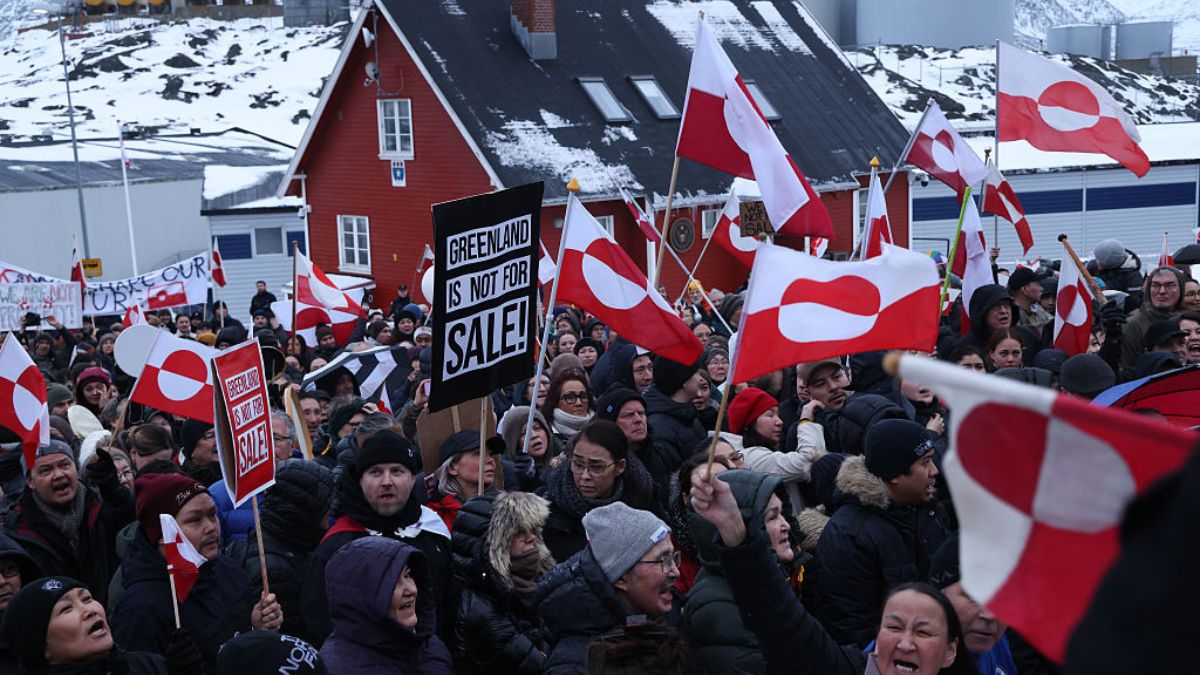

President Donald Trump is putting new tariffs on goods from eight European countries. This move is creating more tension in international trade just a few weeks into the new year. Trump has a clear reason for doing this: he wants these countries to work with the U.S. until a deal is made to buy Greenland completely.
Trump is taking on the role of a global deal-maker and has given himself a new nickname. At a White House event about rural health care on Friday, he said, “I’m the tariff king and the tariff king has done a great job.” He first used this title when talking about how tariff threats could help lower drug prices in America. Just before that, he warned he might use tariffs against countries that oppose his plan to buy Greenland.
Later that night around 10:30 PM, Trump posted on Truth Social. He shared a black and white photo of himself with the label “Mister Tariff.” According to HuffPost, he posted the same photo again minutes later but changed the title to “The Tariff King.”
Trump’s tariff strategy puts NATO allies and economic stability at risk
The threats became real action quickly. The new tariffs were announced Saturday and will start next month at 10%. They will then go up to 25% by June. This is a harsh move because these tariffs target NATO allies. These new taxes come even though a trade deal was reached in July that was supposed to keep things stable with the European Union.
On Monday, Trump went even further. He said countries doing business with Iran would face a 25% tax on their trade with the U.S. This threat could easily destroy the current truce on tariffs with China, which buys a lot of oil from Iran. The president has promised to use tariff revenue for programs, though details remain unclear.
This wave of new taxes is the opposite of what people expected. After a rough 2025, Wall Street, big companies, and regular Americans were hoping for a calmer 2026. Experts thought the economy would get better because of tax cuts from the One Big Beautiful Bill Act. Goldman Sachs predicted strong growth of 2.8% for 2026, much higher than the usual forecast of 2.1%.
The Federal Reserve was also counting on inflation staying under control. They thought earlier tariffs would only cause a one-time price increase. Their recent report showed optimism, saying “The outlook improved on balance, with more optimism and a bit less caution than in the last report, boosted in part by reduced uncertainty from tariffs.” But these new tariffs could ruin those hopes and prevent the Fed from cutting interest rates if inflation stays above their 2% goal.
Parts of the economy that depend on trade are already having problems. Manufacturing companies have cut 70,000 jobs since the government announced major tariffs in April 2025. Factory activity has been shrinking for ten straight months, which shows the industry is struggling.
While Mexico avoided recent tariff threats, European nations now face similar pressure. French President Emmanuel Macron warned about Europe’s response, posting on X that “Tariff threats are unacceptable and have no place in this context. Europeans will respond in a united and coordinated manner should they be confirmed.” He stressed they “will ensure that European sovereignty is upheld.”




Published: Jan 18, 2026 02:15 pm