



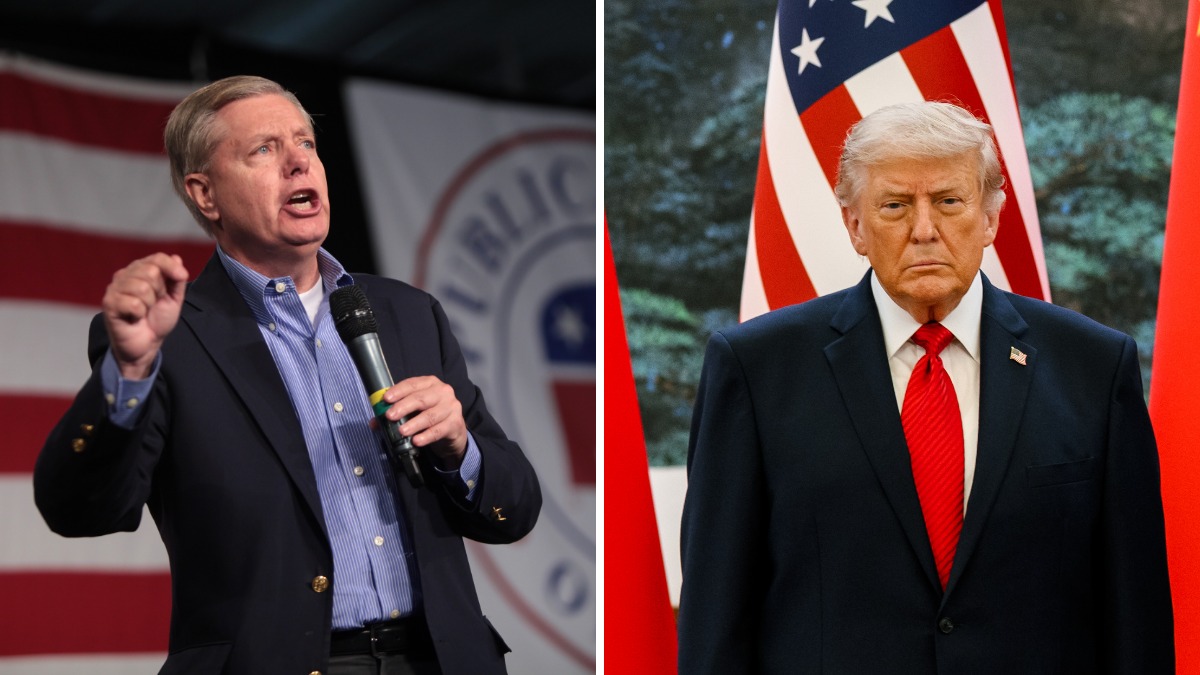

President Trump is pushing the Senate to fast-track the Clarity Act, a major piece of cryptocurrency regulation, in a move he says is in honor of the late Senator Lindsey Graham, The Hill reported. The South Carolina senator, who passed away over the weekend following a sudden and brief illness, was a significant supporter of the president.
Medical examiners have indicated that the 71-year-old senator died of an aortic dissection resulting from arteriosclerotic cardiovascular disease. While the president is framing this legislative push as a tribute, it is worth noting that Graham did not serve on either of the two committees involved in drafting the bill. His legislative work was primarily focused on foreign policy, including the war in Iran and a new Russian sanctions package.
The Clarity Act represents the most significant legislative goal for the crypto industry, and lawmakers are facing a very tight deadline. With Congress set to depart for its August recess soon, experts are warning that this window is likely the last chance to pass the bill before the midterm elections. If it doesn’t cross the finish line before the break, the political landscape could shift significantly, potentially forcing the entire process to start over from scratch.
The Clarity Act is currently at a critical junction
Brian Gardner, a chief Washington policy strategist at Stifel, noted in late June that Congress needs to finish the bill before the August recess to have a real chance at success. While a lame duck session is technically possible after the midterms, it is considered unlikely.
The president is clearly feeling the urgency. In a post on Truth Social, he emphasized the global stakes, stating, “China, and many other countries, would like to take complete and total control of this major financial ‘happening,’ as well as A.I., where we are now leading, but where they are fighting hard. Don’t let China win on either subject!!!”
Despite this push, the bill is hitting some serious roadblocks. One of the biggest issues is the ethics debate surrounding elected officials and their involvement in the digital asset industry. This has become even more complicated following the release of the president’s recent financial disclosures. Those documents showed that he made approximately $1.2 billion in crypto-related income last year, with $594 million coming from World Liberty Financial and $635 million tied to meme coins.
Top Senate Democrats, including Elizabeth Warren, Richard Blumenthal, Gary Peters, Dick Durbin, and Ron Wyden, have voiced strong concerns that these disclosures make it look like the president is pushing for legislation that directly benefits his own financial interests.
Ian Katz, a managing partner at Capital Alpha, highlighted how these disclosures have impacted the legislative process. He noted that the past week was not a positive shift for the bill and that the ethics issue is currently the biggest substantive obstacle to getting the Clarity Act passed. While there has been talk of giving state attorneys general the power to sue federal officials who violate ethics provisions, there has been very little actual progress on that front in recent weeks.
The bill has also faced a long and winding road through the committee process. It moved out of the Senate Agriculture Committee in January on a party-line vote, but it ran into trouble in the Senate Banking Committee over a dispute regarding stablecoin rewards.
That panel eventually moved it forward in May, but Democratic senators like Ruben Gallego and Angela Alsobrooks have warned that their support in committee does not guarantee they will vote for it on the Senate floor. Republicans are aiming to bring the bill up for a vote during the week of July 20, but they will need at least seven Democratic votes to succeed.
Other hurdles remain, including concerns from law enforcement regarding a provision that would shield software developers from liability. While there has been some positive movement here, with the Major County Sheriffs of America shifting to a neutral stance, the banking industry is still pushing back.
The Independent Community Bankers of America has been running ads arguing that stablecoin rewards could lead to significant deposit outflows that would hurt community lending. Rebeca Romero Rainey, the president and CEO of the organization, has questioned why there is such a rush to move the legislation forward so quickly.
As the clock ticks down, the legislative window is closing fast. The House is only in session through July 23, and after the August recess, there are only about three weeks left in September before lawmakers enter full campaign mode.






Published: Jul 13, 2026 03:30 pm