



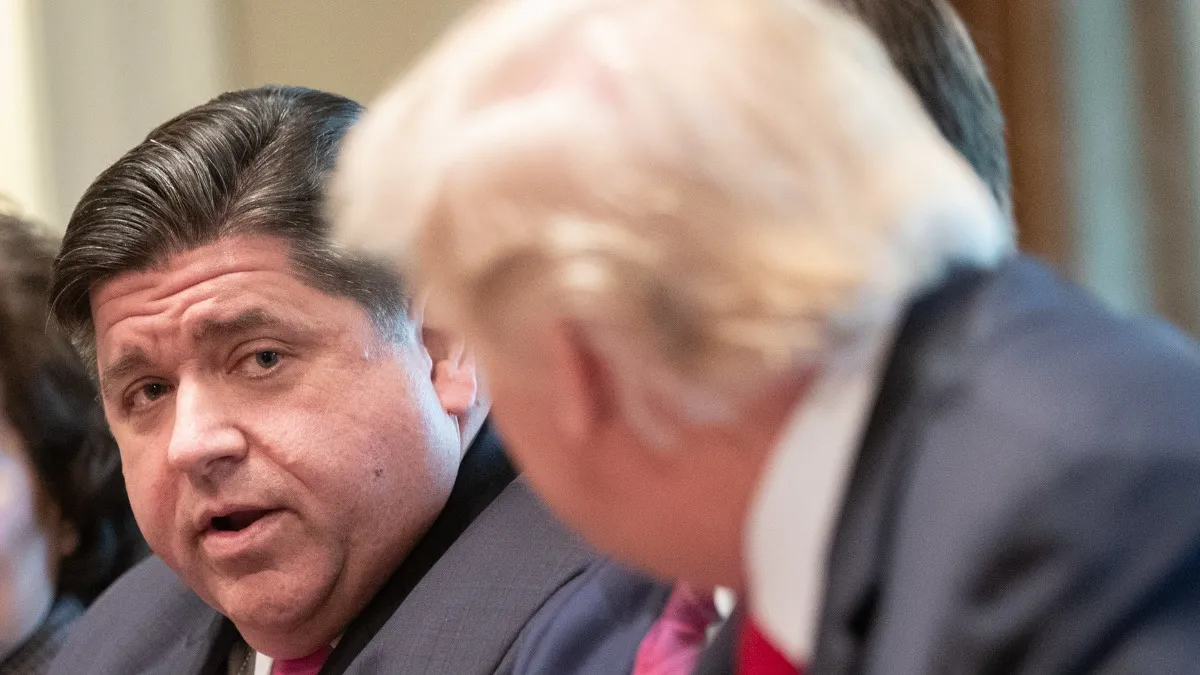

The city of Chicago is currently reeling after a violent weekend that left seven people dead and dozens more injured. Over the course of three days, stretching from Friday evening into Sunday, Chicago police documented at least two dozen shooting incidents. This recent spike in violence has once again put the spotlight on the ongoing friction between President Donald Trump and Illinois Governor J.B. Pritzker regarding how to handle crime in the nation’s third-largest city.
As reported by Fox News, the surge in violence began on Friday, which coincided with the Juneteenth holiday. In a particularly alarming incident in the Princeton Park neighborhood on the South Side, an SUV pulled up to a crowd and two individuals opened fire. The attack resulted in 12 people being hospitalized, including eight males and four females ranging in age from 17 to 47. Another man involved in the incident suffered unknown injuries but declined medical treatment.
This specific act of violence drew a direct response from Mayor Brandon Johnson, who stated in an X post on Saturday, “What should have been a night of celebration and community reflection for Juneteenth was shattered by a horrific act of violence.” He further emphasized, “Violence has no place in our city, and those responsible will be held accountable.”
Tragically, the weekend toll was not limited to that single event
On Friday night, 29-year-old Mario Price was killed in a drive-by shooting where he sustained wounds to his face and body. A 70-year-old bystander was also shot in the leg during that same encounter but managed to survive. Throughout the remainder of the weekend, the violence continued, with police reporting deaths that included an 18-year-old shot in the armpit on Saturday evening and a 21-year-old who was shot in the chest on Sunday.
These incidents follow the death of a 14-year-old boy who was shot multiple times on Thursday. The youth, who was a member of the Midwest Hawks football team, was mourned by his teammates in a statement noting that “there are no words that can ease the pain of a loss like this.”
President Donald Trump wasted no time addressing the situation, taking to Truth Social on Sunday morning to criticize the leadership in Illinois. “Lots of Killing going on in Chicago,” Trump wrote. “Why isn’t Governor Pritzker calling me for help. I could make Chicago a safe City in ONE MONTH, in ONE YEAR, it would be one of the safest!!!”
Trump also touted his own record in other major cities, claiming that his administration’s efforts helped Washington, D.C. transition from one of the most dangerous cities to one of the safest. He pointed to previous deployments of National Guard troops and federal authorities in cities like Memphis, Los Angeles, and Portland as examples of his approach to crime reduction.
It is worth noting that the relationship between the President and the Governor regarding this issue has been contentious for quite some time. Late last year, the federal government sent several hundred troops to the Chicago area, though the deployment was swiftly tied up in legal challenges and the troops were eventually demobilized in January.
Governor Pritzker has remained firm in his opposition to federal intervention. During a previous news conference, Pritzker addressed the President directly, saying, “Mr. President, do not come to Chicago,” and adding, “You are neither wanted here nor needed here.” He has characterized the offers of federal assistance as a “dangerous power grab.”
The Governor has previously used humor to deflect from the narrative of a city in total disarray. During an appearance on Jimmy Kimmel’s late-night show in October, Pritzker stood in downtown Chicago wearing a Kevlar vest and mocked the idea that the city was a war zone. “This is JB Pritzker, reporting from war-torn Chicago. As you can see, there’s utter mayhem and chaos on the ground. It’s quite disturbing,” he joked.
He continued his satirical commentary by claiming, “We’ve seen people being forced to eat hot dogs with ketchup on them, and our deep dish pizza, well, has gone shallow. So, it’s a challenge to survive here in the city of Chicago, but there’s no hellscape that I’d rather be in.”
While the recent statistics are certainly concerning, it is important to look at the broader context. Chicago Police Department data indicates that while there has been a slight uptick in shooting incidents compared to the first half of last year, the overall rate of violent crime has generally seen a downward trend over the past few years, mirroring national patterns. Still, the impact of these events on local communities remains significant. Other cities across the country also faced a violent weekend, with reports of shootings in Kansas City, Philadelphia, and Cincinnati.
As of now, the office of Governor Pritzker has not provided a response to the latest calls for federal assistance, leaving the path forward for Chicago’s crime-fighting strategy unclear as the city processes this latest wave of violence.


Published: Jun 22, 2026 04:45 pm