



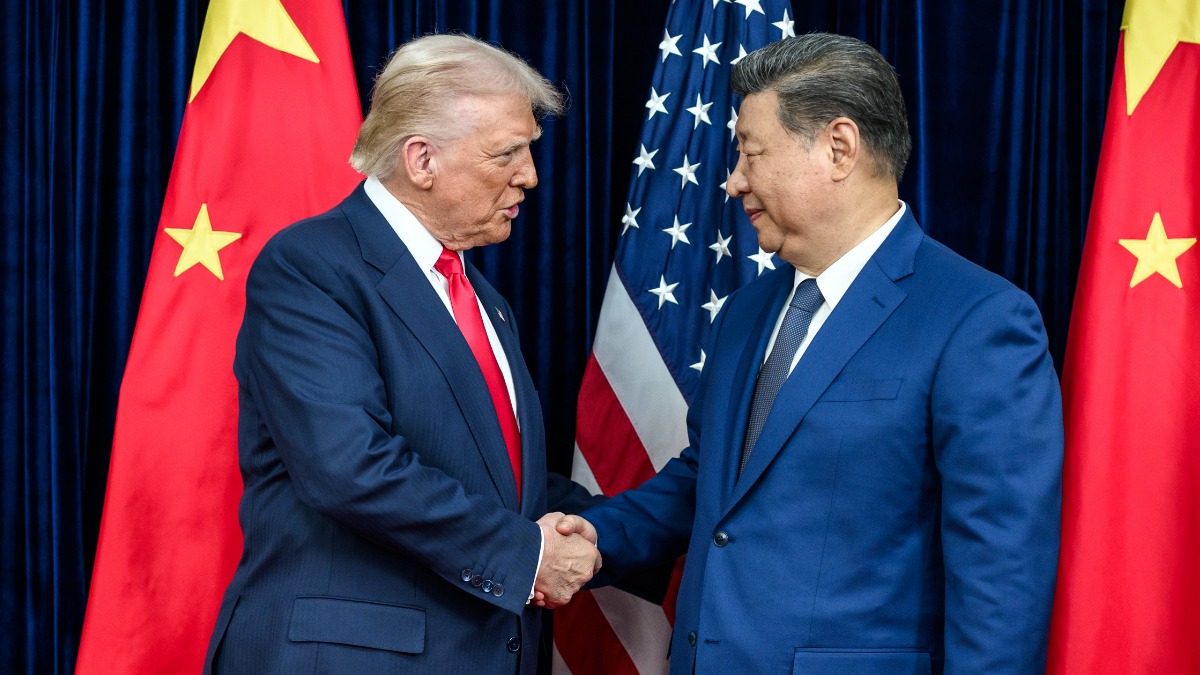

It is a massive week for international diplomacy in Beijing, as Vladimir Putin arrives to meet with Xi Jinping just four days after Donald Trump wrapped up his own high-stakes summit in the Chinese capital. This sequence of events is incredibly rare in the post-Cold War era, and it really highlights how Beijing is quickly becoming the absolute center of global political gravity. The two leaders, Xi and Putin, have already set the stage by exchanging congratulatory letters, signaling that their strategic partnership is only getting stronger as they mark its 30th anniversary.
According to Kremlin aide Yuri Ushakov, as reported by The Guardian, Putin is scheduled to arrive on Tuesday evening, with a formal meeting with Xi set for Wednesday morning. They are expected to dive into all aspects of their bilateral relationship, with the proposed Power of Siberia 2 gas pipeline likely being a significant topic of discussion. This pipeline would be a huge deal, adding 50 billion cubic meters of capacity to the energy network between the two nations.
It is fascinating to see how this plays out, especially when you look at how different this is from the recent talks with the United States. While the US-China summit focused heavily on trade, Taiwan, and the ongoing conflict in the Middle East, the war in Ukraine barely registered a mention in the official statements. In contrast, the Russia-China relationship has been growing tighter by the day.
Since the start of the full-scale invasion of Ukraine in 2022, trade between Beijing and Moscow has reached record levels
China has purchased more than 367 billion dollars of Russian fossil fuels, which has provided Moscow with a massive influx of revenue. This dependency has effectively helped sustain the conflict, according to many Western analysts. For Beijing, these energy purchases are about more than just supporting a partner. They are a strategic necessity for China’s own energy security, particularly with the recent shipping disruptions in the Middle East.
Joseph Webster, a senior fellow at the Atlantic Council, pointed out that Taiwan might actually be the subtext of this entire meeting. If Beijing moves forward with expanding Russian oil pipeline capacity, it would significantly boost its oil security in the event of a future conflict over the self-governing island. Xi has already signaled his position on this, having pressed Donald Trump on the issue of Taiwan during their recent summit. Trump left Beijing without a final decision on a multibillion-dollar arms sale to Taiwan, a move that would be a clear win for Beijing if it were ultimately halted.
The closer alignment between Russia and China is certainly not going unnoticed in the West. Pasi Rajala, Finland’s political state secretary for foreign affairs and defence, recently noted that the two countries are increasingly working in tandem to disrupt free societies and undermine faith in governance. From cyber-attacks to alleged interference in various nations, the concerns are mounting.
Rajala emphasized that Russia would likely struggle to sustain its war in Ukraine without the critical technology and financial support flowing from Beijing. This sentiment is shared by many, including Australian officials who have warned that foreign agents are actively targeting sensitive government data and critical infrastructure projects like the Aukus nuclear submarine program.
It is a delicate balancing act for many nations. Countries like Australia are trying to maintain vital economic trade with China while simultaneously keeping their national security interests at arm’s length. Finland, which shares a massive 1,300 kilometer border with Russia, is pushing for greater awareness regarding these strategic shifts. They are currently looking to deepen defense cooperation with partners like Australia, aiming to integrate civilian and military preparedness as they navigate an increasingly complex global landscape.








Published: May 18, 2026 05:00 pm