


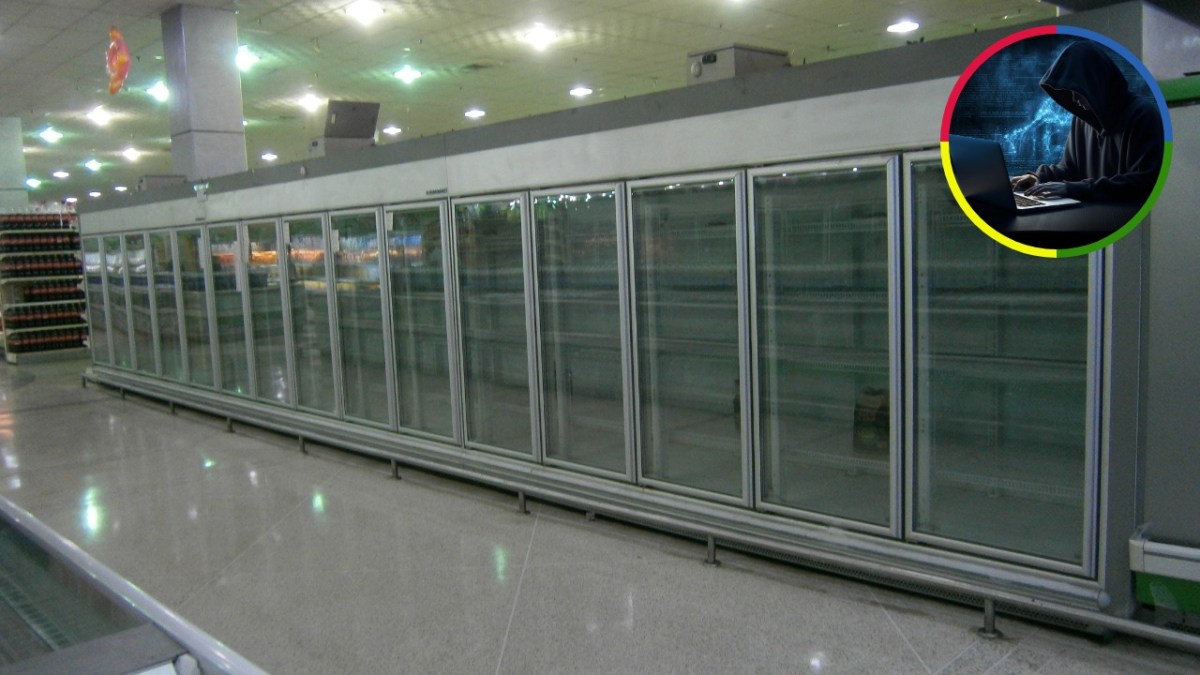

A Delhaize supermarket in Flanders recently faced a massive loss of over $110,000 worth of food after hackers remotely manipulated the temperature settings of its refrigeration units. The attackers managed to gain access to closed networks, turning up the heat on fridges and freezers until the contents were spoiled.
As reported by LADbible, the affected units were still running on default factory settings for usernames and passwords. It seems the hackers used the username Supervisor and tried the password 12345. Because this specific vulnerability was documented publicly, the devices became easy targets for anyone looking to cause disruption.
Experts are now looking into the broader implications of the attack. Dr Xavier Bellekens from Lupovis, an organization started by the University of Strathclyde, believes this was a coordinated effort. He told The Sun that the devices were probed for 10 days before the attack actually took place. This level of planning suggests that the people behind it are not just random individuals acting on impulse.
The attack hit seven countries
Dr Bellekens said, “The coordination across all of the European countries, the fact that all of these devices were probed essentially end days for 10 days before the attack means that not only there is coordination, but it’s a planned attack.” He also noted, “When we look at our previous data, previous attacks, we can effectively say that we are not talking about an adversary that might be a teenager in a bedroom.”
The attack hit seven countries across Europe, with Belgium and Luxembourg seeing the worst of the damage. Other affected nations include Finland, Estonia, Ireland, the Netherlands, and Sweden. The Delhaize branch in Belgium reported a loss of €100,000 in food alone. This figure does not even account for the additional financial hit the business took because it had to close its doors.
Dr Bellekens suggested that if Russia is responsible, it could be a way to show Western countries what they are capable of doing. He said, “If you were Russia and you wanted to demonstrate capabilities on a critical system, because food is part of our critical national infrastructure, you wanted to demonstrate capabilities at a European scale, the food market is a perfect target.”
He also noted, “I don’t think there’s anybody in the UK now that has not heard of those attacks in Europe, in the UK and elsewhere.” While it is too early to confirm the exact source, cybersecurity specialists in the United Kingdom are now on high alert. They are reportedly watching over electricity grids, gas grids, and water networks to prevent similar breaches.









Published: Nov 6, 2026 05:30 am