



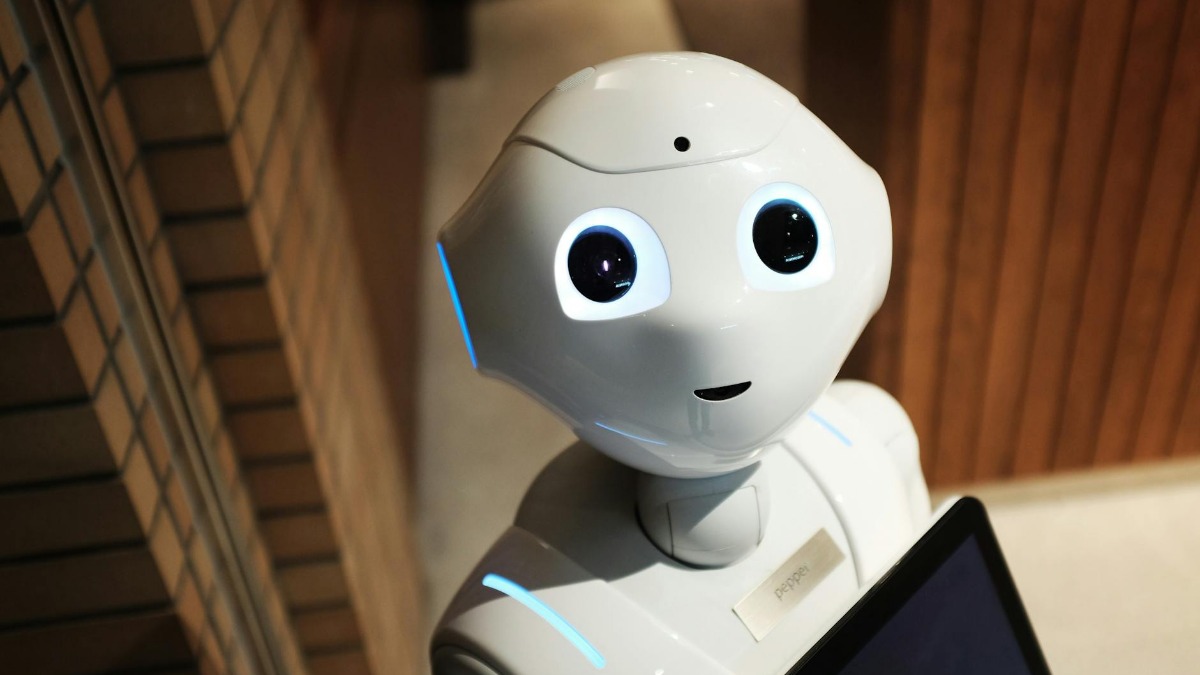

Japan Airlines is set to trial humanoid robots for baggage and cargo handling on the tarmac at Tokyo’s Haneda Airport starting in May. The story gained traction when reported by Interesting Engineering, which detailed how the airline is turning to robotics as the country grapples with a persistent and worsening labour shortage, compounded by a record surge in inbound tourism.
The robots are manufactured by Hangzhou-based company Unitree and are known as the G1. During a media demonstration, the G1 was seen pushing cargo onto a conveyor belt alongside a Japan Airlines plane. The model stands approximately 130 centimetres tall, weighs around 35 kilograms, and features a foldable design for compact storage. It is equipped with 3D LiDAR, a depth camera, and voice input systems, allowing it to navigate the busy and often unpredictable conditions of an active airport tarmac. With 23 degrees of freedom, the G1 is built for significant flexibility and physical coordination.
Training these machines involves a detailed pipeline. Engineers use the Nvidia Isaac Simulator to train the G1 in a virtual environment, building a digital twin of the robot using motion capture and video data to replicate human movements. Those movements are then refined through reinforcement learning before being transferred to the physical robot using a Sim2Real approach. The result is a machine capable of moving at speeds of up to 7.2 kilometres per hour.
There is a clear ceiling on what these robots are permitted to do
On a single charge, the G1 can operate continuously for around two to three hours before needing to be recharged. The trial is scheduled to run through 2028, giving the airline time to assess performance and refine how the robots are integrated into daily operations.
There is, however, a firm line on responsibilities. Yoshiteru Suzuki, president of JAL Ground Service, stated that critical functions such as safety management will remain in the hands of human workers. The robots are designed to handle physically demanding, repetitive tasks, not high-stakes decisions. Airlines have faced their own operational pressure from staffing gaps in recent years, as seen in a widely shared American Airlines gate breakdown in which ground staff could not locate a flight crew or aircraft.
The scale of Japan’s tourism boom makes the urgency clear. More than 7 million visitors arrived in just the first two months of 2026, following a record 42.7 million tourists the previous year. Meanwhile, Japan’s working-age population is shrinking, with estimates suggesting the country may need more than 6.5 million foreign workers by 2040 to sustain growth. Tomohiro Uchida, president of GMO AI and Robotics, has pointed out that despite airports appearing highly automated, back-end operations remain heavily dependent on human labour. The wider issue of workforce reduction affecting major manufacturers and transport companies has drawn scrutiny elsewhere too, amid Bentley’s job cuts as it restructures under market pressure.
Japan Airlines and its partner Japan Airlines GMO Internet Group are already looking beyond baggage handling. Future applications under consideration include using the robots to clean aircraft cabins, with the broader goal of building a more sustainable operational structure that reduces the burden on human ground crews.







Published: Apr 29, 2026 08:15 pm