



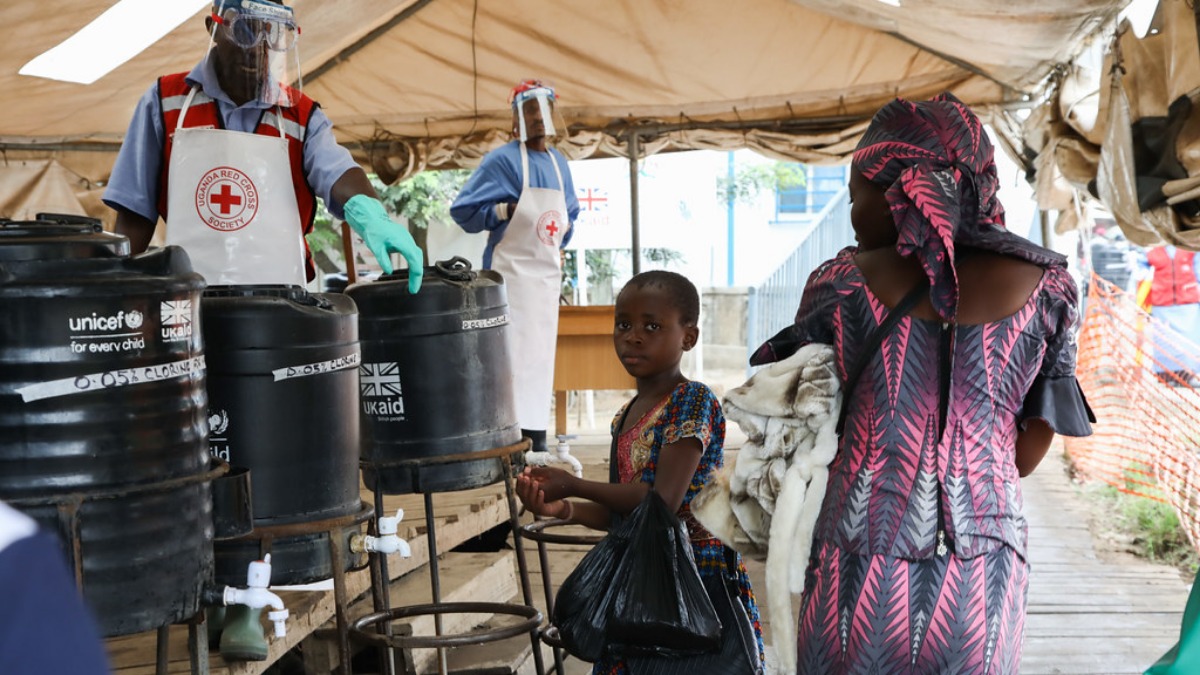

The World Health Organization has officially declared a public health emergency of international concern following the emergence of a rare Ebola variant in Congo and neighboring Uganda. This is a significant development because the outbreak involves the Bundibugyo virus, a strain that currently lacks any approved vaccines or therapeutics. As of Monday, health officials have tracked over 390 suspected cases and 105 deaths in Congo, alongside two confirmed deaths in Uganda.
Congo is now preparing to open three dedicated treatment centers in the eastern Ituri province to manage the influx of patients, Associated Press reported. Congolese health minister Samuel Roger Kamba visited Bunia, the capital of Ituri, on Sunday to assess the response.
During his visit, he emphasized the strain on local infrastructure, noting that hospitals are already overwhelmed. Kamba stated, “We know that the hospitals are already under stress because of the patients. But we are preparing to have treatment centers at all three sites in order to be able to expand our capabilities.”
This Ebola outbreak is particularly concerning due to the delay in initial detection
The first person to die from the virus passed away on April 24 in Bunia. According to Kamba, the virus began to escalate after a body was repatriated to the Mongbwalu health zone, which is a mining area with a large population. The Africa Centers for Disease Control and Prevention noted that another person fell ill on April 26, but the initial response was hampered because local samples were tested for the more common Zaire strain.
The scope of the spread is beginning to reach major population centers. While the epicenter remains in Ituri, cases have been reported in the capital, Kinshasa, and in Goma, which is the largest city in eastern Congo. The World Health Organization Regional Office for Africa shared on X that a team of 35 experts has arrived in Bunia, accompanied by 7 tons of emergency medical supplies and equipment.
Despite these efforts, the situation remains precarious. The Africa CDC director-general, Dr. Jean Kaseya, told Sky News on Sunday that he is in “panic mode” regarding the lack of available medicines and vaccines, though he noted that some candidate treatments are expected in the coming weeks.
The region was already struggling with a severe humanitarian crisis before this outbreak began. Mongbwalu is a remote mining area with poor roads, located more than 1,000 kilometers from Kinshasa. The area is marred by insecurity, including the presence of armed groups that have displaced thousands of people over the past year.
A U.N. official based in Bunia described the atmosphere as uncertain, noting that staff have been advised to work from home and avoid physical contact. With over 273,000 displaced people in Ituri and 1.9 million people in need of assistance, the potential for the virus to spread through high-traffic mining routes and refugee populations is a major concern for global health authorities.
International travel and safety protocols are also being tightened. The U.S. Centers for Disease Control and Prevention issued travel advisories, urging Americans in the region to avoid individuals exhibiting symptoms like fever, muscle pain, or rashes. While U.S. health officials have stated that the risk to Americans is generally low, they have not provided specific details regarding reports of Americans being exposed to the virus. Furthermore, Rwanda has reportedly closed its land border with Congo, allowing entry only to those holding international flight tickets.
The Bundibugyo virus is rare, with this being only the third time it has been detected since 1976. It was first identified in 2007 in Uganda and again in 2012 in Congo. Because it is highly contagious and spreads through bodily fluids, the current lack of medical countermeasures makes containment difficult. Dr. Gabriel Nsakala, a professor of public health, noted that while Congo has extensive experience managing Ebola, this unusual strain complicates traditional response efforts.
As the WHO and other aid groups like Medecins Sans Frontieres and the International Rescue Committee continue their work, the focus remains on contact tracing and establishing the true scale of the outbreak. The emergency declaration serves as a call for a coordinated international response to ensure that diagnostic tests and essential supplies reach the affected regions as quickly as possible.









Published: May 18, 2026 07:00 pm