



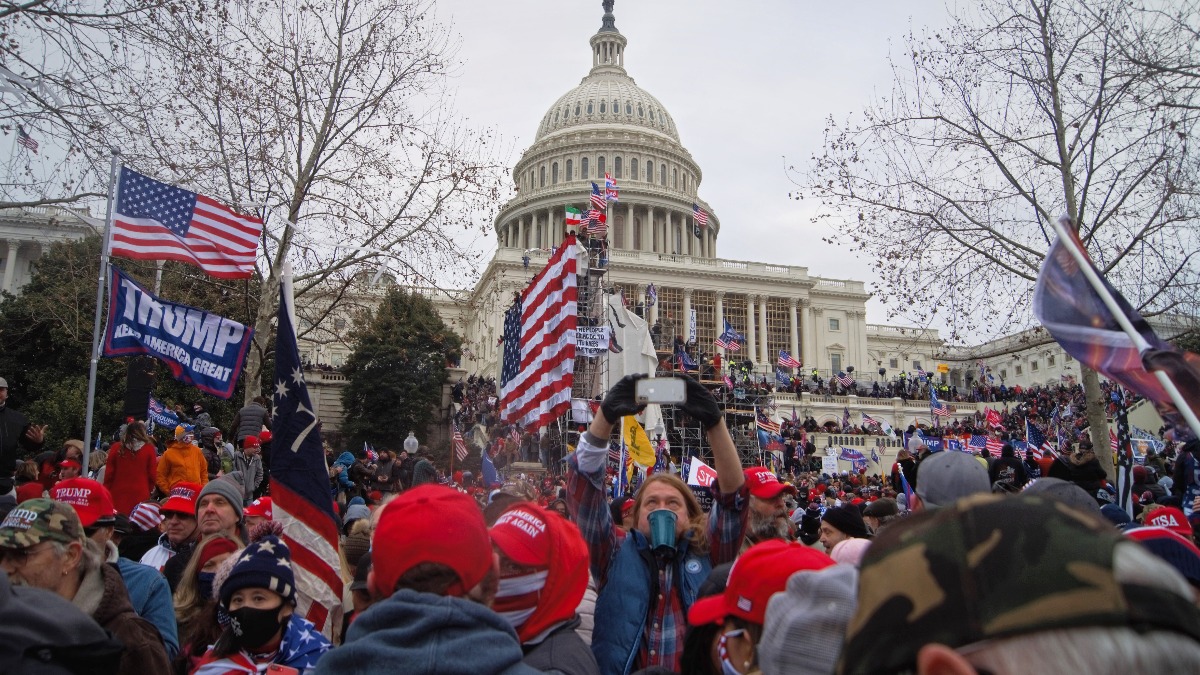

The Trump administration has mass-deleted information about prosecutions tied to the January 6, 2021, attack on the U.S. Capitol, including cases involving defendants who assaulted police officers, NPR reported. This sweeping removal marks the latest phase of President Trump’s ongoing effort to rewrite the history of that violent riot.
Last week, Justice Department news releases detailing guilty pleas, jury verdicts, and prison sentences abruptly vanished from government websites. If you try to access those previously public records now, you’ll simply find a “Page not found” message, which is pretty jarring for official government information.
The Justice Department, taking to social media, defended this move, stating, “We are proud to reverse the DOJ’s weaponization under the Biden administration. We will do everything in our power to make whole those who were persecuted for political purposes. This includes stripping DOJ’s website of partisan propaganda.”
This explanation frames the deletions as an effort to correct what they perceive as political persecution
However, a review by NPR found that the deleted material included crucial information about some of the most serious assaults on law enforcement that occurred that day. NPR maintains what’s considered the most complete database and visual archive of the January 6 prosecutions, which has been incredibly helpful for researchers and the public.
The purged news releases covered a range of severe cases. For example, there was Daniel Rodriguez, who pleaded guilty to driving an electroshock device into the neck of former Washington, D.C., Metropolitan Police Department officer Michael Fanone. Rodriguez was sentenced to more than 12 years in prison. Another case was Albuquerque Head, who pleaded guilty to assaulting police and grabbing Fanone by the neck, pulling him into the rioting mob while yelling, “I got one!” Head received a sentence of more than seven years in prison.
Other significant cases that disappeared include Thomas Webster, who a jury convicted of assaulting law enforcement with a metal flagpole, tackling a police officer to the ground, and trying to remove the officer’s gas mask. Webster was sentenced to 10 years in prison. Then there’s Christopher Alberts, convicted by a jury of assaulting police with a wooden pallet and carrying a loaded handgun on Capitol grounds, who was sentenced to seven years. Finally, Peter Schwartz, convicted by a jury of assaulting police officers with pepper spray and throwing a metal chair at law enforcement, received a 14-year sentence.
This mass deletion of government information about the riot, where a mob of Trump supporters injured 140 police officers and threatened the lives of members of Congress and then-Vice President Mike Pence, isn’t an isolated incident. It follows a broader effort by the Trump administration to whitewash the attack. President Trump previously granted clemency to every January 6 defendant, including full pardons for even the most violent rioters and the erasure of seditious conspiracy convictions for members of extremist groups.
The administration also took other steps, like firing dozens of prosecutors who worked on January 6 cases and hiring a former riot defendant who was seen on video urging the mob to “kill” police. The administration settled a wrongful death lawsuit brought by the estate of rioter Ashli Babbitt, who was shot and killed while storming the Capitol, for nearly $5 million.
On the fifth anniversary of the riot, the White House created a website that distorts that day’s events, describing the rioters as “patriots” and blaming police for causing “chaos.” Just last week, the administration announced a $1.8 billion “Anti-Weaponization Fund,” indicating that even rioters who assaulted police may be eligible for payouts.
President Trump consistently describes his supporters as victims rather than perpetrators of violence when speaking about the attack. “I pardoned people that were assaulted themselves. They were assaulted by our government,” Trump said last year. “They didn’t assault. They were assaulted.” This perspective stands in stark contrast to the experiences of those who were on the front lines.
Police officers who were violently assaulted on January 6 have described suffering lifelong physical and psychological injuries. Former Capitol Police Sgt. Federico Ruiz, in a victim impact statement filed in a January 6 case, said, “I have been sentenced to a lifetime of medical issues that include physical pain and mental and emotional distress. There is not a day that goes by that pain, discomfort, and/or a mental health issue do not flare up to remind me of that day.”







Published: May 27, 2026 05:00 pm