



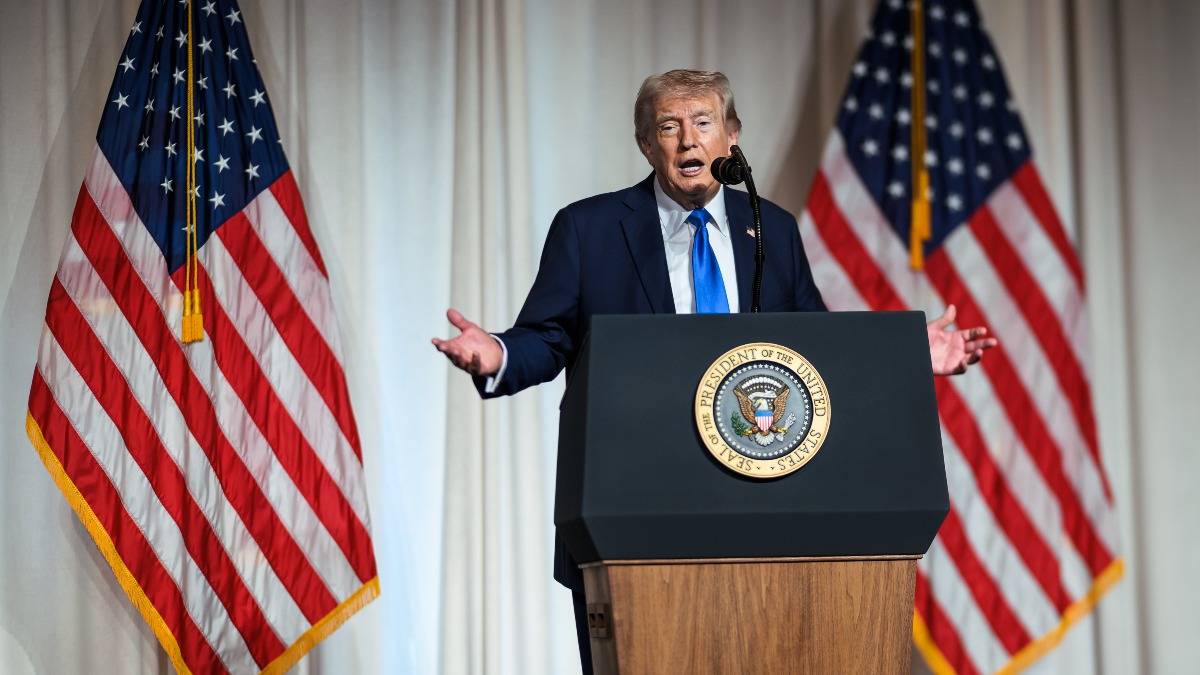

A May survey conducted by Public First, an independent polling company, for Politico finds that 18 percent of President Donald Trump’s 2024 voters say their finances have worsened since he returned to office, and they are pointing to the Iran war as the primary cause. The survey polled 2,065 U.S. adults online from May 9 to May 11, with an overall margin of error of plus or minus 2 percentage points.
Cost-of-living anxiety continues to climb. In November, nearly half of Americans said the cost of living was the worst they could remember. That figure has since risen to 53 percent in May. Responsibility for the economy, meanwhile, remains firmly pinned on the president: 46 percent of Americans laid most or full responsibility for economic conditions at Trump’s feet in November, and that figure is virtually unchanged in the latest survey.
The Iran war is compounding the pressure. More than 60 percent of respondents, including majorities of both Trump voters and those who backed former Vice President Kamala Harris in 2024, said the conflict has driven up prices across the board. Gas, food, and flight costs are among the categories where respondents most frequently reported increases.
Trump’s own voters are split on whether he’s done enough
GOP communications strategist Kevin Madden drew a comparison between the current situation and a challenge that undermined Joe Biden’s presidency, noting that a signature problem for Biden was explaining away inflation as transitory. Madden sees a similar bind for Trump, saying that as prices rise due to tariff, trade, and conflict pressures, telling voters it is a hoax or untrue is a discordant message when so many are feeling a budget squeeze at the pump and the grocery store.
White House officials have faced sustained questioning over oil and gas prices, and battleground Republicans have grown anxious that a prolonged conflict could damage their prospects in key Senate and House races this November. Trump’s approval rating had already fallen to a new low earlier this year as gas prices surged following the opening of the conflict.
Attempts to shift blame onto Biden are not landing. Only 28 percent of Americans say the former president is mostly or fully responsible for current economic conditions, a stark contrast to the roughly half still attributing responsibility to Trump. An anonymous Florida-based Republican strategist told Politico that the sooner the war winds down, the better Trump’s midterm prospects become, given how closely the price of gas tracks with voter perceptions of affordability.
White House spokesperson Kush Desai acknowledged that the president has been clear about short-term disruptions and stated that as traffic in the Strait of Hormuz normalizes, Americans will again see gas prices fall, real wages grow, and inflation cool. Among Trump voters, the picture remains divided. Forty-three percent say Trump has done enough to shield them from the economic costs of the war, while 43 percent say he has not, a tie that reflects broader tensions within the GOP itself, with figures including Tucker Carlson and former Rep. Marjorie Taylor Greene openly opposing the conflict.
A plurality of Trump voters, 42 percent, still back continued U.S. involvement in Iran even if it means higher costs, compared to just 11 percent of Harris voters and 22 percent of all respondents. Trump has offered conflicting signals on when consumers might see relief, having given contradictory answers on gas prices before the midterms within a span of four days.
Inflation has climbed to its highest point since Trump returned to office, and first-quarter economic growth came in below initial estimates. Nearly half of Americans cite inflation as their primary affordability concern, while roughly a quarter point to overseas conflicts as the main driver. Strong majorities, including most Trump voters, report that prices for gas, food, and medicine have risen since he took office.








Published: May 29, 2026 07:00 am