



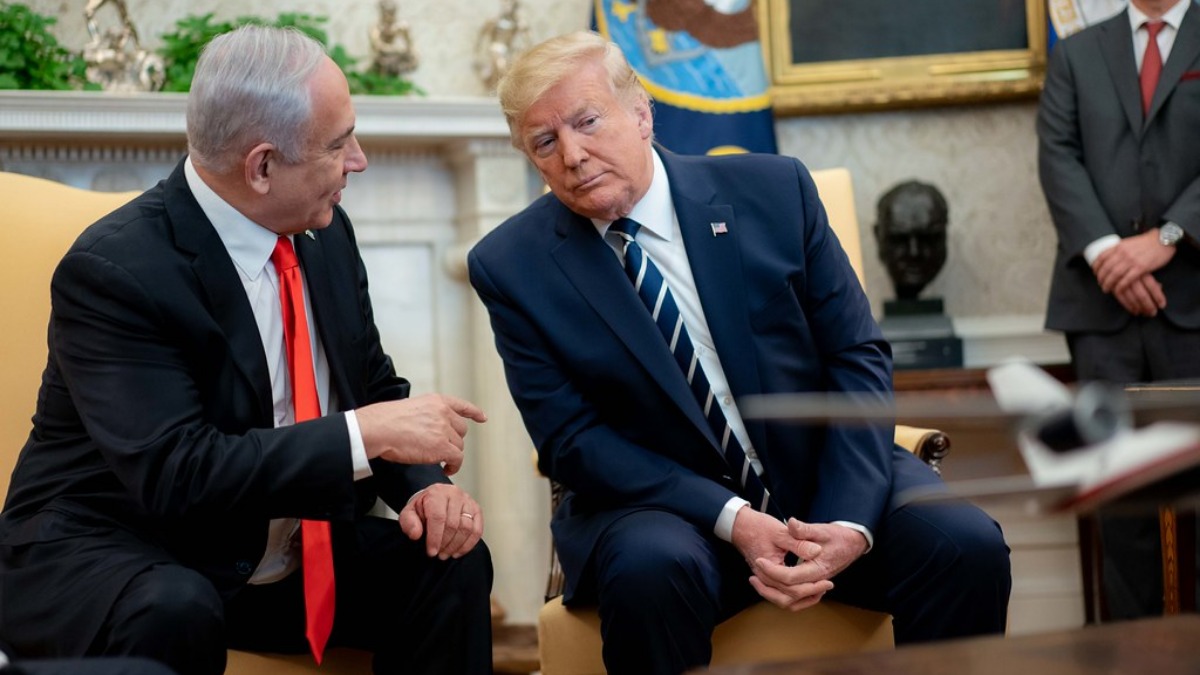

The power dynamic between Washington and Jerusalem is under intense scrutiny this week as Israeli Prime Minister Benjamin Netanyahu has publicly vowed to strike Iran whenever necessary. This defiant stance follows a series of high-tension events that have left the Middle East on edge, specifically after President Trump declared on Sunday that he is the one who “calls the shots” in the ongoing conflict between the United States and Israel.
On Monday, Netanyahu addressed the situation in a statement aired on Israeli television. “Israel has every right to self-defense, and we will exercise that right whenever necessary,” Netanyahu stated. He also attempted to frame his relationship with the American leadership in a diplomatic light, noting, “I say this to you just as I say it, with appreciation and respect, in my positive conversations with my friend, President Trump.”
The friction reached a boiling point over the weekend when Iran fired missiles into Israel. This marked the very first time Tehran had directly fired at the country during the fragile ceasefire that had been in place since April 8. Tensions were already high after Israel breached a security zone intended to serve as a buffer between Lebanon and Israel, specifically targeting the Iranian-backed militant group Hezbollah. This move came despite a U.S.-brokered ceasefire agreement that was supposed to keep the peace.
It is a precarious situation in the Middle East
Netanyahu did not hold back when discussing the recent provocations. “They believed they could fire at Israel from Lebanon and Iran — and that we would not respond. That did not happen, and it will not happen. Not on my watch,” he said during his Monday address. He further warned that if Iran makes a mistake and resumes attacks against Israel, the response will be forceful.
The situation is complicated by the conflicting narratives coming out of the White House and the Israeli government. Shortly after the strikes on Sunday, Trump spoke with the Financial Times and claimed that Israel would not have any choice but to accept a potential deal to end the war. “I call the shots. I call all the shots. He doesn’t call the shots,” Trump said, referring to the Israeli Prime Minister.
This assertion from Trump stands in stark contrast to the actions taken by the Israeli military. A senior U.S. official previously noted that Trump had urged Netanyahu not to retaliate immediately following the Iranian missile attack, believing he had convinced the leader to wait. The official stated that Trump “got Bibi to hold off for the time being,” though this clearly did not stop the subsequent Israeli military operations.
The military reality on the ground is quite intense. Israel launched airstrikes on an Iranian petrochemical complex and dismantled various defense systems across the country. Reports from Iranian state television indicated that explosions were heard in cities such as Isfahan, Karaj, Tabriz, and Tehran. The Islamic Revolutionary Guard Corps later reported that Israel used air-launched ballistic missiles during the Monday morning attack. Meanwhile, the IRGC claimed to have targeted two military bases in Israel as part of an operation they labeled as Victory.
The regional impact is also hitting global markets. Brent crude jumped $3.50 to $96.59 a barrel on Monday, and Asian stocks saw a sharp decline. Beyond the direct conflict between Iran and Israel, Yemen’s Iran-aligned Houthi rebels have also entered the fray. They announced a missile attack on Israel and declared a complete and total ban on Israeli maritime navigation in the Red Sea.
While the White House has remained largely silent on whether the Israeli strikes were coordinated with the U.S., Iranian officials are skeptical of any claims that Israel acted alone. Esmaeil Baqaei, a foreign ministry spokesperson for Iran, stated, “No one believes that the Zionist regime would carry out any action without prior coordination and cooperation with the United States.” He added that the diplomatic process meant to end the war is inevitably going to be affected by these developments.
Adding to the complexity, Trump also took to his Truth Social platform on Monday to demand that both nations cease their fire. “Israel and Iran must immediately stop ‘shooting’. President DONALD J. TRUMP,” he wrote. Despite these public proclamations and his insistence that he is in control, the reality on the ground suggests that the conflict remains highly volatile. For now, the world is watching closely to see if the rhetoric will lead to a broader regional war or if the fragile diplomatic efforts can somehow be salvaged.









Published: Jun 8, 2026 03:30 pm