



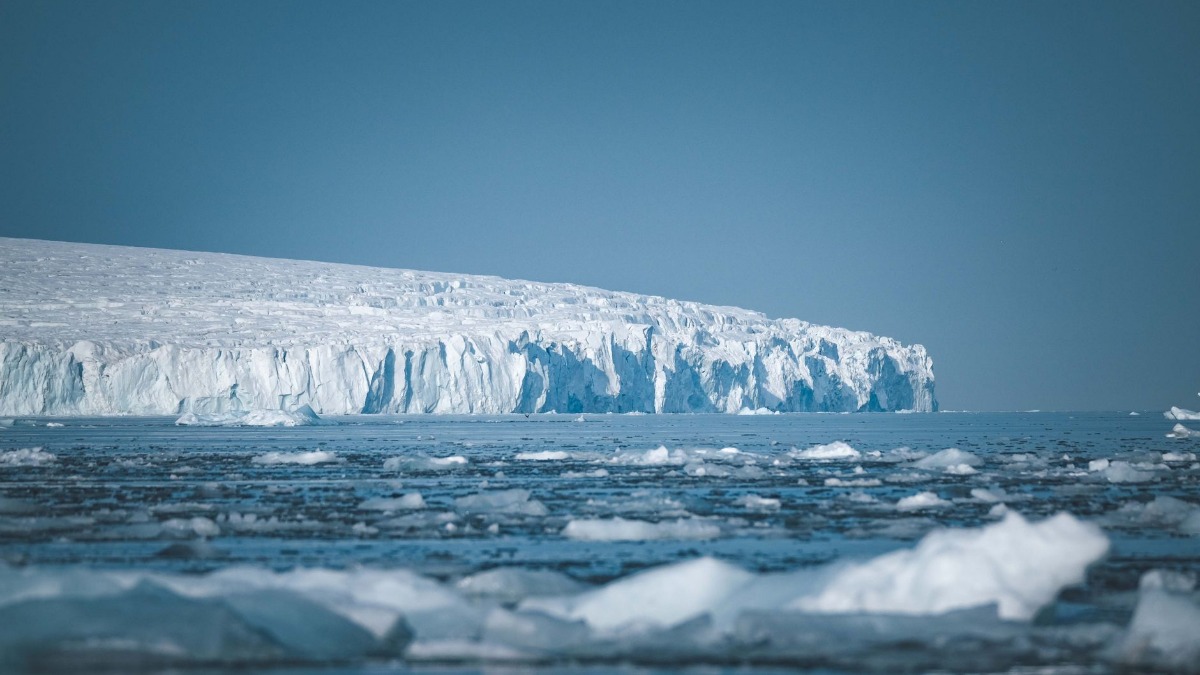

Antarctica is currently missing a massive expanse of winter sea ice that covers an area roughly the size of France, a development that has experts sounding the alarm about the stability of the entire continent. Satellite imagery confirms that the Bellingshausen Sea, which should be blanketed in thick ice during the month of June, is sitting almost entirely open, The Guardian reported.
This missing ice totals about 650,000 square kilometres, or 250,000 square miles, when compared to the long-term averages recorded between 1991 and 2020. It is a staggering gap that is nearly 10 times the size of Tasmania, and it highlights a troubling trend for the region.
It is currently winter in the southern hemisphere, which is the time of year when sea ice should be expanding rapidly toward its peak in September. Instead, researchers are watching the charts with growing anxiety as the total sea ice coverage around the continent sits at roughly 11.4 million square kilometres as of 10 June. This falls significantly short of the typical 12.6 million square kilometres experts usually expect to see by that date.
The implications for local wildlife are significant, particularly for krill
Dr Will Hobbs, an expert on Antarctic sea ice based at the University of Tasmania, expressed his frustration with the current state of the region. “I’m concerned. It’s depressing,” said Dr Will Hobbs. He noted that this marks the third instance in just four years that sea ice levels in this specific area have plummeted to such low points. “It is remarkable that we are in June and there is no sea ice there,” he added.
The implications for local wildlife are significant, particularly for krill. These tiny organisms are a foundational component of the Antarctic food web, and they rely on the undersides of sea ice to graze on algae and hide from predators during the winter months. Without that protective barrier, the entire ecosystem faces increased pressure.
Dr Peter Fretwell of the British Antarctic Survey has been tracking the decline of penguin populations, and he noted that the situation is becoming dire for species like the emperor penguin. “Sea ice is forming too late and breaking up too early. It leads to reduced breeding success and longer trips to moulting grounds,” said Dr Peter Fretwell.
The region was already the site of a disaster in late 2022, when four colonies experienced a catastrophic breeding failure that resulted in the deaths of thousands of emperor penguin chicks. This prompted international authorities to elevate the species to endangered status. Other animals are struggling as well, with Adelie penguin numbers falling and crabeater seals being forced to migrate further to locate stable ice.
The missing ice could also trigger a feedback loop that accelerates global sea level rise. Dr Phil Reid, who monitors environmental conditions at the Bureau of Meteorology in Australia, pointed out that the Bellingshausen Sea sits right next to the Pine Island and Thwaites glaciers. These glaciers are major contributors to ice loss, and they are currently shielded by floating ice shelves.
If the protective sea ice remains absent for extended periods, those shelves are much more likely to break up. Once those buffers are gone, the glaciers can flow into the ocean more quickly, which would inevitably lead to higher sea levels across the globe. Dr Reid noted that the area has seen incredible coastal exposure during both winter and summer seasons over the past few years.
This lack of ice also appears to be influencing the regional climate in dangerous ways. Recently, the Antarctic Peninsula experienced a severe heatwave that saw temperatures spike to levels far above the norm. Officials at the Servicio Meteorológico Nacional in Argentina reported that the Esperanza base recorded a peak temperature of 15.4C on 5 June, followed by 13.4C on 6 June.
To put that in perspective, the average daily maximum for that time of year is usually around -6.2C. The previous record for June was 13.3C, which was set on 12 June 1998. Dr Hobbs believes it is logical to assume the lack of sea ice made this heatwave worse, as the ice usually helps cool down warmer air moving in from the north. Scientists are now working to determine exactly how much global heating is driving these changes.
As for the future of the Bellingshausen Sea, Dr Hobbs remains pessimistic about a return to normal conditions. “I don’t think we will see sea ice there any more. It’s done,” he said.






Published: Jun 12, 2026 06:00 pm