



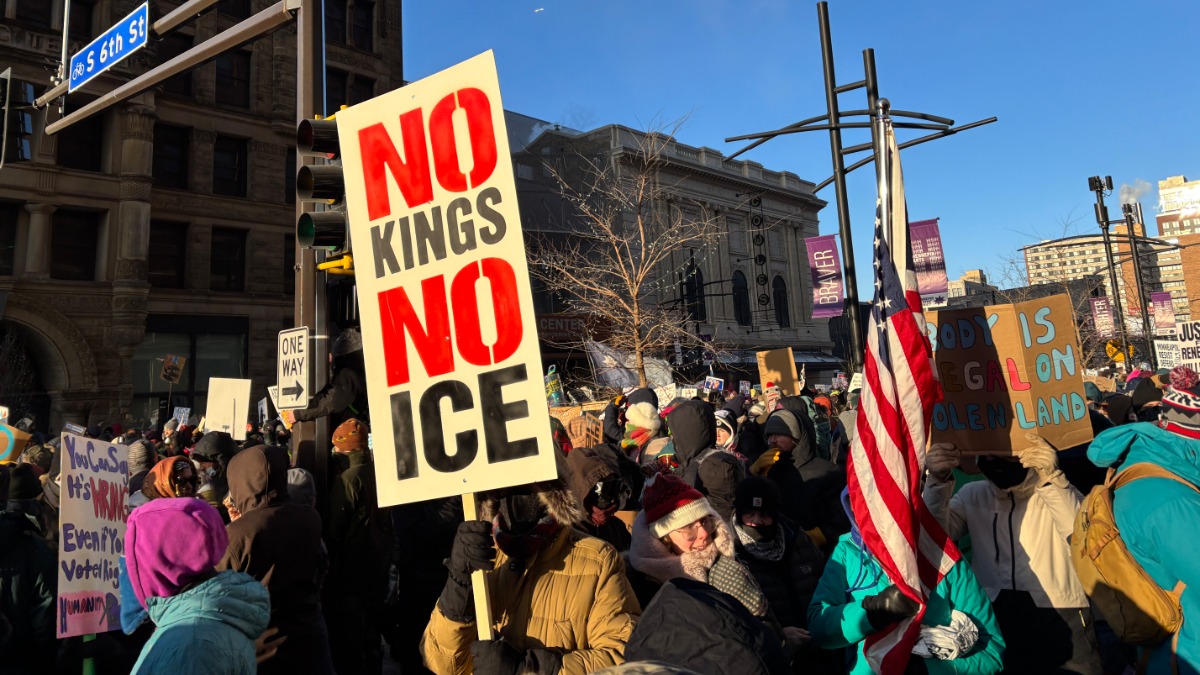

On Tuesday, nine activists were sentenced in a Texas courtroom for their involvement in a protest at an immigrant detention facility in Alvarado, Texas. The terms range from 50 to 100 years in prison, The Guardian reported.
This outcome follows a three-week jury trial that concluded in March, where the defendants were convicted on various charges, including riot, explosives offenses, and providing material support to terrorists. The protest, which took place on the Fourth of July, was originally intended as a noise demonstration to show solidarity with those inside the facility.
The situation escalated when some participants vandalized property, including cars and a security camera. During the event, an officer arrived on the scene and drew his weapon, leading to a moment where Benjamin Song fired an AR-15 from the woods, striking the officer in the shoulder. The officer survived the shooting. Benjamin Song received a 100-year sentence for charges including attempted murder of an officer of the United States, as well as firearm and explosives-related counts.
The sentencing structure utilized in this case has drawn significant scrutiny
Barbara McQuade, a former federal prosecutor who served as the US attorney for the eastern district of Michigan during the Obama administration, noted that the severity of these prison terms is highly unusual. She explained that judges typically sentence defendants for separate counts concurrently. In this instance, it appears the judge stacked the sentences for each count consecutively. McQuade mentioned that she would have expected lengthy sentences in the ballpark of 15 to 25 years, rather than the 50 to 100 years handed down.
The administration has framed these convictions as a major victory. Todd Blanche, the acting attorney general, issued a statement praising the outcome. He stated, “The sentences handed down today make clear that Antifa terrorists who attack law enforcement and federal facilities will face swift and uncompromising justice.” He added, “Their violent extremism has no place in our country, and the Department of Justice will continue to aggressively investigate, disrupt, and prosecute those who threaten law enforcement officers or undermine the rule of law.”
The sentences differ significantly from those given to high-profile figures involved in the January 6 attack on the Capitol. Enrique Tarrio, the leader of the Proud Boys, received 22 years for seditious conspiracy, while Stewart Rhodes of the Oath Keepers was sentenced to 18 years.
The activists in the Texas case received significantly more time despite many of them having no history of violence. For example, Zachary Evetts, a mechanical engineer, was sentenced to 50 years. His lawyer, Patrick McLain, described him as “a man of peace” and confirmed that they intend to appeal the conviction.
The prosecution argued that the activists were part of a North Texas antifa cell, a move viewed by many as an effort to criminalize a constellation of left-wing views. During the trial, prosecutors pointed to messages on Signal, an encrypted messaging platform, and the possession of firearms as evidence of premeditation.
However, the defense highlighted that the firearms were legally purchased and that the group was a loose collection of activists connected by a local book club. Some defendants, such as Savanna Batten and Elizabeth Soto, were not even involved in the planning stages and left the scene when requested by guards.
Daniel Sanchez-Estrada, who was not present at the protest, received 30 years in prison for corruptly concealing a document or record after he moved materials for his wife, Maricela Rueda. Rueda herself was sentenced to 70 years. Before his sentencing, Sanchez-Estrada told the court he is a father, husband, and teacher who believes in human rights, but is not a terrorist.
The legal strategy used by the government to secure convictions for providing material support for terrorists has been widely debated. While the charge does not require a connection to a specific terrorist ideology, the Department of Justice has used these convictions to characterize antifa as a terrorist organization.
Critics argue that the use of book club materials and zines as evidence of a conspiracy amounts to an attack on freedom of speech. As the government pursues similar prosecutions in other parts of the country, including Minneapolis, Spokane, and Chicago, critics have called this Texas case a concerning precedent for how dissent is handled in the current political climate. The families of the convicted, like Amber Lowrey, have vowed to continue fighting these convictions, insisting that the case has relied on misinformation from the beginning.








Published: Jun 24, 2026 07:45 am