



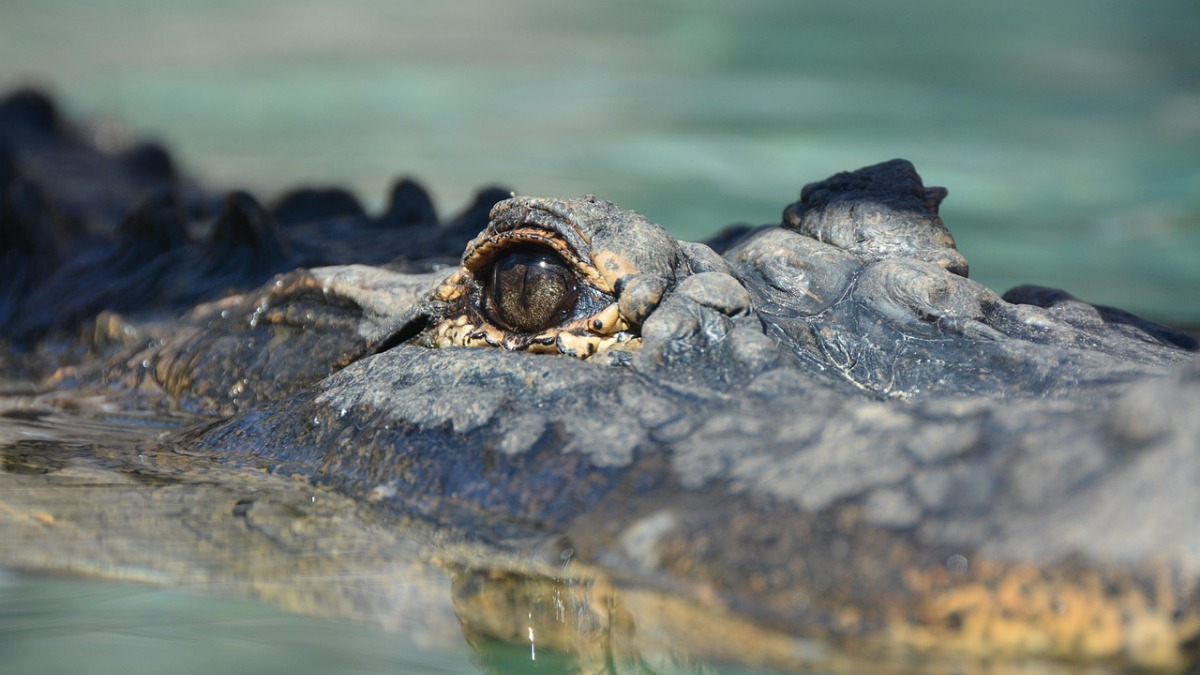

A homeowner in the Toscana Isles neighborhood of Nokomis, Florida, discovered a nine-foot, four-inch alligator in their swimming pool at 5:45 AM. As detailed by BroBible, the resident first spotted the reptile through a Ring security camera before Sarasota County officials and the Venice Police Department were notified and arrived on the scene.
Finding an alligator in a residential pool is uncommon in Florida, even though the animals are frequently spotted in local ponds and small lakes. Many homeowners use screened enclosures around their pools specifically to keep pests and wildlife out, which typically keeps alligators away from swimming pools even in areas where the reptiles are common nearby.
Once officers arrived, an alligator wrangler was brought in to handle the removal. The wrangler safely captured the animal and moved it out to the street before relocating it elsewhere, and the process was carried out without incident.
Florida officials say the state’s healthy gator population makes relocation a rare solution
The Venice Police Department later issued a lighthearted statement about the encounter, saying, “Don’t let your morning routine become a real ‘see you later, alligator’ story.” The department added that residents should give these wild animals the space they need.
The Florida Fish and Wildlife Conservation Commission, or FWC, maintains a Statewide Nuisance Alligator Program to address concerns in developed areas, drawing on guidance detailed by the Florida Fish and Wildlife Conservation Commission. The agency generally considers an alligator a nuisance if it measures at least four feet long and is believed to pose a threat to people, pets, or property.
Alligator encounters have made headlines elsewhere in recent months, including a Louisiana swamp arrest where a fleeing suspect was bitten by an alligator before officers took him into custody. Residents who encounter an alligator matching the FWC’s nuisance criteria can call the toll-free Nuisance Alligator Hotline at 866-FWC-GATOR.
Alligators under four feet are generally not considered dangerous to people or pets, though handling them is illegal and can lead to serious infections from bites. If a smaller alligator ends up in a pool or garage, the FWC still recommends calling the hotline so a professional trapper can resolve the situation.
The FWC does not typically relocate nuisance alligators because Florida has a stable population of approximately 1.3 million gators, and relocated animals frequently attempt to return to their original capture sites. Alligators inhabit all 67 counties in Florida and can be found in most wild areas that support them.
Escaped or displaced alligators have drawn attention in other states as well, including an Indiana alligator search after a two-foot gator went missing from a private animal show. The FWC encourages Florida residents to stay alert to the possible presence of alligators in nearby ponds and canals.
The Nokomis discovery came just days after a 31-year-old woman was fatally attacked by a 13-foot alligator on the Econlockhatchee River, an attack that DNA lab results later linked to that animal, though a 12.5-foot alligator was also found in the vicinity. A 71-year-old Florida man survived a separate encounter shortly after by using his fishing pole to fight off an attacking gator.
No further incidents involving the Toscana Isles alligator have been reported since it was relocated.









Published: Jul 18, 2026 05:00 am