



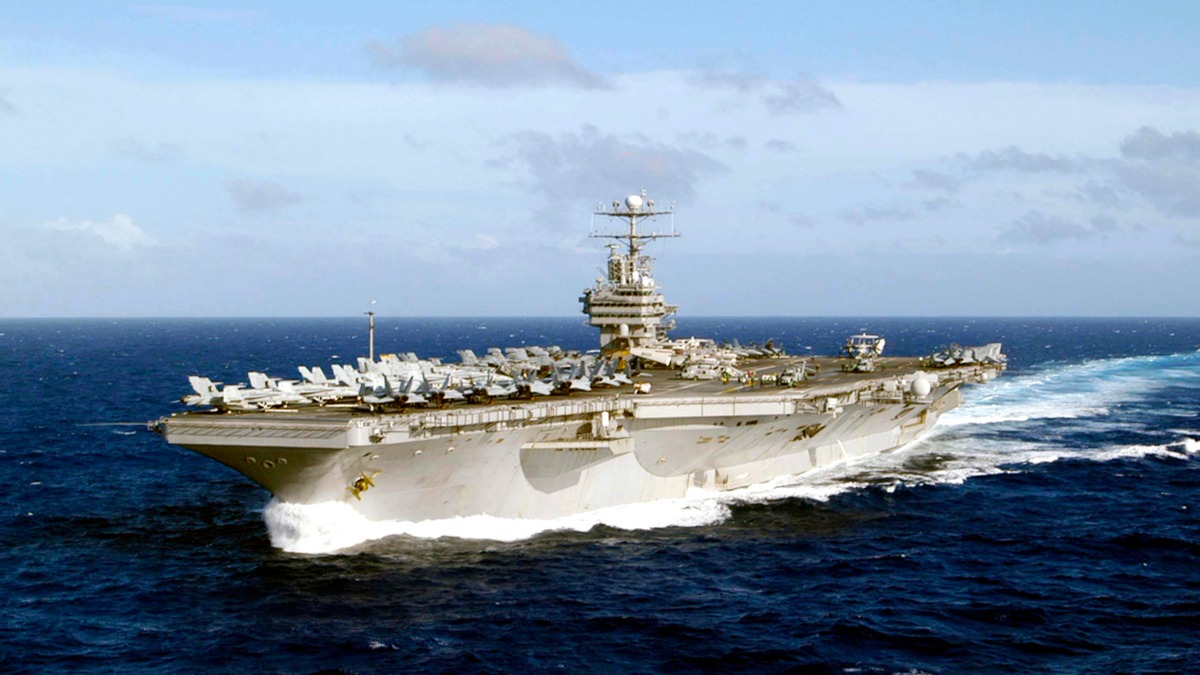

The tension aboard the USS Abraham Lincoln has reached a boiling point as families directly confronted Navy leadership on Thursday regarding the mental health of sailors currently deployed in the Middle East, Stripes reported. During intense town hall meetings, one spouse tearfully shared a message she received from her husband that same day, stating that “he hopes he doesn’t wake up tomorrow.”
This harrowing account was delivered to Acting Secretary of the Navy Hung Cao and other senior officials, including Vice Adm. Douglas Verissimo and Vice Adm. Joseph Cahill, who presided over the sessions. The carrier has been at sea for more than eight months, logging a record-breaking number of days without a port stop.
The deployment, which was originally anticipated to end in May, has been extended indefinitely with no publicly announced return date. Sailors and their families are reporting that the grueling schedule, which has included 40 days of continuous combat operations, is pushing the crew to their breaking point.
Interviews with active-duty sailors and their loved ones reveal a grim reality of declining morale and exhaustion
There are reports of sailors struggling with suicidal thoughts, and one crew member was even reportedly prevented from jumping overboard. One parent expressed the difficulty of the situation, writing, “My son is currently on that ship and listening to him say that he and his shipmates constantly think about jumping off the ship just for relief is so hard to listen to.”
While officials at the meetings did not directly respond to the specific, distressing anecdotes shared by families, they emphasized that sailors have access to chaplains, doctors, and mental health workers. They also noted that the service is working to send additional mental health professionals to the ship. In a statement released Monday, the Navy said, “Leadership is continuously conducting assessments to monitor and sustain the psychological readiness of every sailor.”
One attendee told the senior officials that they had “broken trust between us and the leadership.” Sailors themselves describe a feeling of hopelessness, with one crew member noting, “We’ve just been turning and burning the whole time we’ve deployed.” The sailor added that morale is so low that many would prefer to skip any potential port visits if it meant returning home sooner. “All we want is a date home,” the sailor said.
The physical conditions have also been a major stressor. Reports of food rationing, water shortages, and laundry delays have circulated, though the Navy says those logistical issues are improving. The service explained that operating in a highly contested environment required them to prioritize mission-critical supplies.
The uncertainty of the timeline is a significant factor in the deteriorating mental state of the crew. Retired Navy chief petty officer Thomas Nutzmann explained that the lack of a clear end date makes it nearly impossible to maintain optimism. “The problem is when you’re out to sea for so long, you can only do so much to keep morale up before you hit a stalemate,” Nutzmann said.
For now, the roughly 5,000 service members remain at sea with no clear answer on when they will return. The Navy maintains that it is committed to “listening to our families, supporting our servicemembers, and ensuring the Abraham Lincoln Carrier Strike Group has the resources needed to safely and successfully accomplish its mission.”








Published: Aug 12, 2026 04:00 pm