



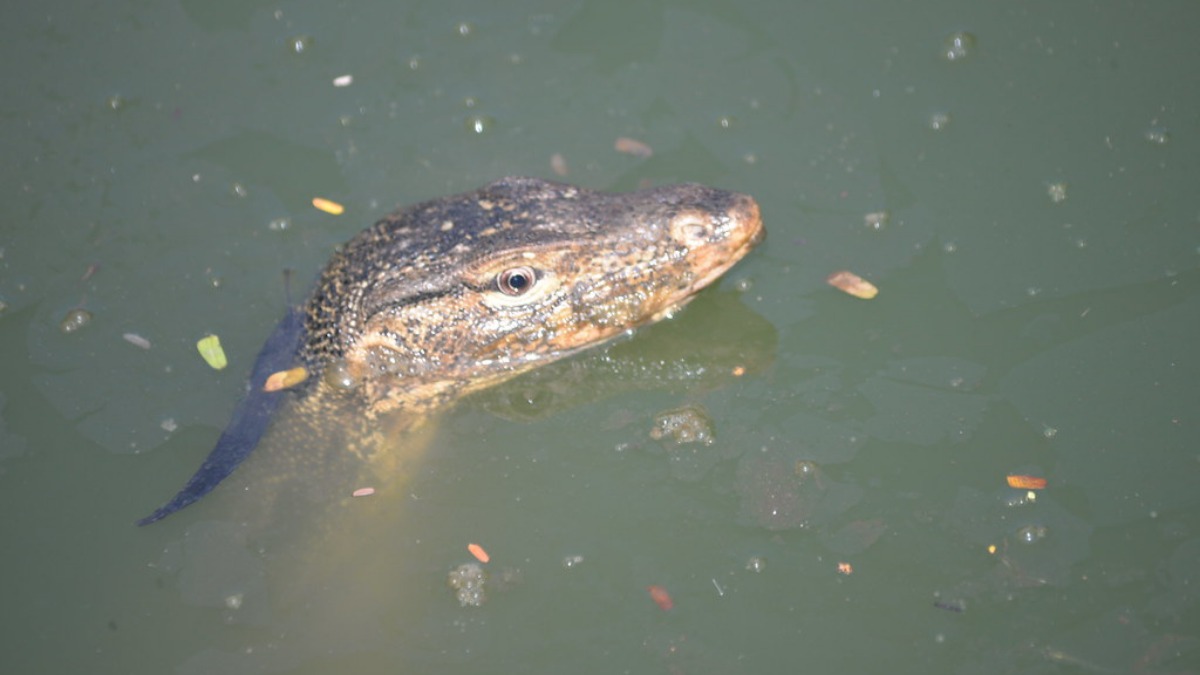

A large Asian water monitor lizard is back home in Bedford County, Tennessee, after spending nearly a month on the run. As reported by UPI, Bedford County Animal Control captured the reptile on Friday after it was spotted on Spring Street in the town of Wartrace. The lizard had originally escaped its home on July 20, and it was found roughly half a mile from where it first got loose.
Following the capture, the Bedford County Sheriff’s Office posted a photo of the animal on social media in an effort to track down its owner. The post worked, and the office later confirmed the owner had been identified and the lizard was returned home. Asian water monitors are known for their size and intelligence, which made the animal’s monthlong disappearance a notable local story.
Asian water monitors are native to southern and Southeast Asia, with populations ranging from Northeast India to islands throughout Southeast Asia. They have adapted to a wide range of environments, including dense urban areas such as Bangkok, where the species is frequently spotted navigating city streets and waterways. That adaptability is part of why an escaped specimen can travel unnoticed for extended periods.
The lizard’s size explains why it caused such a stir
Asian water monitors rank as the third-longest lizard species in the world, trailing only the Komodo dragon and the crocodile monitor. Adult males typically measure between five and eight feet long, though the species can grow larger, including a recorded specimen from Sri Lanka that reached 10.5 feet. The animals can also live for 15 to 20 years or more in captivity, which factors heavily into the level of commitment required to keep one, a detail that has drawn renewed attention amid a fake Airbnb rental story that similarly went viral this month for showing how quickly an unexpected situation can escalate.
Growth rates add another layer of difficulty for owners. A hatchling monitor may start out around 10 inches long but can grow several feet within a single year under the right conditions. Keepers often begin hatchlings in a 40-gallon enclosure before eventually moving them into custom habitats that can reach eight feet in length and height, according to Reptiles Magazine, which also notes that the animals require both vertical and horizontal space to stay active.
Husbandry requirements extend beyond enclosure size. The species needs specific temperature ranges, high humidity, and a large water reservoir deep enough for full submersion, since the animals are semi-aquatic and rely on water access to regulate body temperature. Inadequate humidity or stagnant water conditions can lead to skin infections and other health problems, a pattern that has echoed in a viral local story that also drew widespread attention this week for how quickly community reaction can spread online.
Feeding needs shift significantly with age. Hatchlings typically eat daily or every other day, while adult monitors may only need to eat two or three times per week due to their slower growth rate. The species is considered an opportunistic feeder, meaning it will generally eat whenever food is available, which keepers say makes portion control an ongoing concern in captivity.
The Bedford County Sheriff’s Office confirmed the reptile was returned to its owner shortly after the animal control team’s capture.








Published: Aug 13, 2026 01:00 pm