



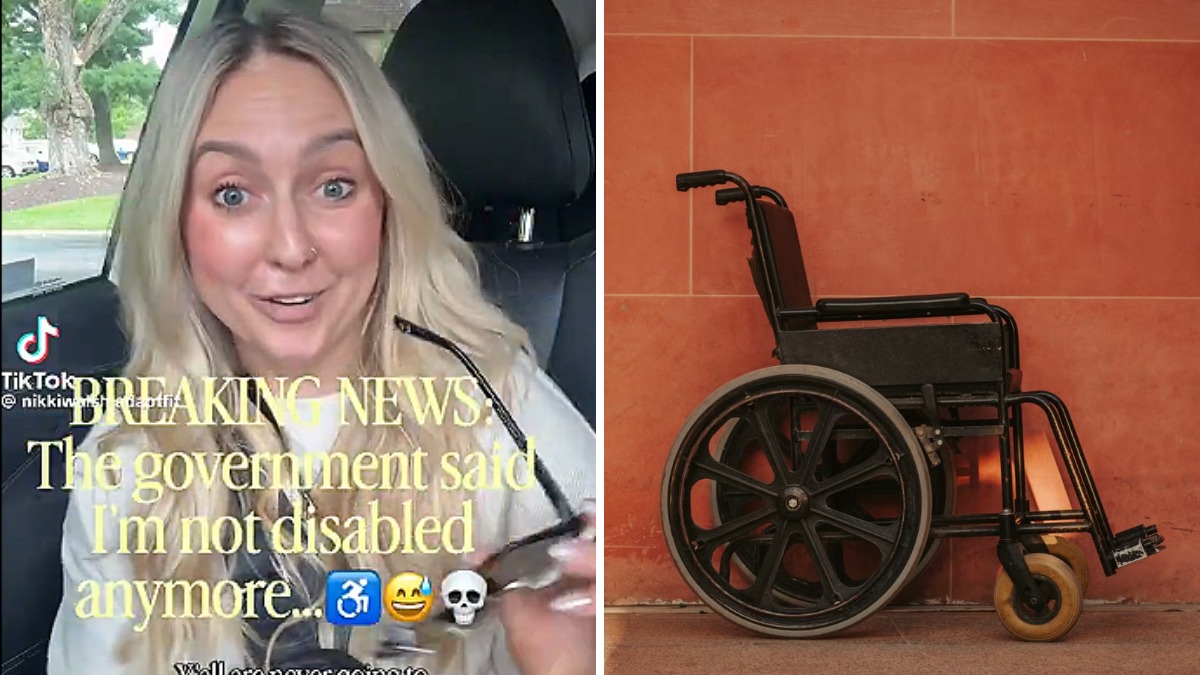

The Social Security Administration recently sent a letter to a woman that effectively declared her disability had ended, despite the fact that she remains a wheelchair user who requires daily accommodations. According to The Daily Dot, the woman shared her experience in a video, where she expressed her frustration with the bureaucratic decision through a lens of biting sarcasm.
“Y’all are never going to believe this. I just got the best news ever from Social Security in the mail,” she says. “They told me, which I think is a little weird, that my disability has ended. I am no longer disabled.” It is clear that the tone of her message was meant to highlight the absurdity of the situation. As she demonstrated in her video, the reality of her physical condition has not changed.
She explained that she still relies on her wheelchair for mobility, she still cannot walk, and she still needs to utilize accessible parking spots. She pointed out the contradiction by showing herself taking her wheelchair out of her vehicle.
Why Her Benefits Were Cut Off Despite Her Condition
The core issue, according to her explanation, is that she earns an income above the threshold allowed by the government. Because she earns this money, the system has determined she is no longer eligible for benefits, regardless of her actual physical limitations. “I’m no longer disabled,” she says. “Thank you, American government!” She finalized the video by putting her handicap sign up on her car, underscoring the irony of the situation. Disability fraud claims have circulated online before; some viral stories about how people allegedly qualify for benefits have sparked their own controversy.
Social Security regulations state that benefits can stop if a person’s medical condition improves to the point where they can work again, or if they return to work and earn over a specific amount of money. For those on Social Security Disability Insurance, there are some programs designed to help people transition back into the workforce. This includes a trial work period where a person can work full time for up to nine months while keeping their benefits.
After those nine months, eligibility is reviewed, and payments may cease. There is also a 36-month extended period of eligibility where benefits might be reinstated if monthly pay drops below the maximum threshold. However, these incentives look very different for those on Supplemental Security Income, or SSI, which has almost no incentives for returning to work because nearly any income can reduce or eliminate payments.
It is worth noting that disability payments are not permanent, though they are considered open-ended until a recipient reaches their full retirement age. Once that age is reached, the disability program ends and the payments transition into standard retirement benefits. This transition can actually be beneficial for those who want to work, as the strict income limits that apply to disability benefits are often different under retirement rules.









Published: Aug 19, 2026 03:45 pm