




I have spent countless hours in my survival worlds building libraries that would make a librarian villager weep with joy. Whether I am trying to max out my enchanting setup or just making enough firework rockets to cross a continent with my Elytra, I always find myself coming back to one humble resource: paper. While it seems like a beginner item, there is actually a ton of depth to how you get it, how it grows, and how to automate it using the latest 1.21 Tricky Trials updates.
How to Make Paper at Your Crafting Table
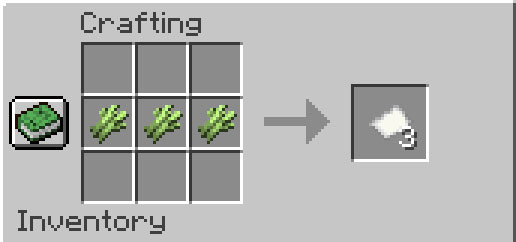
If you are just starting out, the recipe is the easiest part of the whole process. I always keep a few stacks of sugar cane in my inventory because the crafting is so simple. To make paper, you just need to place three pieces of sugar cane in a single horizontal row on your crafting table. This will give you three sheets of paper back.
It is a one to one ratio, so every stalk you harvest basically equals one sheet of paper. I have noticed that a lot of people think the source of paper in the game is weird since it comes from a plant rather than wood pulp, but it is actually a cool nod to history. The developers likely drew inspiration from ancient papyrus, which was made by weaving together the stalks of a plant that looks a lot like sugar cane.
Where to Find Sugar Cane in the Wild
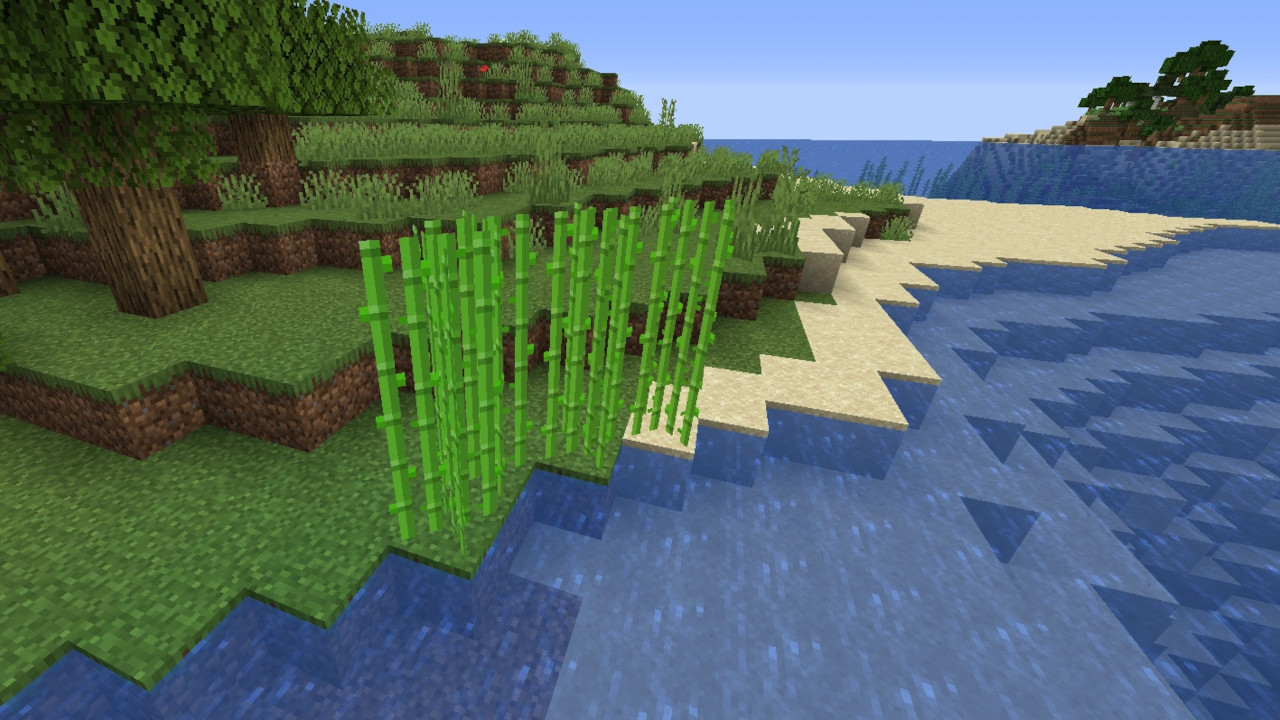
In my experience, finding your first few stalks is all about following the water. You will never find sugar cane growing in the middle of a dry field. It has to be directly next to a water block, which includes rivers, oceans, or even frozen ice. If you are looking to get a farm started fast, I have a few tips for you:
- Deserts are actually your best bet for a quick harvest. Even though they are dry, the game attempts to generate sugar cane fifty times more often in desert biomes along the riverbanks.
- Swamp biomes are the second best place to look since they are filled with shallow water and plenty of dirt for the stalks to grow on.
- You can plant sugar cane on dirt, grass, sand, red sand, podzol, or even the new mud blocks from recent updates.
- There is a huge myth that sugar cane grows faster on sand than on dirt. I have tested this myself and checked the game code: the substrate makes no difference at all to the growth speed.
Using the 1.21 Crafter to Automate Your Farm
The 1.21 Tricky Trials update changed everything for me. Before this, I had to manually click my crafting table for hours to turn my massive sugar cane harvests into paper. Now, we have the Crafter block, and it is a total game changer for technical players.
The trick to a perfect paper machine is managing the recipe slots. If you just pipe sugar cane into a Crafter, it might try to make sugar (a single item recipe) instead of paper (a three item recipe). To fix this, I always click on six of the slots in the Crafter interface to disable them. This leaves only one horizontal row open.
I use a Redstone Comparator to check the Crafter. When you have three slots open and they all fill up with sugar cane, the Comparator outputs a signal strength of seven. I set up my redstone to pulse the Crafter only when it hits that specific signal. This guarantees that my machine only spits out paper and never accidentally fills up with junk or makes the wrong item. It is way more efficient than manual crafting, especially if you are also building things like honeycombs for your fully automated base.
The Math Behind How Sugar Cane Grows
I know that waiting for crops to grow can feel like watching paint dry, but there is actually a very specific mathematical model behind it. Minecraft uses something called random ticks to decide when a plant should grow.
- On the Java Edition, sugar cane receives a growth update on average every eighteen minutes.
- If you play on the Bedrock Edition, the default tick speed is slower, meaning it takes about fifty four minutes for a stalk to reach its full three block height.
- A stalk needs to receive sixteen of these random ticks to grow one block higher.
- If you are on Bedrock, you can actually use bone meal to instantly grow sugar cane to its full height, but this does not work on Java at all.
I usually build my farms in a ninety block diagonal from where I spend most of my time. This is because random ticks only happen within a 128 block radius of the player. If you wander too far away, your sugar cane will simply stop growing until you come back.
Trading Paper for Infinite Emeralds
If you want to get rich in Minecraft, paper is better than gold. In my trading halls, I always have a fleet of librarians and cartographers ready to go. Both of these professions will buy twenty four pieces of paper for one emerald at the Novice level.
While many players prefer trading sticks to fletchers, I find paper much easier to scale. You can automate a sugar cane farm to be 100% passive, whereas chopping down trees for sticks always requires you to be there doing the work. If you cure a zombie villager, you can get that price down to just one sheet of paper for one emerald. This is the foundation of what I call the book loop. I buy bookshelves from a cured librarian, break them into books, and then sell those books back for a massive profit.
The Lore of the Ancient Builders and Libraries
I love looking at the environmental storytelling in this game. Have you ever wondered why Strongholds have massive libraries filled with books and paper? According to some of the deeper community theories, the Ancient Builders used these libraries to store all their knowledge before they fled to the End.The Trial Chambers introduced in 1.21 are even more interesting. They are pristine and made of copper, suggesting they might be newer than the crumbling Strongholds. You can find Trial Explorer Maps in these chambers, which are made of paper, showing that the builders were using this resource to organize their combat trials. It seems that in the world of Minecraft, paper has always been the primary way that civilizations preserved their history and magic.





Published: Apr 20, 2026 02:43 pm