


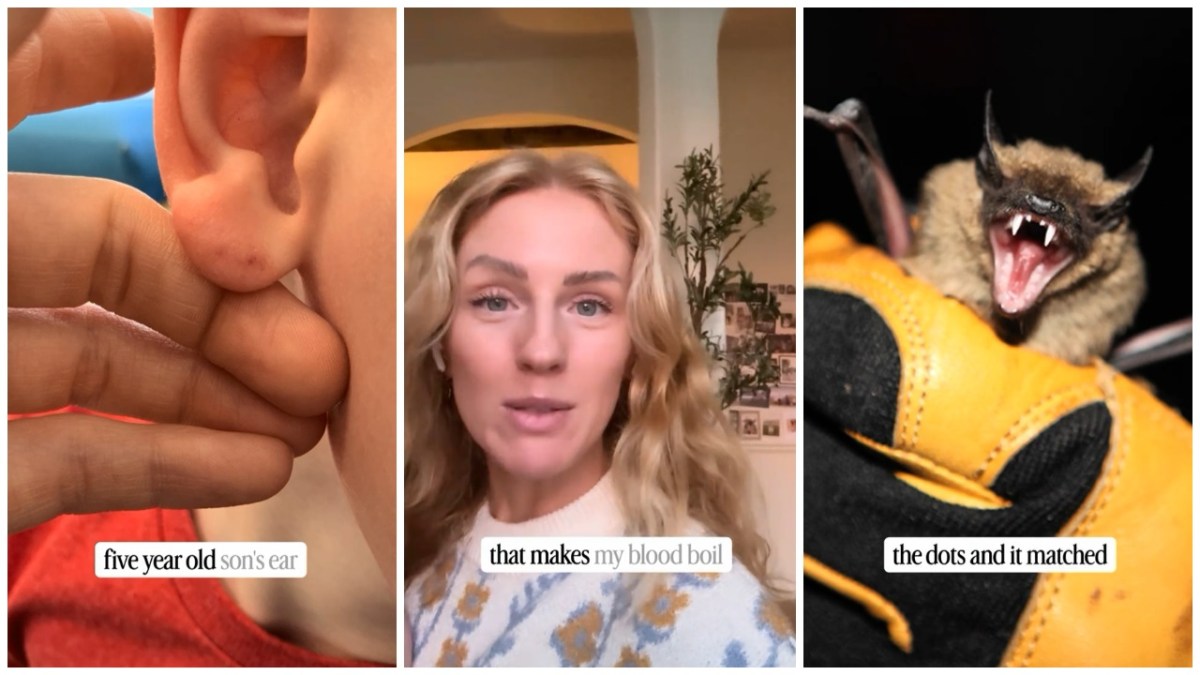

A mom says her family received a $50,000 medical bill for rabies shots after a potential exposure involving her young son. Kate Monson (thekatedebate) documented the ordeal and its financial aftermath on Instagram and TikTok, racking up more than 2 million views.
Monson said she discovered two puncture marks on her 5-year-old son’s ear after a trip to a cabin. In her video, she said her pediatrician identified the marks as consistent with a bat bite and contacted state health officials because of a recent rabies death in the area.
Since the family had been sleeping in the same room when the potential exposure occurred, she said they were all advised to receive the rabies vaccine series. Monson said the shots needed to start immediately and continue over 14 days.
Commenters said the vaccine costs far less abroad
Monson told viewers the family was then hit with a $50,000 bill, which she initially said her insurer, UnitedHealthcare, would not cover. She also claimed that every application for financial assistance, including through the hospital, was rejected, and that she was turned down for rebates from the vaccine manufacturer.
Many viewers said the rabies vaccine is free or heavily subsidized in other countries. One user who was bitten by a dog in India said it would have been “cheaper to fly to India and stay for weeks.” Others said their own insurance covered the shots, with one noting the only “insurance issue I had was my pharmacy incorrectly coded it.”
Some wondered why the government doesn’t cover the vaccine, with one user calling rabies a “public health issue” and another noting its “99% fatality rate.” A few said they would refuse to pay the bill altogether.
Yale Medicine notes that while human rabies cases are rare in the U.S., any exposure is a serious concern because the disease is almost always fatal once symptoms appear. That was the case for an 11-year-old who died of rabies weeks after a bat landed on his face. Experts emphasize that post-exposure treatment, which includes wound care and a series of vaccines, is extremely effective if given soon enough.
SafeRabies notes there is no fixed price for the treatment, since the total depends on the specific plan, which may include vaccine doses, rabies immune globulin, facility fees, and consultations. Each vaccine dose reportedly costs $406, according to the Southwest Utah Public Health Department.
In a follow-up video, Monson addressed questions about her insurance, explaining that the shots were considered out of network and did not count toward her deductible. She apologized for saying the care was not covered at all, but maintained that the cost was an extreme burden for a young family.
Attack of the Fanboy was unable to independently verify UnitedHealthcare’s or the hospital’s side of the story, as this account comes solely from Monson’s Instagram and TikTok posts.


Published: Oct 30, 2026 06:15 am