



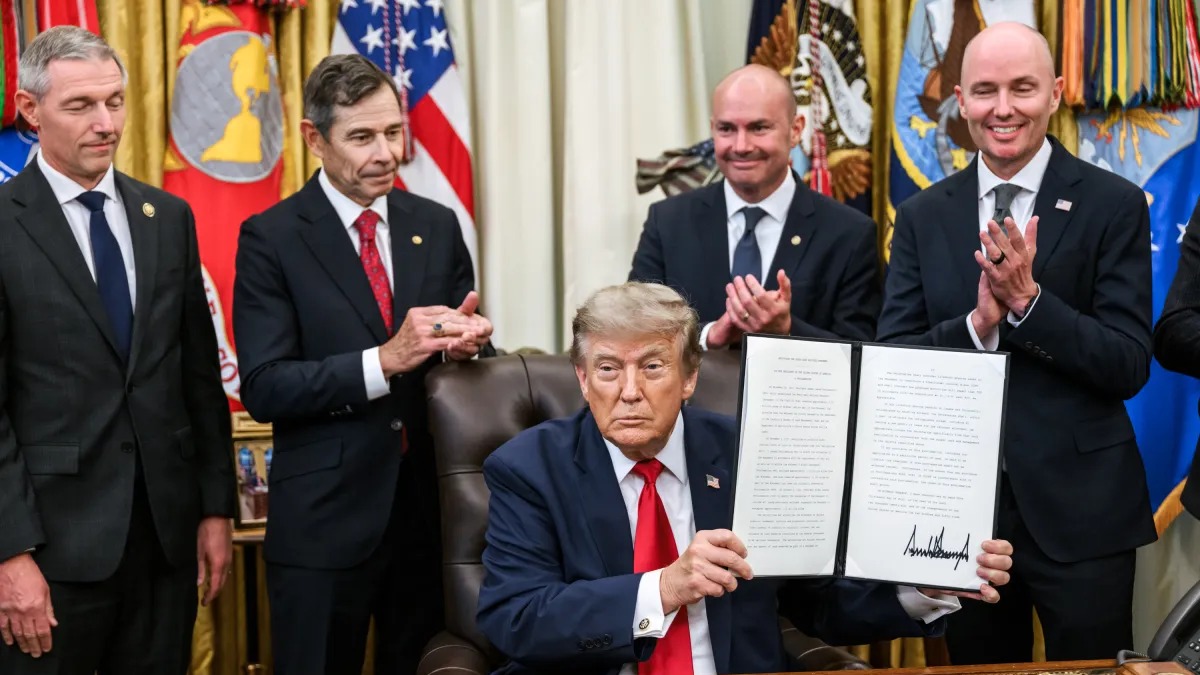

A majority of Americans now disapprove of the way President Trump is handling his job. In The Economist/YouGov poll released on July 21, the results show that 60 percent of respondents either strongly or somewhat disapprove of the president, while only 36 percent of those polled said they approve of his performance. A small portion of the group, specifically 4 percent, noted that they were unsure about how they felt regarding the president’s work in the White House.
This recent data aligns with broader trends that have been developing throughout the summer months. In a polling average provided by Decision Desk HQ, the president’s approval rating sat at 40.80 percent, while his disapproval rating hovered at 56.60 percent. These figures reflect a challenging environment for the president and his party as the November midterms approach.
The administration is dealing with a combination of an unpopular war in Iran, significant concerns regarding the state of the economy, and ongoing frustration from many voters over the current immigration agenda. When you add recent Democratic electoral victories into the mix, it is easy to see why the president is facing such an uphill climb.
On top of these policy-related headaches, the president is also facing questions about his age
In that same July poll, 52 percent of respondents said they believe the president is too old to hold his job, while 36 percent said he is not too old and 11 percent were unsure. This is a point of contention that mirrors the concerns often raised about his predecessor, Biden, during his time in the White House.
The economic landscape has been particularly difficult for the president as well. Looking back at a report from June 9, polling from Reuters/Ipsos indicated that his approval rating was sitting near the lowest level of his political career. At that time, 35 percent of Americans approved of his job performance, which was just slightly above the 34 percent rating recorded in April and mid-May. It is worth noting that this is dangerously close to the 33 percent low he saw back in December 2017.
A major driver of this dissatisfaction has been the cost of living, specifically the price of gasoline. Even though drivers saw a slight relief in mid-June when the national average price of a gallon of gas dropped to $4.24, it is still significantly higher than the sub-$3 prices seen in late February before the war began.
The war in Iran has clearly complicated things, especially with the closure of the Strait of Hormuz affecting the global oil supply. While the Trump administration has pointed to these price hikes as a temporary consequence of the conflict, they have struggled to convince the public.
The administration has even proposed eliminating gas taxes to help ease the burden on families, but the public remains skeptical. In fact, nearly 60 percent of Americans told pollsters in June that they expect gas prices to get worse over the next year, while only 17 percent were optimistic that things would improve.
The president’s own comments on the matter have certainly not helped him gain favor with voters who are feeling the pinch. During a press event in May, the president famously dismissed concerns about the financial strain on households. When asked about it, he told reporters, “I don’t think about Americans’ financial situations.” He then added, “Not even a little bit.” He went on to say, “I don’t think about anybody,” and followed up with, “I think about one thing: We cannot let Iran have a nuclear weapon.”







Published: Jul 22, 2026 03:45 pm